
Africa Launches First-Ever Reparations Festival in Nairobi to Champion Justice and Renewal
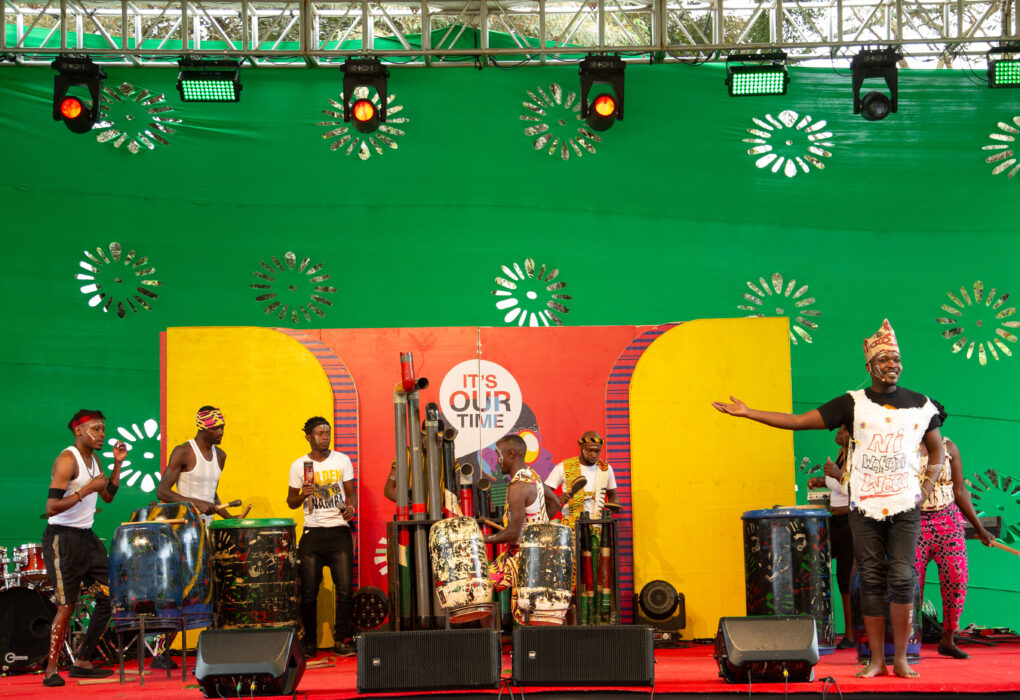
Nairobi, October 22, 2025 — On Wednesday the artists, scholars, and activists from across Africa converged for the continent’s first-ever Reparations Festival Wakati Wetu (Swahili for “It’s Our Time”). Themed “To Resist, Repair, and Reclaim,” to mark a historic moment in Africa’s growing reparatory justice movement.
The two-day festival organized by African Futures Lab, Baraza Media Lab,AU ECOSOCC, and Reform Initiatives seeks to examine the lasting legacies of colonialism and to inspire new pathways for healing, equity, and sovereignty through art, dialogue, and activism.
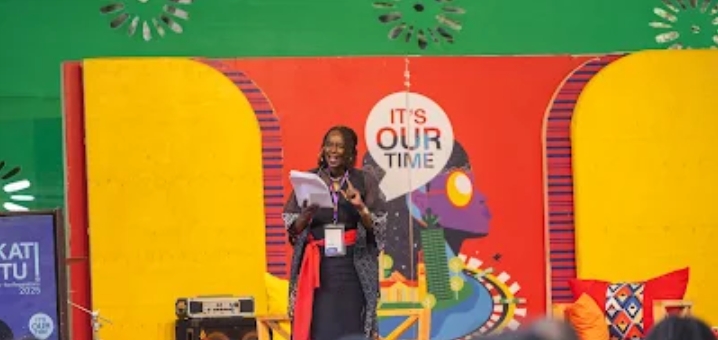
Award Winning Author Yvonne Adhiambo Owuor giving out a speech during the festival.
Award-winning author Yvonne Adhiambo Owuor set the tone with a stirring keynote, describing reparations as “an act of moral autopsy and moral exorcism.” She urged participants to resist folding justice into the same development models that created inequality.
Speaking during a regional festival, festival convener Dr. Liliane Umubyeyi, Executive Director of the African Futures Lab, emphasized, “We are here because justice is not only about remembrance it’s about renewal. The time is truly ours. Ni Wakati Wetu!” aimed at fostering such discussions, she said Africa must establish fair and resilient institutions capable of addressing these challenges without repeating the mistakes of the past. “The climate crisis and economic instability will not wait for us,” she warned, stressing that African societies must urgently rethink their frameworks to promote justice and sustainability.
She called for urgent dialogue on global inequalities rooted in colonial systems, emphasizing that crises such as climate change, pandemics, and debt are symptoms of deeper structural injustices between the Global North and South.
Dr. Umubyeyi further urged Africans to reclaim their cultural knowledge and values as foundations for new models of education, economy, and governance. She noted that Africa’s curricula and economies still mirror colonial structures designed for resource extraction rather than self-determination. Citing the loss of over 80 billion dollars annually through illicit financial flows, she argued that corruption alone does not explain the continent’s economic woes. “We need to start new conversations, create our own narratives, and build systems that work for us,” she said. Drawing from her Rwandan heritage, she highlighted resilience and Pan-African unity as essential values for shaping a just and self-reliant future.
During a Panel discussion,Veteran lawyer and former MP Paul Muite drew on his experience with the Mau Mau reparations case, stressing that “justice begins with truth and accurate historical record.”
He criticized the government for what he termed as a blatant disregard for constitutional principles, warning that Parliament and the Presidency cannot legislate arbitrarily without upholding public interest and constitutional values enshrined in Articles 10 and Chapter Six.
Muite argued that many recent laws are unconstitutional, crafted to facilitate corruption and silence dissent, particularly citing amendments to cybercrime and agricultural laws.
He condemned the push for genetically modified crops as a foreign-driven agenda that endangers public health and undermines small-scale farmers, accusing leaders of selling national sovereignty for personal gain. Muite further linked Kenya’s growing cancer burden to the unchecked importation of banned agricultural chemicals, alleging corruption among institutions meant to protect citizens.
Turning to history, he recounted how colonial-era injustices against Mau Mau freedom fighters were perpetuated by post-independence governments, with the movement remaining outlawed until 2003. He revealed that through his efforts, the Kibaki administration repealed the law branding Mau Mau as terrorists, paving the way for their legal recognition and restoration of dignity.
Journalist Ngartia Mūrūthi and media scholar Christine Mungai unpacked how colonial propaganda shaped public consciousness, calling for brave storytelling as a tool for repair.
Philosopher Yoporeka Somet reminded attendees that “there is no renaissance without remembering,” while Dr. Natasha Shivji urged African governments to take ownership of the reparations agenda, reframing it as a revolutionary state responsibility rather than a plea for sympathy.
The festival’s artistic showcase, curated under the theme “Confronting the Silence,” blended music, film, poetry, and visual art into a collective act of remembrance.
Performances by Eric Wainaina, DJ Talie, and poets transformed the venue into a vibrant tapestry of resilience. Screenings of If Objects Could Speak and How to Build a Library explored cultural theft and memory erasure, amplifying the festival’s message that repair must be both political and cultural.
The festival concludes on October 23 with discussions on Tax Justice, Climate Reparations, and Gendered Reparations, followed by a finale concert led by Sitawa Namwalie and June Gachui. As the African Union prepares to launch the Decade of Reparations (2026–2036), Wakati Wetu stands as a bold declaration that Africa is no longer asking for justice it is defining it.