
Why Thousands of Lake Region Farmers Are Turning to Sunflower Farming in a Major Agricultural Revolution
Thousands of farmers across Kenya’s Lake Region are set to benefit from a transformative sunflower farming programme that promises to increase household incomes, strengthen food security and unlock new economic opportunities for local communities.
The ambitious initiative, launched by the Lake Basin Development Authority (LBDA) in partnership with Green Tec Hub Limited, is expected to reshape agricultural practices in the region by encouraging farmers to move away from traditional crops and embrace sunflower cultivation as a profitable alternative.
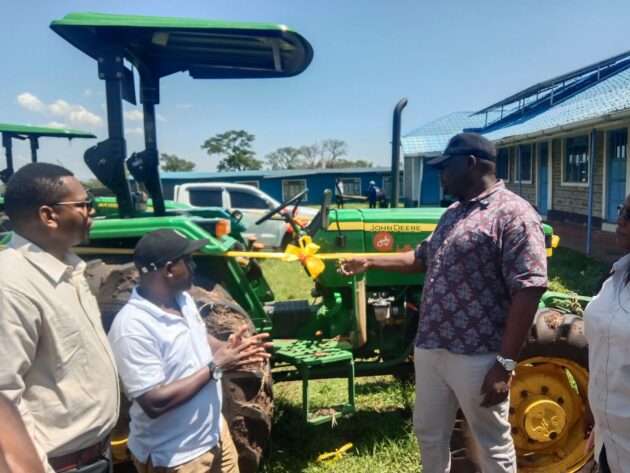
The programme was officially unveiled at the Industrial Technology Transfer and Training Centre, where government officials, agricultural stakeholders and development partners highlighted sunflower farming as a game-changing opportunity for farmers struggling with declining returns from conventional crops such as maize and sugarcane.
A New Hope for Farmers
For years, many farmers in the Lake Region have relied heavily on maize and sugarcane farming. However, fluctuating market prices, delayed payments, climate-related challenges and rising production costs have left many households searching for more reliable sources of income.
Stakeholders behind the new initiative believe sunflower farming could provide the solution.
Speaking during the launch, Kuno Jacob said the project is part of a broader strategy aimed at transforming agriculture and improving livelihoods throughout the Lake Basin region.
“Today we are launching the planting and production of sunflower to bring change to this community, and we are going to roll this out to other regions as well,” Jacob said.
According to him, sunflower was carefully selected because of its economic value, shorter maturity period and ability to thrive in local environmental conditions.
“The reason why we chose sunflower is because it is valuable, takes a shorter time to mature, and the income that comes with it is quite huge compared to crops such as sugarcane and maize,” he explained.
More Than 3,000 Farmers to Benefit Initially
The project will begin by targeting more than 3,000 farmers across the Lake Region before gradually expanding to reach over 20,000 farmers in the coming years.
Officials say the expansion will help create a strong sunflower value chain capable of supporting rural economies while reducing dependence on imported sunflower products.
The programme is expected to spread to several counties, including Migori County, Busia County and other parts of the wider Lake Basin region.
Guaranteed Market Eases Farmers’ Concerns
One of the biggest challenges facing farmers in Kenya is market uncertainty. Many growers often struggle to find reliable buyers after harvesting their crops.
To address this concern, LBDA has partnered with Green Tec Hub Limited, which has committed to purchasing sunflower produced under the programme.
Jacob assured farmers that market demand for sunflower remains extremely strong.
“We have partnered with Green Tec to do the marketing for this, and the market is ready. The only worry is that production might be low because the demand for sunflower is quite huge,” he noted.
The guaranteed market arrangement is expected to give farmers confidence to invest in sunflower farming without fear of post-harvest losses or exploitation by middlemen.
Seeds, Inputs and Technical Support
Green Tec Hub Limited representative John Kanyi said the Sunflower Value Chain Programme is designed to complement the company’s existing agricultural initiatives, particularly in rice production.
He revealed that participating farmers will receive quality seeds, farm inputs and technical support to help maximise productivity.
“We are going to provide the farmers with seed and inputs. We are then going to come and take all that particular crop. We encourage the farmers to join cooperatives and groups so that they can benefit from this initiative,” Kanyi said.
He further noted that growing demand for sunflower products, particularly cooking oil and biofuel, presents enormous economic potential for local farmers.
Driving Food Security and Economic Growth
Agricultural experts view the programme as a significant step toward improving food security and enhancing economic resilience in rural communities.
With climate change increasingly affecting traditional farming systems, sunflower’s adaptability and relatively short growing cycle make it an attractive option for farmers seeking sustainable and profitable agricultural ventures.
If successfully implemented, the initiative could mark the beginning of a new agricultural era in the Lake Region, empowering thousands of farmers with better incomes, stronger market connections and greater financial stability.
For many farming households, the sunflower programme represents more than just a new crop—it offers hope for a brighter and more prosperous future.