


Kenya’s HIV Response at a Crossroads, Health CS Calls for Urgent Action
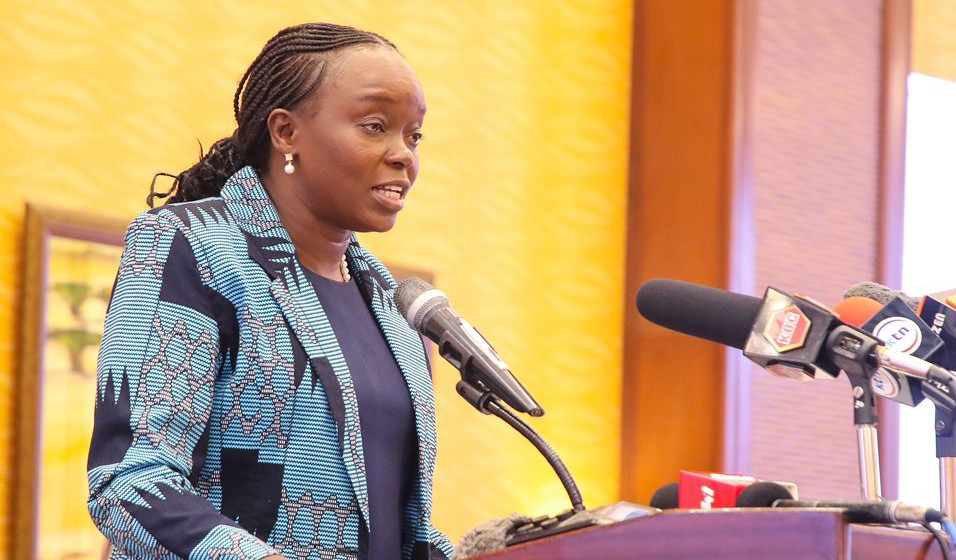
Health Cabinet Secretary Dr. Barasa Deborah has issued a strong call to action following the U.S. government’s decision to impose a 90-day pause on foreign development assistance, a move that has disrupted healthcare service delivery in Kenya.
She emphasized the critical role international partnerships have played in Kenya’s fight against HIV but underscored the need for self-reliance.
Speaking at a high-level government meeting, Dr. Barasa highlighted Kenya’s remarkable progress in combating HIV. As of 2023, 95 percent of the 1.37 million people living with HIV in the country know their status, with 97 percent receiving lifesaving antiretroviral treatment (ART). Viral suppression among those on treatment has also improved from 85 percent in 2019 to 94 percent in 2023.
However, the recent policy shift by the U.S., government poses a threat to these hard-won gains.
“We have made tremendous progress, but we cannot afford to be complacent. The disruption in funding reminds us that it is our collective responsibility to sustain the gains we have made,” Dr. Barasa stated.
Kenya has been preparing for a shift in donor funding since its reclassification from a low-income to a lower-middle-income country. The Ministry of Health developed a Health Sector Transition Roadmap, which prioritizes essential commodities, service delivery, human resources, health information systems, and infrastructure improvements.
This roadmap is being implemented in three phases: Planning (2021-2022), Pilot (2022-2025) and Transition (2026-2030).
To ensure sustainability, Kenya has also developed an Operational Plan for Enhancing Country Readiness to Sustain a Resilient HIV Response Beyond 2030, focusing on governance, service delivery, health financing, health products, and community engagement.
Dr. Barasa reassured stakeholders that Kenya has built strong institutions capable of sustaining healthcare programs.
She cited the Kenya Medical Supplies Authority (KEMSA) as a reliable supply chain institution with access to global markets and robust procurement processes.
Additionally, she stressed the importance of expanding local pharmaceutical manufacturing to reduce dependency on foreign aid.
Dr. Barasa urged county governments, members of parliament, and the health sector to take immediate action to fill the funding gap.
The county government need to Increase domestic resource allocation for HIV programs and utilize the Facilities Improvement Fund (FIF) to engage additional healthcare workers and ensure continued service delivery.
For Members of Parliament,Advocate for increased budgetary allocations to the health sector, particularly for HIV programs, to sustain progress and prevent setbacks.
For the Health Sector: Rethink disease management strategies to promote long-term resilience and self-sufficiency.
The Health CS emphasized that Kenya must move away from over-reliance on donor funding and strengthen its Social Health Insurance Fund (SHIF) to create a sustainable, locally driven response to HIV and other public health challenges.
“We urge calm, unity, and collective action as we navigate these changes. Let us stand together in our commitment to a sustainable and resilient health system,” Dr. Barasa said.
By Sharon Atieno
Kenya Confronts Healthcare Crisis as US Funding Cuts Take Toll

One thought on “Kenya’s HIV Response at a Crossroads, Health CS Calls for Urgent Action”