
World Vision Kenya Unveils 2026–2030 Strategy, Targets 13.3 Million Children Nationwide
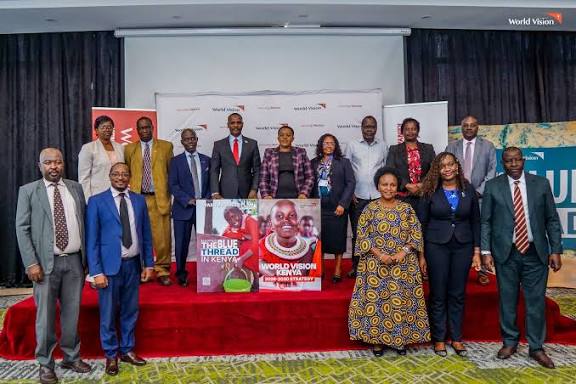
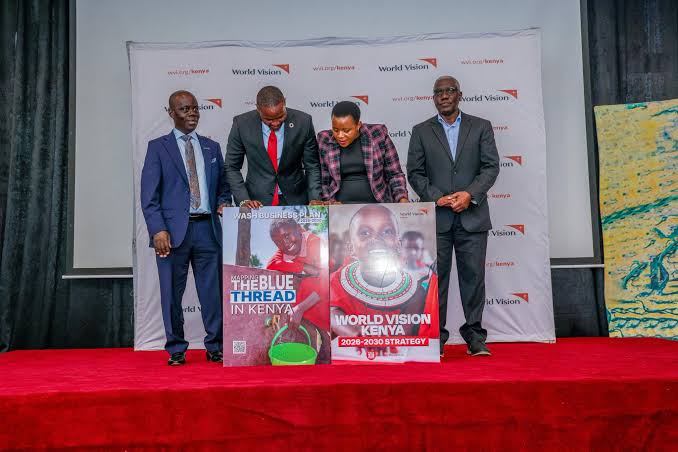
World Vision Kenya has launched its 2026–2030 National Strategy alongside its Water, Sanitation and Hygiene (WASH) Business Plan, outlining an ambitious roadmap to improve the wellbeing of 13.3 million children, families and communities across 33 counties.
The strategy prioritises reaching 3.04 million of the most vulnerable children through integrated programming, strategic partnerships and evidence-based advocacy, while the WASH Business Plan dubbed “Mapping the Blue Thread” aims to expand access to safe water, sanitation and hygiene services for at least 1.2 million people in 18 counties over the next five years.
Speaking during the launch, Principal Secretary in the State Department for Climate Change and Forestry, Dr Eng. Festus Ngeno, underscored the importance of collaboration between government, development partners and communities in delivering sustainable outcomes for children.
“Water, sanitation, climate resilience and environmental protection are not isolated issues. They are interconnected systems that directly determine children’s health, dignity and future opportunities,” Dr Ngeno said, noting that strategic partnerships are now central to effective NGO programming.
He highlighted Kenya’s climate and environmental challenges, including recurrent droughts, floods and declining forest cover, currently estimated at about 8.8 per cent far below the national target. The government, he said, is committed to achieving 30 per cent tree cover through the 15-billion-tree initiative as part of its climate action and green growth agenda, calling on organisations like World Vision to align their programmes with national priorities.
Dr Ngeno also pointed to persistent gaps in WASH services, citing data showing that only 59 per cent of Kenyans have access to safe drinking water, about 29 per cent to improved sanitation, and roughly 25 per cent to basic handwashing facilities disparities that disproportionately affect rural, informal settlement and climate-vulnerable communities.
The 2026–2030 strategy builds on gains made between 2021 and 2025, during which World Vision reached 9.4 million children in 32 counties, protected 1.27 million children from violence, enabled nearly one million people to access clean water, and invested about USD 470 million in child wellbeing programmes.
Under the new plan, World Vision Kenya will focus on seven integrated priority areas: child protection, education and participation; water, sanitation and hygiene; environment and climate change; food security and economic development; health and nutrition; disaster risk management; and peacebuilding and conflict management. Special emphasis will be placed on children living in extreme poverty and children with disabilities.
Principal Secretary in the State Department for Parliamentary Affairs, CPA Aurelia Rono, welcomed the strengthened collaboration between government and World Vision, revealing plans to formalise the partnership through a memorandum of understanding.
“When we work together, we deliver more. There is only one Kenya, and development works best when we align data, resources and priorities,” she said, adding that partnerships are critical amid fiscal constraints facing the government.
World Vision Kenya Board Chair Dr David Githanga said the new strategy and WASH Business Plan go beyond policy documents, describing them as practical tools to transform lives at household and community level.
“Water affects health, education, livelihoods and even human-wildlife conflict. These plans are about dignity, resilience and sustainability, especially for children,” he said, stressing the need to diversify financing through partnerships with government, the private sector, social enterprises and climate finance mechanisms.
Regional Director Ms Lilian Dodzo reaffirmed World Vision’s child-centred and partnership-driven approach, saying the Blue Thread symbolises shared hope for vulnerable children and communities.
“The results we celebrate are not just numbers. They represent real lives changed,” she said, while acknowledging ongoing challenges such as water insecurity, sanitation gaps, climate shocks, violence against children and shrinking funding.
She cited the story of a family in Bomet County whose children’s health and school attendance improved after gaining access to safe water through a simple purification intervention, illustrating the transformative power of WASH services.
As Kenya grapples with climate change, rapid urbanisation and socio-economic pressures, speakers at the launch agreed that the World Vision Kenya 2026–2030 Strategy comes at a critical moment, calling for unity, innovation and sustained partnerships to secure a healthier, safer and more resilient future for every Kenyan child.