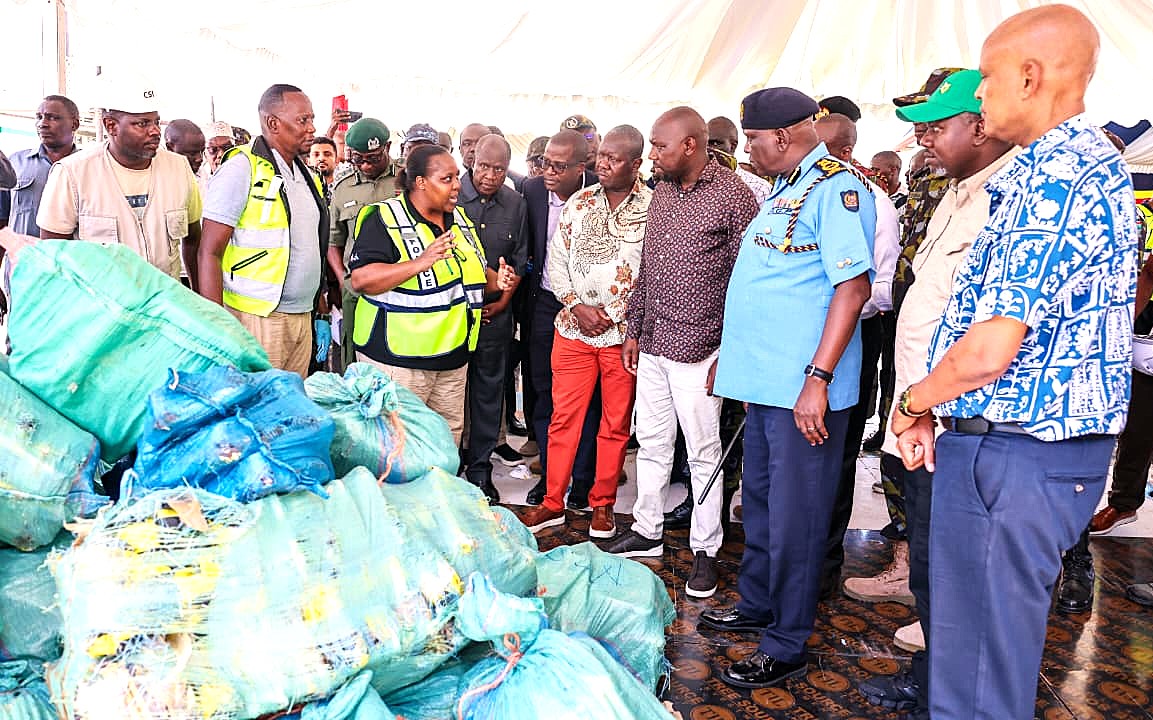

IAWRT Equips Women Journalists with Ethical AI Skills Ahead of Final Training Session
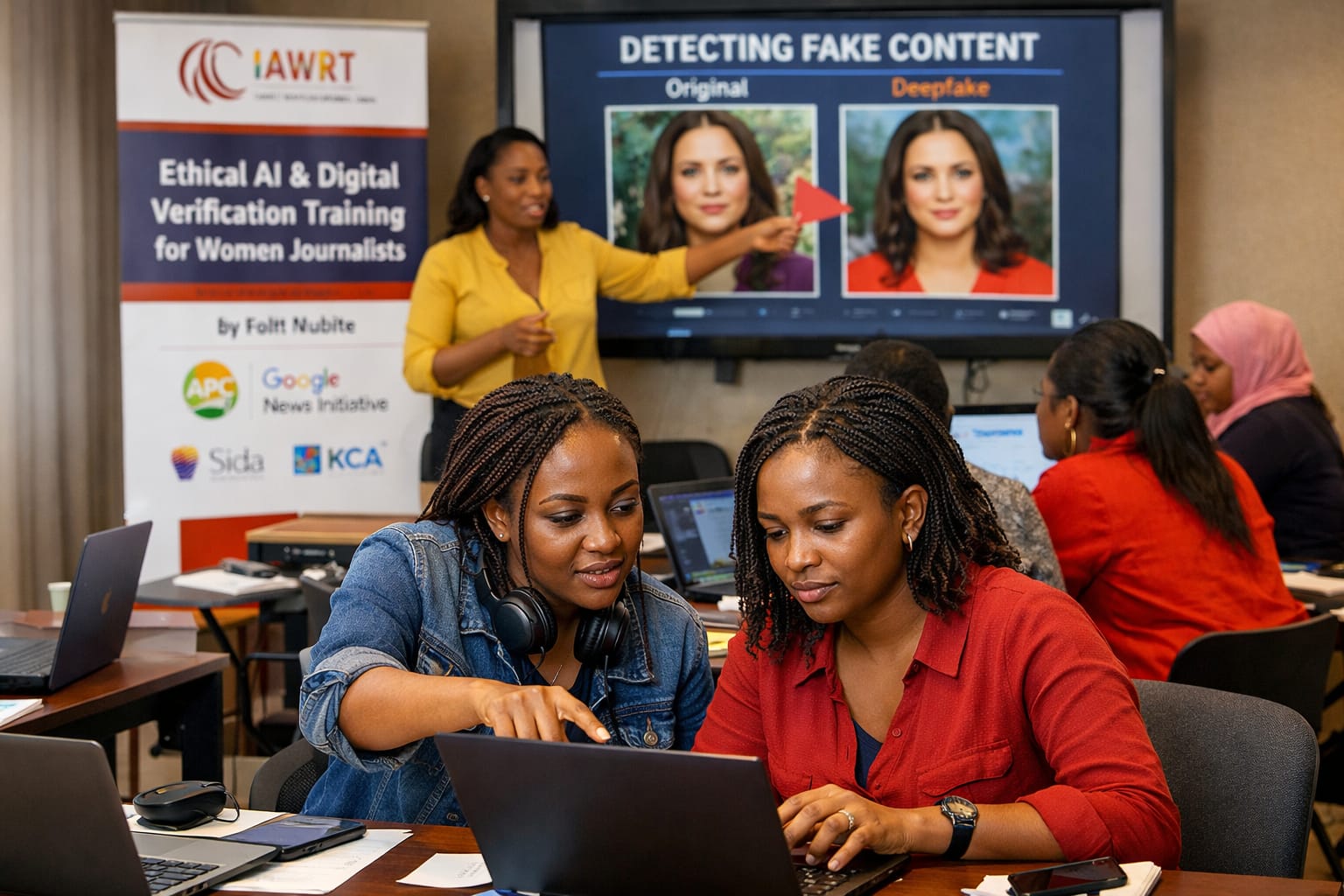
As the International Association of Women in Radio and Television (IAWRT) Kenya’s AI training programme nears its conclusion, selected women journalists across the country continue to sharpen their skills in the responsible use of Artificial Intelligence and digital tools in journalism. NewsLight Kenya was among the participants in the programme, which goes beyond basic automation to focus on the ethical, strategic, and human-centered integration of AI into professional journalism.
The just-concluded session marked the sixth training since the programme began in August 2025, and stands as the Second last engagement before the initiative wraps up. The training reflects IAWRT Kenya’s sustained commitment to empowering women journalists to navigate an increasingly complex digital information ecosystem with confidence, skill, and integrity.
The session was led by Nelly Moraa Nyangorora, MPRSK, an independent journalist and media mentor, who guided participants through the fundamentals of ,AI-supported fact-checking and verification in today’s fast-moving and often deceptive information environment. She emphasized that while AI can enhance journalistic work, “no tool can verify information with absolute certainty”.
She noted that Verification remains a human-led editorial process, strengthened but never replaced by digital and AI-assisted methods, this challenges the widespread fear that AI will replace journalists. While machines can process vast amounts of data at remarkable speed, they cannot interpret emotion, understand cultural nuance, or exercise moral judgement.
Journalism operates in the present moment shaped by empathy, context, and accountability qualities that remain uniquely human. AI works from historical patterns while journalism responds to lived realities.
The training underscored the principle of editorial sovereignty, selected journalist reflected on the reality that while AI can draft text or generate images, it cannot demand accountability or witness truth. That responsibility rests firmly with the journalist.
As media professionals, our role has evolved from simply gathering information to becoming moral and ethical gatekeepers of public knowledge.We remain the authors and the ones held accountable.
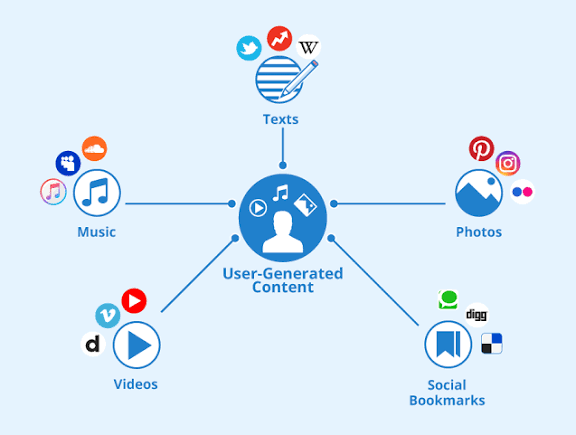
She emphasis on the verification of user-generated content, particularly from social media. Journalists were encouraged to anchor their work in the core journalistic questions the 5Ws and H ,while remaining alert to the growing threats of coordinated inauthentic behaviour, manipulated images and videos, and misleading narratives amplified online.
Participants also explored how AI can be used responsibly to identify patterns, flag inconsistencies, summarise complex claims, and support investigative work, with the clear reminder that AI outputs must always be cross-checked against authoritative and primary sources.
To support verification efforts, the session highlighted a range of tools journalists can use responsibly, including: Google Fact Check Explorer – to confirm whether viral claims or statistics have already been verified or debunked by credible organizations.
Reverse Image Search tools – to trace the origin, prior use, and context of circulating images.
Video verification and analysis tools such as Hive AI – to assess whether videos are original, manipulated, or shared out of context.
AI-supported image and video analysis tools – to flag potential manipulation or AI-generated content, always paired with human review.
Social media account analysis tools– to identify fake, impersonation, or coordinated accounts by examining posting patterns and digital footprints.
Generative AI tools such as ChatGPT or Google Pinpoint – to cautiously summarize claims, suggest verification steps, or locate documents, but never as sources of truth.
Document analysis platforms– to cross-check official statements, press releases, and public records over time.
This session reaffirmed that credible journalism depends on transparency, context, and professional judgement, particularly as digital threats continue to evolve. Through this programme, IAWRT Kenya is helping bridge the digital divide in newsrooms while ensuring women journalists are not only equipped with new tools, but grounded in the ethics that define the profession.
As the media landscape undergoes rapid transformation driven by Artificial Intelligence, the professional imperative has shifted. It is no longer enough to adopt new tools; journalists must master the ethics, precision, and accountability that guide their use.
The training journey has centered on three critical pillars:
Ethical Innovation – navigating AI policy and practice to ensure journalism remains transparent, unbiased, and human-centered.
Verification and Fact-Checking – using AI to enhance speed and accuracy without compromising truth.
Strategic Digital Leadership – preparing women journalists to lead newsrooms and media spaces into the next generation of storytelling.
As the programme approaches its final session, the message remains that AI may mimic our style, but it can never mirror our conscience.