
Uganda’s Minister Advocates for Agroecology as a Sustainable Farming Solution
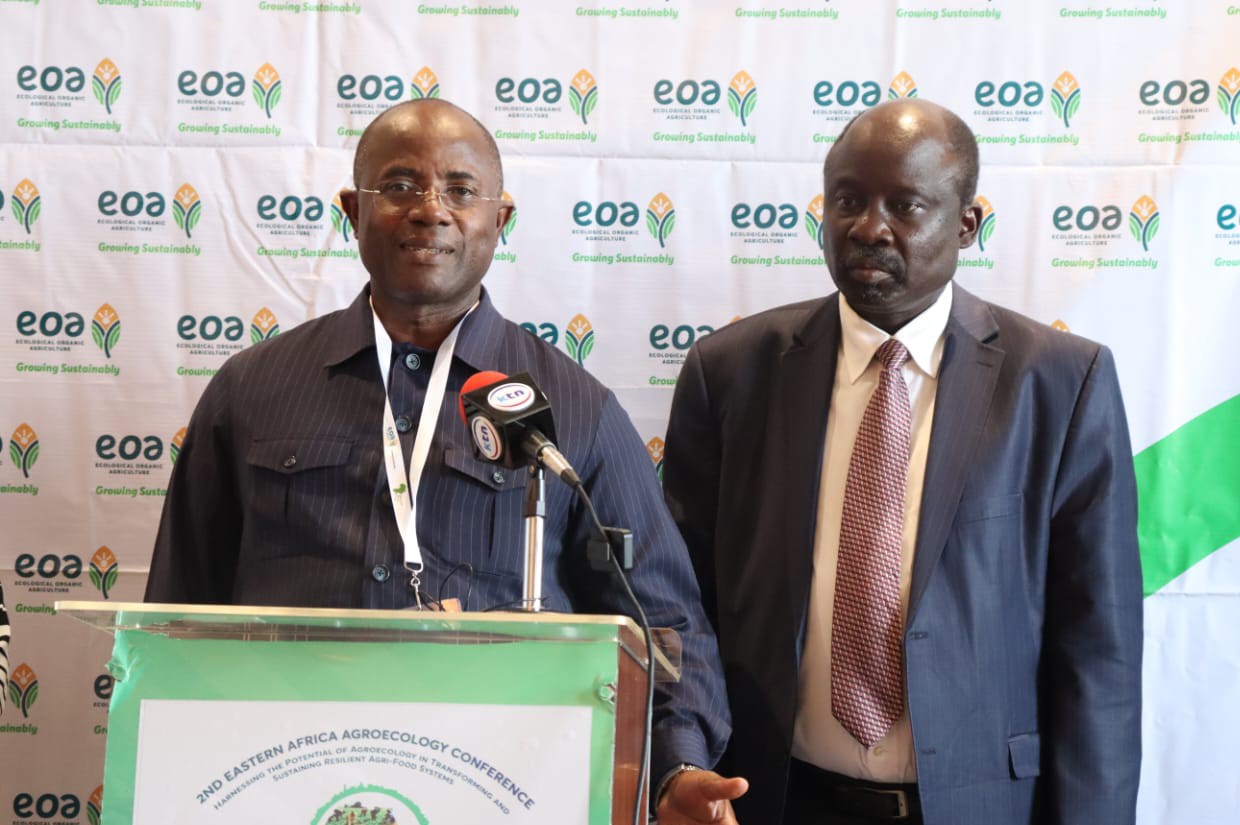
Uganda’s Minister, Honourable Fred Bwino, has reaffirmed the country’s commitment to agroecology, emphasizing its role as a science, a practice, and a movement that promotes farming methods in harmony with nature.
Speaking at a high-level agricultural forum, Bwino highlighted the importance of using organic alternatives instead of relying heavily on inorganic inputs.
“Agroecology is about practices that favor nature. From the type of seeds we plant to the fertility of our soils, we must prioritize organic methods over chemical-based farming,” he stated.
Bwino’s remarks come at a time when global concerns over soil degradation and food security are mounting. Experts warn that excessive use of chemical fertilizers has led to declining soil health, reducing crop yields and increasing dependency on expensive imported inputs.
David Amudavi, Executive Director of Biodiversity International, supported the minister’s stance, underscoring the need to improve soil health naturally.
“Our soils are the foundation of agriculture. Just like human beings, they need to be healthy. Overuse of chemical fertilizers has left many of our farms with acidic and unproductive soils,” he explained.
A 2012 study conducted in Uganda revealed that most farmlands suffer from soil acidity, significantly reducing their ability to sustain high yields. In response, Uganda recently hosted the Africa Fertilizer and Soil Summit, bringing together stakeholders to discuss sustainable solutions, including organic composting, biofertilizers, and nature-based soil enrichment techniques.
Experts at the forum emphasized that agroecology provides viable solutions to climate change, food security, and economic sustainability. As unpredictable weather patterns threaten agricultural productivity, traditional and resilient crops such as yams, cassava, and sweet potatoes are gaining recognition.
These crops not only improve soil health but also enhance nutrition and provide economic opportunities for farmers.
“We need to prepare our farming systems to withstand climate change. With erratic rainfall and prolonged droughts, farmers must diversify their crops and adopt nature-based solutions,” Amudavi added.
Organic fertilizers like Bokashi compost, increasingly popular in Kenya, Uganda, and Tanzania, were cited as a promising alternative to chemical fertilizers. Studies indicate that such organic inputs improve soil structure, enhance nutrient retention, and support long-term productivity.
While advocating for agroecology, policymakers acknowledged the need for a balanced approach.
Dr. Sara Olembo, an expert in farm-managed seed systems, cautioned against complete dependency on industrialized agriculture, which prioritizes a few select crops.
“We cannot rely on just five industrial crops such as maize, wheat, rice, sorghum, and groundnuts. We need diverse seeds to ensure food security. Women play a crucial role in preserving traditional seed varieties, yet there is a push to monopolize and commercialize seed production,” Olembo stated.
Echoing her concerns, Joyce Mutua, Makueni County’s Executive Committee Member for Agriculture in Kenya, emphasized the need for gradual transitions.
“Agriculture is devolved, and food security depends on counties. While we are shifting towards organic practices, we cannot entirely abandon conventional fertilizers overnight. We need a strategic, science-based approach to integrate both organic and inorganic solutions,” she said.
Kenya has already made strides in adopting integrated pest management (IPM), reducing reliance on chemical pesticides. In regions like Makueni, farmers are increasingly using pheromone traps for mango farming, a move that minimizes pesticide exposure and promotes sustainable honey production.A Call for Policy Action and Research Investment.
As African nations grapple with food security challenges, experts at the forum called for increased investment in agroecological research, farmer training, and policy support.
They urged governments to scale up successful organic farming models and promote circular economies where farm waste is repurposed into valuable agricultural inputs.
“Agroecology is not about rejecting technology it’s about making science work for nature, not against it,” said Bwino.”We must invest in sustainable solutions that restore our soils, ensure food security, and reduce harmful environmental footprints.”
With Africa facing growing pressure to feed its expanding population, the shift toward agroecology presents an opportunity to secure long-term food sustainability while safeguarding the environment.
However, success will depend on strong policy frameworks, farmer support programs, and a commitment to reducing dependency on imported chemical inputs.