

FINAS 2026 Summit to Drive Action on Financing Africa’s Food Systems
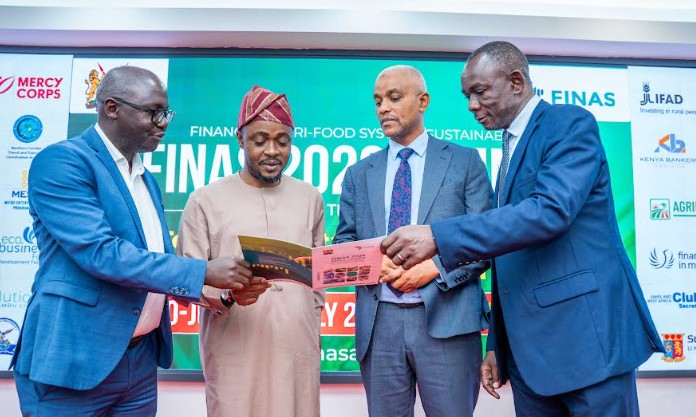
Nairobi, Kenya, April 27, 2026 — More than 1,000 stakeholders from government, financial institutions, development partners, and the private sector are set to gather in Nairobi for the Financing Agri-Food Systems Sustainably (FINAS) 2026 Summit, in a renewed effort to unlock sustainable financing for Africa’s food systems.
The summit, scheduled for June 30 to July 2, 2026, will be held under the theme “Towards a Sustainable Financial Architecture for Africa’s Food Systems,” with a strong focus on implementation, investment mobilisation, and measurable outcomes.
Huge Financing Gap in Africa’s Agriculture
Africa’s agri-food systems contribute up to 30 percent of GDP in many countries and employ over 60 percent of the workforce. However, the sector continues to face a financing gap of more than USD 100 billion annually, with agriculture receiving less than five percent of formal bank lending leaving smallholder farmers, women, youth, and agri-SMEs most affected despite producing up to 80 percent of the continent’s food.
Government Push for Results-Oriented Financing
Speaking during the media launch, Principal Secretary for Agriculture Dr. Paul Ronoh, in remarks delivered on his behalf, said the summit comes at a critical moment for the continent.
He emphasised that the forum will assess progress made and push for results-oriented financing that ensures every investment delivers measurable impact in strengthening sustainable agri-food systems.
Rashid Khator, Secretary of Administration in the State Department for Agriculture, underscored the importance of empowering farmers through inclusive financing models.
“We must move beyond viewing agriculture as a risky sector. Without agriculture, no economy can function. Financing must support the entire value chain from production to markets while ensuring smallholder farmers are not left behind,” he said.
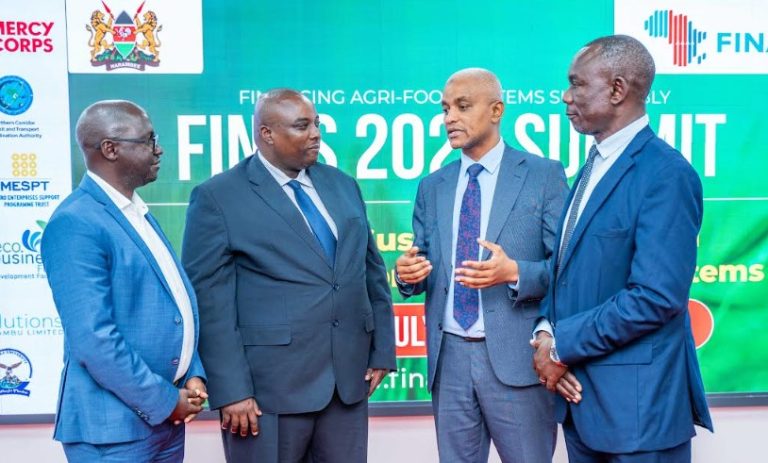
Khator also highlighted the role of collaboration between government, development partners, and private sector actors in creating impactful policy frameworks. He noted that data remains central to effective policymaking, pointing to ongoing government efforts to streamline agricultural data systems to improve access to information for research and investment decisions.
He further cited government interventions such as fertiliser and seed subsidy programmes aimed at lowering production costs and boosting output, adding that such efforts are key to achieving food sovereignty.
Policy Reforms and Investment in Climate-Smart Agriculture
Adding to the discussion, Peter Michael Oduor, a Principal Research Officer at the Kenya Marine and Fisheries Research Institute, outlined policy measures being implemented to improve access to finance.
“These include increasing funding to agricultural finance institutions, expanding subsidies to reduce input costs, and investing in climate-smart technologies and irrigation to enhance productivity and resilience,” he said.
Oduor noted that the government is also working towards sustainable financing frameworks for subsidy management, while aligning with continental commitments such as allocating at least 10 percent of national budgets to agriculture.
He stressed the importance of creating an enabling environment that attracts private investment, noting that public resources alone are insufficient to meet the sector’s financing needs.
Strengthening Financial Institutions and Inclusion
Echoing the call for stronger financial systems, David Adama, Senior Specialist for Continental and Regional Engagement at AGRA, pointed to ongoing reforms in state-owned financial institutions.
He said institutions such as the Agricultural Finance Corporation (AFC) have been restructured to enhance efficiency, sustainability, and financial inclusivity.
“The goal is to build resilient institutions that can sustainably provide financing to farmers while ensuring funds are effectively targeted and repaid to support long-term operations,” he said, adding that increased government funding is already being channelled towards this effort.
Rethinking Agricultural Financing Models
George Kubal, Managing Director of AFC, challenged perceptions that banks are unwilling to finance agriculture, noting that structural issues within the sector limit access to credit.
“About 80 percent of agriculture in Kenya is informal, making it invisible to commercial banks. We must rethink financing beyond traditional banking systems and explore alternative solutions,” he said.
Kubal also called for a shift from simply increasing access to credit to ensuring affordability.
“We cannot finance agriculture with high interest rates. There is need for subsidised and blended financing models to make credit accessible and practical for farmers,” he added.
Partnerships Key to Driving Change
Dr. Sophia Baumert, Project Manager for Sustainable Agricultural Systems and Policies at GIZ Kenya, described FINAS as a critical platform for advancing partnerships and accountability in the sector.
“FINAS has evolved from a national platform into a continental forum that brings together all actors to drive meaningful dialogue and collaboration towards resilient and secure food systems,” she said.
Similarly, Jared Ochieng, Agriculture Finance Lead at FSD Kenya, highlighted the urgency of collective action in addressing persistent challenges such as climate change, market disruptions, and financing constraints.
“As stakeholders, we must work together to reshape our economies and develop innovative financial models that can effectively support Africa’s agri-food systems,” he said.
According to Prof. Hamadi Boga, Vice President for Programme Delivery at AGRA and Chair of the FINAS Secretariat, the summit marks a shift from commitments to action.
“FINAS 2026 is about coordinated delivery unlocking capital at scale and translating policy ambitions into bankable investments that directly benefit farmers and agri-enterprises,” he said.
The summit will be preceded by high-level dialogues focusing on key areas such as the establishment of an Agricultural Development Fund, green finance, and implementation of continental frameworks. The main event will feature ministerial and CEO roundtables, deal-making sessions, and discussions centred on policy alignment, inclusive finance, climate resilience, and trade.
Participants will also undertake site visits to key innovation hubs, including infrastructure and technology centres, as part of efforts to showcase practical investments driving transformation in Kenya’s agri-food systems.
A Defining Moment for Africa’s Food Systems
With growing momentum around agricultural transformation across Africa, stakeholders say FINAS 2026 presents a critical opportunity to align policy, partnerships, and capital towards building resilient, inclusive, and investment-ready food systems.