

Mukuru Digital Classroom Launched at Connected Africa Summit, Showcasing Power of Connected Learning

Initiative signals new push to bridge digital divide in underserved communities
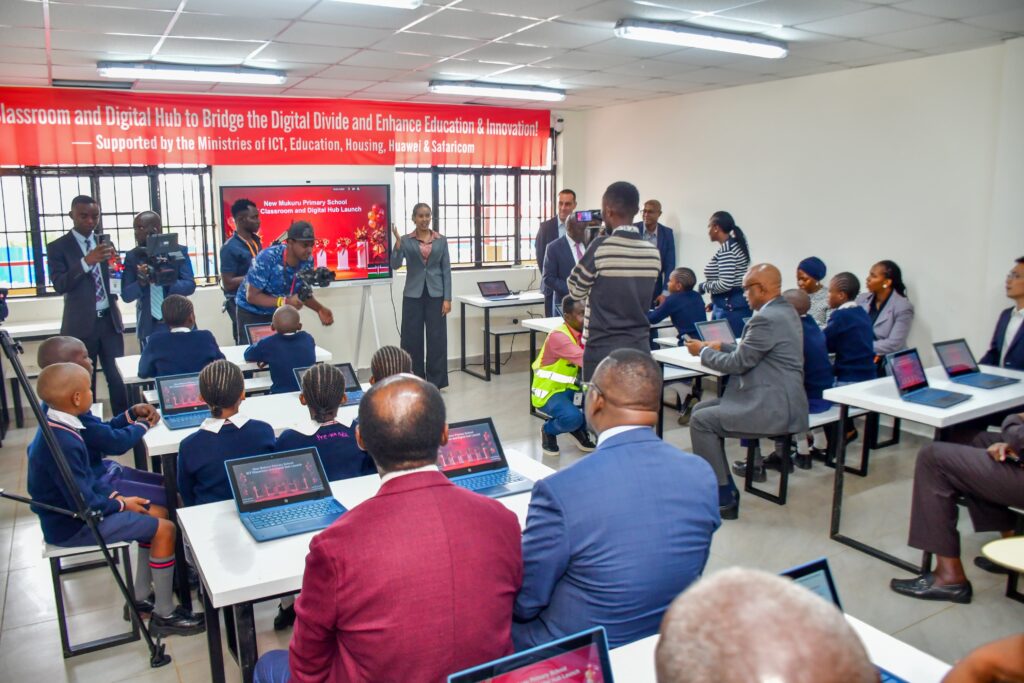
Nairobi| 27 April 2026-Kenya has marked a significant step in advancing digital inclusion and education with the launch of the Mukuru Digital Classroom at New Mukuru Primary School, unveiled during the Connected Africa Summit 2026 in Nairobi.
The initiative, situated within the Mukuru Affordable Housing Complex, demonstrates how integrated digital infrastructure and public-private partnerships are reshaping learning in underserved communities. Equipped with 20 laptops and linked to the broader Mukuru ICT Hub, the classroom aims to boost digital literacy, improve academic outcomes, and prepare learners for a fast-evolving digital economy.
The launch was led by ICT Cabinet Secretary William Kabogo alongside Principal Secretary John Tanui, with participation from Huawei Kenya, Safaricom, education stakeholders, and community representatives.
Speaking at the event, Kabogo underscored the role of education in Kenya’s digital transformation, noting that expanding access to digital tools ensures learners from all backgrounds can acquire critical skills for the future economy.
Beyond the classroom: building a connected community
The digital classroom is part of a wider ecosystem supported by Huawei Kenya at the Mukuru ICT Hub, where end-to-end infrastructure has been deployed to drive inclusive development. The facility features fibre connectivity, WiFi 7 access points, CCTV surveillance, and a smart classroom screen (IdeaHub), creating a secure and technology-enabled learning environment.
Affordable fibre packagesboffered at nearly half the prevailing market rates are also being extended to residents, enabling low-income households to access reliable internet. This expansion is expected to extend digital opportunities beyond schools into homes, small businesses, and community spaces.
The impact is already being felt across multiple fronts. Enhanced surveillance systems are improving security and supporting local enterprises, while digital tools in classrooms are enabling interactive, multimedia-based learning. Learners are also gaining early exposure to coding and other essential digital skills.
Partners highlight role of collaboration
Safaricom’s Nyagitari Bosire emphasized that connectivity remains central to modern education, noting that partnerships are key to unlocking access for underserved learners.
Huawei Kenya’s Freshina Morogo highlighted technology’s role in reducing inequality, pointing to smart learning environments as a pathway to building future-ready skills from an early age.
At the school level, Ruth Ogachi welcomed the project, describing it as transformative for both learners and teachers through improved access to digital resources and enriched learning experiences.
A model for inclusive digital transformation
More than just a classroom, the Mukuru Digital Classroom represents a broader model for community empowerment where investments in infrastructure, education, and connectivity converge to unlock opportunity.
As one of the flagship initiatives showcased at the Connected Africa Summit 2026, the project illustrates how collaboration between government and private sector players can bridge learning gaps, expand access, and build a digitally ready generation in Kenya’s underserved communities.