
Kenya Set to Launch AI-Powered Disability Inclusion Project at KISE
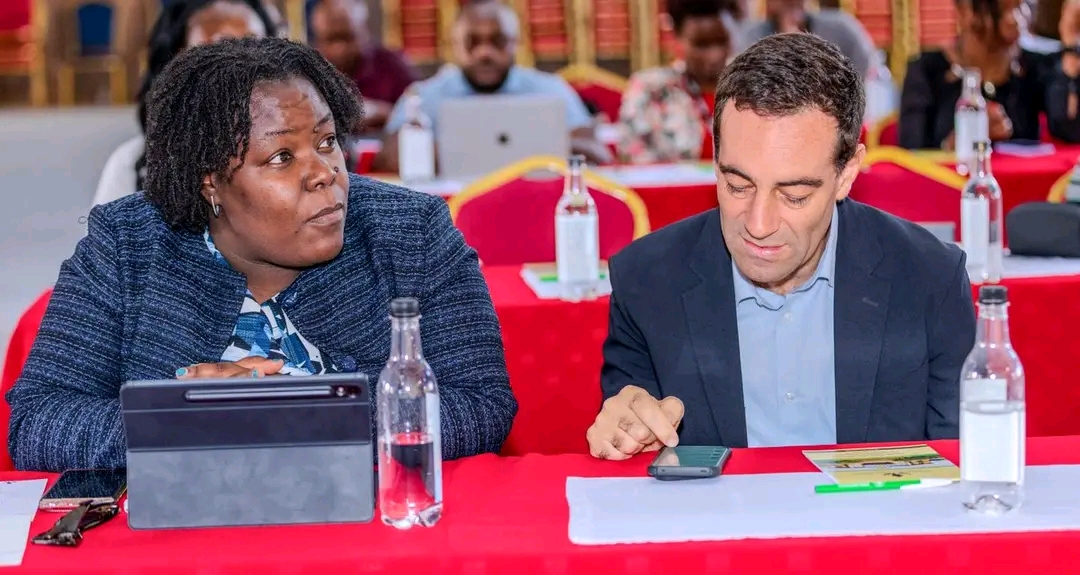
Molocyce Esther – Senior ICT Officer, Partnerships at Ministry of Information, Communications and The Digital Economy and Adam Lane, Policy and Partnerships Lead at Huawei Kenya.
Nairobi, Kenya, April 2026 — Kenya is set to officially launch an Artificial Intelligence (AI) for Disability Project aimed at expanding economic opportunities and digital inclusion for young persons with disabilities. The initiative will be unveiled on April 28 at the Kenya Institute for Special Education (KISE) in Kasarani, following a pre-launch media tour that showcased its potential impact.
Driving Inclusive Innovation Through Technology
Speaking during the media briefing, KISE Director Dr. Norman Kiogora said the initiative reflects a growing commitment to ensuring persons with disabilities are not left behind in the digital era.
He noted that access to education, assistive technologies and economic opportunities remains limited for many, emphasizing the need for technology that responds to real-life challenges and fosters meaningful inclusion.
Dr. Kiogora revealed that the project builds on an AI Hackathon held in 2024 in partnership with global and local stakeholders, where young innovators developed solutions tailored to persons with disabilities. These ideas are now being scaled into a fully resourced programme.
He also highlighted KISE’s efforts to strengthen local capacity in designing and producing assistive devices using AI and advanced manufacturing technologies, describing a government-supported facility at the institute as a “game changer” in making devices affordable and accessible.
At the same time, he raised concern over the rising number of disability cases in Kenya, particularly autism, noting that KISE has initiated research to better understand the trend. He stressed that while technology simplifies life for many, for persons with disabilities, it makes everyday activities possible, adding that AI has the potential to transform lives if responsibly implemented.
Government Backs AI for Inclusion
Molocyce Esther, Senior ICT Officer for Partnerships at the Ministry of Information, Communications and the Digital Economy, described AI as a powerful driver of inclusivity.
She said the project is both timely and long overdue, noting that Kenya needs more innovation-driven programmes that address social challenges. She emphasized that inclusion cannot be achieved without placing persons with disabilities at the centre of technological advancement.

According to her, AI is shifting systems from being reactive to predictive, enabling solutions that can anticipate and respond to users’ needs. She pointed to emerging possibilities such as intelligent mobility tools and advanced assistive technologies for the visually impaired, describing AI as a potential “game changer” in disability support.
Private Sector and Partners Step In
Adam Lane, Policy and Partnerships Lead at Huawei underscored that disability inclusion is a mainstream societal issue affecting millions of people.
He said the initiative builds on earlier collaborations with KISE, where innovators were challenged to develop practical solutions for learners, teachers and caregivers. The next phase, he explained, will focus on scaling these innovations, supporting more developers and creating job opportunities for persons with disabilities.
Lane highlighted AI’s ability to enable customized, user-specific solutions, noting that advances in technology have made it easier and more affordable to develop adaptive tools. He added that local talent in Kenya has the potential to create impactful solutions not only for the country but across the region.
Focus on Local Solutions and Accessibility
Shikoh Gitau, CEO and Founder of Qhala and a technical partner in the project, emphasized that assistive technology is essential for independence and dignity.
She said the initiative leverages local ideas and resources to improve existing technologies, such as enhancing wheelchairs, adapting transport systems, and making everyday tools more accessible.
Gitau noted that collaboration among partners including technology firms, disability experts and innovation hubs will ensure solutions move beyond hackathons to real-world testing, market access and widespread adoption.
Advancing Digital Inclusion Nationwide
George Siso of inABLE said the programme marks a shift from policy to practical implementation of inclusive innovation.
He referenced existing ICT accessibility standards and welcomed the establishment of a production facility at KISE, which he said will accelerate the development of accessible devices.
Siso also highlighted ongoing efforts to extend digital inclusion beyond urban centres through partnerships with schools, digital hubs and community programmes targeting youth with disabilities in rural areas. He said such initiatives are critical in ensuring equal access to opportunities and participation in the digital economy.
A Collaborative Path Forward
Stakeholders at the briefing agreed that the success of the AI for Disability Project will depend on strong collaboration between government, private sector players and the disability ecosystem.
As Kenya prepares for the official launch, the initiative is being positioned as a model for inclusive innovation one that harnesses AI to unlock education, employment and entrepreneurship opportunities for persons with disabilities while promoting dignity, independence and equal participation in society.