
Kenya, Uganda and South Sudan Commit to Fast-Track East Africa Rail Corridor
Nairobi, November 7, 2025 — Kenya, Uganda, and South Sudan have renewed their commitment to strengthen regional integration and trade through the fast-tracking of the East Africa Rail Corridor and also to speed up the extension of the Standard Gauge Railway (SGR) across the Northern Corridor, a multibillion-shilling project designed to enhance cross-border connectivity and reduce the cost of transport within the region.
The meeting, organized by Kenya Railways on behalf of the Ministry of Roads and Transport, aimed at aligning national priorities and ensuring synchronized implementation of the railway infrastructure across the three countries.
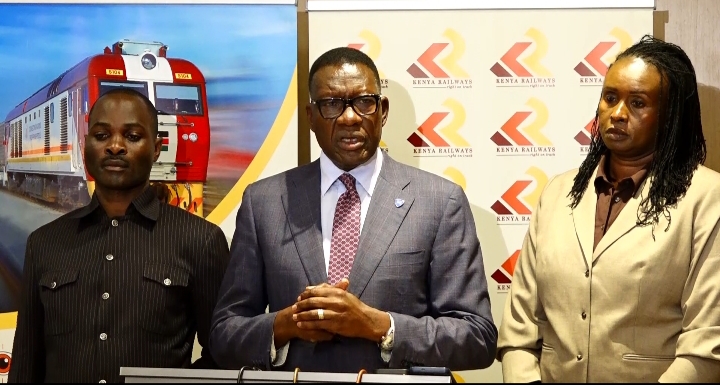
Speaking during a press briefing at a ministerial kick-off meeting in Nairobi on Friday, Cabinet Secretary (CS) for Roads and Transport Davis Chirchir hosted his counterparts, Uganda’s State Minister for Transport Fred Byamukama, and senior South Sudanese officials Anne Achol for joint technical and financing consultations on the progress of the project.
Chirchir emphasized that Kenya remains committed to completing the Standard Gauge Railway (SGR) from Mombasa to Malaba, with construction already advancing on the 262-kilometre Naivasha–Kisumu section and an additional 107 kilometres to Malaba. He underscored the need for regional coordination, noting that disjointed rail networks would undermine the efficiency and optimization of the corridor.
“This is not just a national project but a regional one,” Chirchir said. “We are working closely with Uganda and South Sudan to ensure our timelines align. Kenya has already secured a two percent development fund to support the investment and is in talks with development partners to close the remaining financial gaps.”
The CS added that the corridor will not only reduce pressure on roads and lower accident rates but also cut carbon emissions by shifting bulk cargo transport from roads to rail. He revealed that Kenya recently recorded its highest-ever cargo volume moved by rail over 640 million tonnes in a single month signaling growing confidence in rail transport efficiency.
Chirchir also highlighted provisions in the draft Railways Bill that will allow private operators to run locomotives on SGR tracks.
“Railway can own the infrastructure, and you can then really come in with your locomotive and run your locomotive on the railway, and pay a toll to the in
He said the region is also pursuing greener transport options. “We can run our economy using wind, solar and geothermal,” he said.
Chirchir added that once financing talks are completed, construction of the Naivasha–Kisumu (2D) and Kisumu–Malaba (2C) sections will begin immediately. “The sooner we agree with the lenders, we should be able to break ground and start the construction of the 2D and the 2C section,” he said.
Uganda’s Minister of Transport Fred Byamukama echoed the need for accelerated development, highlighting that reliable rail transport will drastically reduce the cost of doing business. “We spend heavily on road repairs because of overloaded trucks. With an efficient railway from Mombasa through Nairobi and Naivasha to Juba, we will ease road congestion and lower transport costs,” he said.
Byamukama noted that the project would transform regional trade,create a more efficient and affordable transport corridor allowing goods to move seamlessly from Kenya’s port of Mombasa through Uganda to South Sudan and into the Democratic Republic of Congo (DRC).
“All these commodities, we can give them to our people cheaply, if the cost of transportation is reduced,” he said. “At the end of the day, this one will come true, and once it comes true, the economic status of the three countries will not remain the same.” he said.
The ministers affirmed that their commitment to expedite technical consultations and commence groundwork as soon as financing frameworks are finalized.