
Kenya Holds First-Ever Numeracy Workshop to Address Learning Challenges
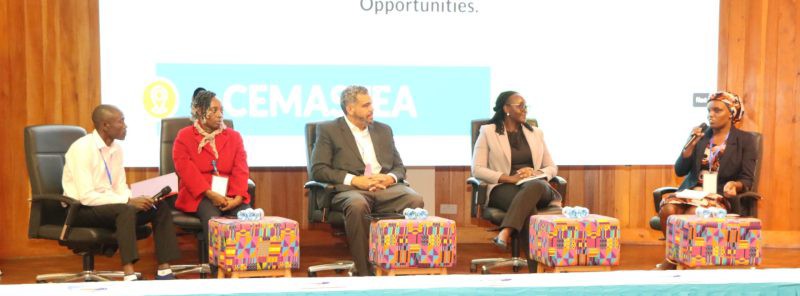
Virginia Ngindiru, Director of Innovations at Zizi Afrique Foundation (1st right) with education stakeholders during a panel discussion.
Kenya has taken a major step toward improving foundational numeracy skills with its first-ever Numeracy Co-Creation Workshop, hosted by the Centre for Mathematics, Science and Technology Education in Africa (CEMASTEA) in collaboration with the Zizi Afrique Foundation aiming to to address low numeracy performance in lower primary grades.
The event themed Foundational Numeracy in Kenya:Status , Challenges and Opportunities has brought together key education stakeholders including policymakers, educators, development partners, researchers and civil society organizations to address the challenges in education sector.
Participants engaged in discussions to analyze common learning errors and develop actionable strategies to enhance mathematics instruction in Kenya.Key Findings on Numeracy Performance.
A recent assessment in Bungoma County, covering 405 learners across five schools, highlighted critical gaps in foundational mathematics skills. The study revealed that:Only 3 percent of learners correctly solved all six addition and subtraction tasks.17 percent mastered addition, while only 7 percent excelled in subtraction, indicating that subtraction poses a greater challenge.Girls outperformed boys, with 5 percent of girls solving all tasks correctly compared to only 2 percent of boys.Girls primarily struggled with procedural and conceptual errors, while boys exhibited more factual errors, especially in Grade 3, suggesting differences in knowledge retention and application.
These insights challenge the long-standing myth that girls perform better in humanities but struggle with mathematics.A Call for Teacher Training and Differentiated Learning
Speaking at the event, Dr. John Mugo, Executive Director at Zizi Afrique Foundation, emphasized the importance of foundational numeracy in shaping students’ long-term academic success.
“By working together with teachers, policymakers and education partners, we can identify the most common errors learners make and create practical solutions to support them,” Dr. Mugo stated.
A major recommendation from the workshop was the need for targeted teacher training in error analysis a diagnostic approach that helps teachers understand how students think and tailor instruction accordingly.
This learner-centered approach enables educators to provide individualized support, addressing specific learning gaps.Already, 12 teachers, five school heads, and five curriculum support officers in Bungoma West Sub-County have undergone training in error analysis, equipping them with better tools for effective numeracy instruction.
A Collaborative Effort for the Future CEMASTEA and Zizi Afrique Foundation reaffirmed their commitment to enhancing quality education by fostering dialogue, research and teacher capacity-building. They called on stakeholders to support early mathematics education, noting that strengthening numeracy today is key to empowering future scientists, engineers, and innovators.
Centre for Mathematics, Science and Technology Education in Africa (CEMASTEA)is a semi-autonomous government agency under Kenya’s Ministry of Education that enhances Mathematics and Science education through teacher training. Established in 2003, it serves as a regional hub for STEM education, supporting curriculum development, ICT integration and research-driven teaching practices.
Zizi Afrique Foundation (ZAF) is a nonprofit organization dedicated to improving learning outcomes for children and youth. Since 2018, ZAF has been at the forefront of evidence-based education reforms, working closely with the government and education stakeholders to strengthen foundational literacy and numeracy skills across Kenya.
Making her remarks,Virginia Ngindiru, Director of Innovations at Zizi Afrique Foundation, emphasized the importance of foundational skills for all children in Kenya.
“We look at ensuring that children are well prepared for learning. We generate evidence, translate it into practice, and work with partners to explore innovative ways to improve learning outcomes,” she noted.
Ngindiru highlighted significant gaps in numeracy skills, revealing that a large proportion of students are progressing through the education system without mastering basic math concepts.
“The data shows that even by Grade 6, many children have not acquired foundational numeracy skills. At Grade 3, over half of the learners still struggle with basic arithmetic,” she stated.
According to her, ineffective teaching methodologies contribute to the problem, with many classrooms failing to make math engaging or applicable to real-life situations.
She stressed the need for evidence-driven pedagogical improvements and better use of learning resources.
The discussion also explored classroom practices and the need for a more hands-on, practical approach to teaching mathematics.
“Learning is still not practical enough. We know that children first grasp concepts by manipulating concrete objects before transitioning to abstract reasoning. However, there is low uptake of teaching and learning resources, and many teachers continue using outdated methods,” Gindiru observed.
She also pointed to the role of parents in supporting learning at home, adding that many feel ill-equipped to help their children due to a lack of understanding of the curriculum.
“Schools need to make parent meetings more meaningful, moving beyond grades to helping parents understand what the curriculum expects of their children,” she urged.
One of the pressing concerns raised at the forum was the gender disparity in mathematics performance at higher education levels.
Dr.Emmanuel Manyasa, Executive Director Usawa Agenda attributed this to systemic biases within schools.
“I had a teacher in Form One who told us that math is not for everyone. That kind of messaging impacts how students, particularly girls, perceive their abilities,” he recounted.
Kimeu pointed out that while boys and girls perform similarly at lower grades, disparities emerge as they advance in their education.
“At KCSE, boys dominate in over 20 subjects, all of which are math-oriented. This indicates that something in the school system discourages girls from pursuing STEM subjects,” he explained.
Manyasa stressed the need for deliberate investments in STEM education, including teacher training, parental engagement, and a shift in mindset towards math learning.
“If Kenya is to meet its commitment of having 60 Percent of students transition to STEM fields, we must address these issues. We need to equip teachers, change conversations at home, and ensure math education aligns with the national vision,” he asserted.
The forum also drew lessons from international best practices, with Manyasa referencing a visit to Sobral, Brazil, a municipality that successfully transformed its education system.
“Sobral achieved success by prioritizing school leadership and creating a supportive environment for teachers. If school leadership is strong, teachers align with that vision, and students benefit,” he noted.
He also emphasized the importance of addressing teacher workloads, stating that large class sizes hinder effective instruction and limit personalized learning experiences.