
Kenya at center of regional civic space decline, new report warns
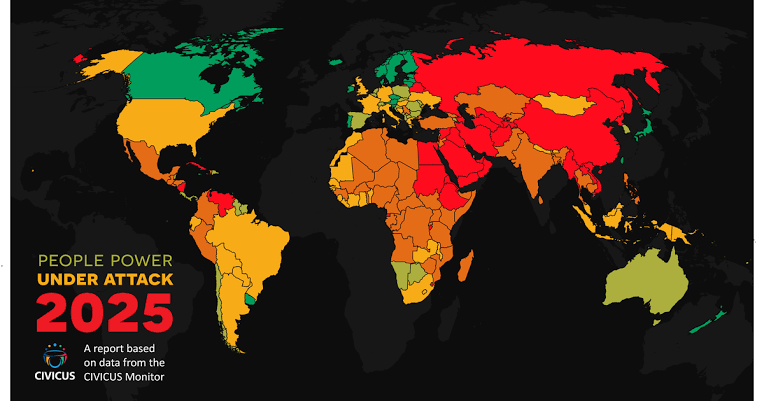
Kenya’s civic freedoms continued to deteriorate this year as new findings placed the country among Africa’s most restrictive environments for journalists, activists and protest movements, according to the People Power Under Attack 2025 report released Tuesday, Dec. 9, 2025.
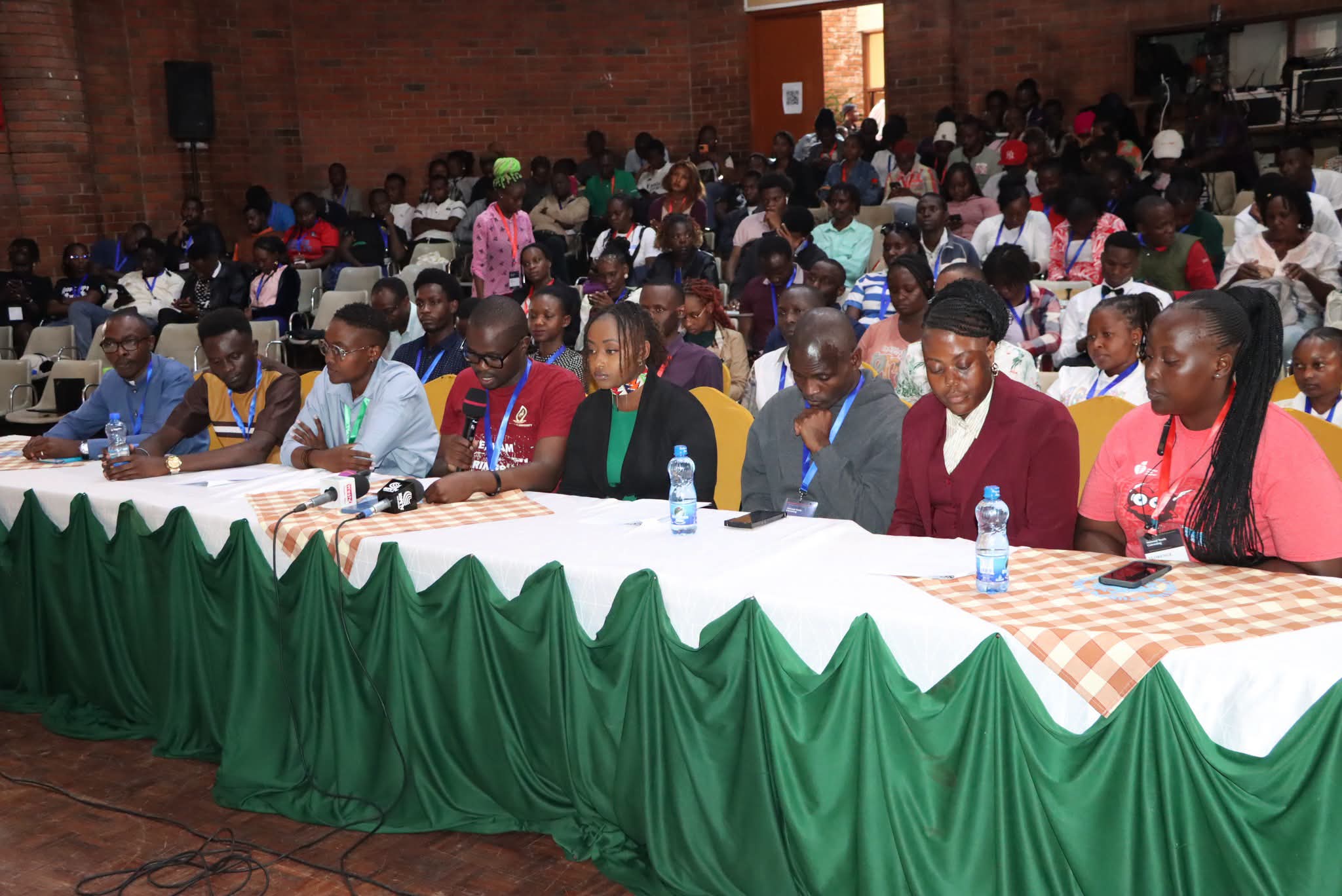
The assessment, launched at the Mercure Hotel in Nairobi, shows Kenya slipping from “obstructed” to “repressed,” marking one of the steepest declines in East Africa. The report links Kenya’s downgrade to protest-related killings, mass evictions, police crackdowns and the criminalization of dissent.
Speaking at the launch, People’s Liberation Party Chairperson Martha Karua said the state of Kenya’s civic space reflects an “intentional” pattern of ignoring constitutional and international obligations. She told attendees that civic freedom is “the air democracy breathes” and warned that Kenya is “dangerously close” to losing the protections that allow citizens to participate without fear.
“And they were the original members of the East African Union, which has now gone to eight states. The others are in a worse state, even a similar state,” stated Karua.
“So it’s in a context where our governments are deliberately ignoring domestic, municipal, and international law in dealing with citizens. So this is intentional, not anything accidental. What is the meaning of civic freedom today? Civic freedom is not an abstract concept,” she added.
Karua pointed to a series of recent incidents, including mass demolitions in Nairobi that left more than 40,000 families homeless despite a court order, and the deaths of three people in Kakamega during a land dispute tied to mineral extraction. She said such actions demonstrate a growing disregard for consultation, compensation and public accountability.
The report also documents at least 65 deaths, hundreds of injuries and more than 1,500 arrests during Kenya’s June–July protests led largely by youth. Researchers highlight allegations of torture, sexual violence and enforced disappearances linked to security operations.
East Africa shows similar backslide
Civic space across East Africa continues to narrow, with Tanzania, Uganda and Somalia recording significant violations, the report says.
Karua noted that Tanzania recently restricted demonstrations ahead of elections, while Ugandan security forces violently disrupted opposition rallies and targeted activists. Somalia led the region in detaining journalists, with 70 arrests recorded this year.
She said the region is witnessing a “normalization of repression,” where actions that once triggered international outrage—such as mass killings, censorship and arbitrary arrests—now receive delayed or muted responses.
Global analysis shows rising repression
Findings from 198 countries indicate widespread deterioration in civic rights:
83 countries are rated repressed or closed.
31% of the world’s population lives under fully closed civic space.
Violations of freedom of expression were reported in 95 countries.
Arrests of protesters occurred in 82 countries.
Journalists were detained in 73 countries.
66 countries introduced or debated restrictive laws, many affecting digital rights.
CIVICUS official Sylvia Batatu said Kenya’s downgrade reflects increased pressure on civil society, the media and human rights defenders. She noted that even long-established democracies are now showing signs of civic space decline, raising concerns about global oversight and accountability.
“Key to note, Kenya was downgraded last year. In the 2024 December report, we used to be obstructed, and now we are a repressed country. And a repressed country is a second worst rating a country can have, and it means civil society organizations, journalists, and activists are heavily under a lot of repression from the state,” she said.
Batatu added that annual ratings shift based on performance, meaning countries previously considered “open” can quickly fall if rights are restricted.
A continent at a crossroads
Karua said African governments are reshaping repression as a form of “governance,” using surveillance, censorship, protest bans and intimidation as policy tools. She warned that when civic space shrinks, corruption and impunity grow while public trust collapses.
She called on civil society to resist authoritarian drift and to “renew its energy” to defend democratic space across the continent.
“It is the air that democracy breathes. It is the oxygen of national dignity. It is the difference between the people who live as citizens and the people who survive as subjects,” Karua emphasized.