
Government calls for stronger public-private partnerships to boost agricultural financing

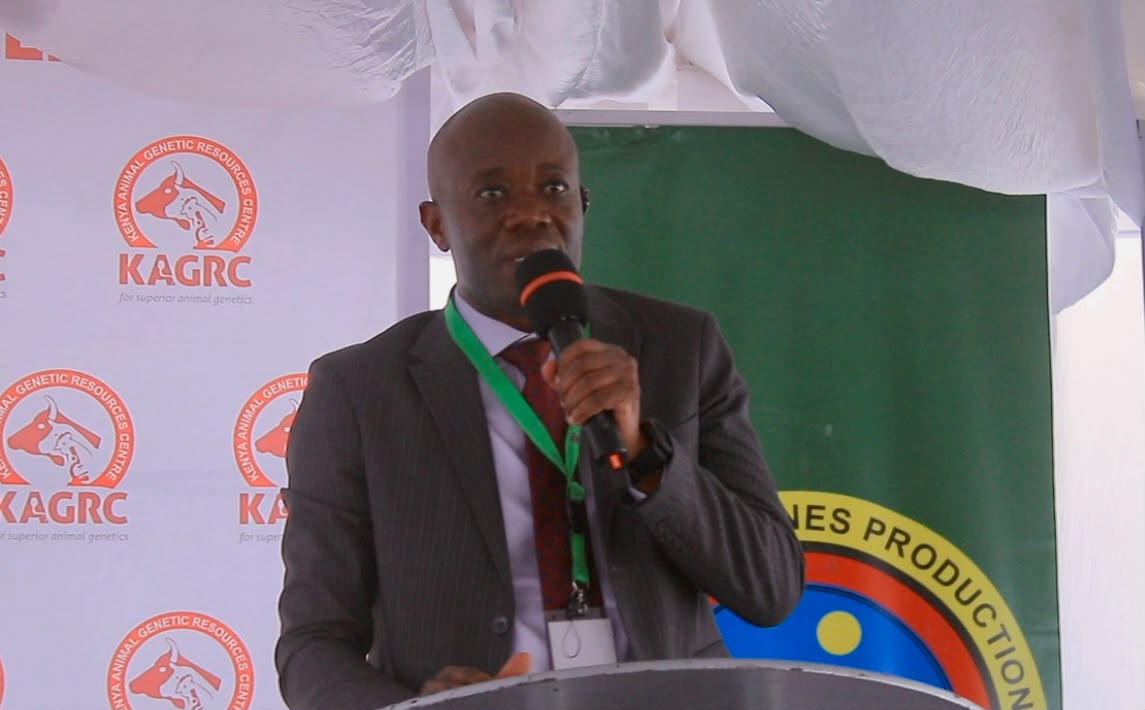
Principal Secretary for Micro, Small and Medium Enterprises (MSMEs) Development Susan Mangeni speaking during the closing ceremony of the Financing Agri-Food Systems Sustainably (FINAS) 2026 Summit in Nairobi on 2nd July, 2026. Photo/Courtesy
The government has called for stronger collaboration between the public and private sectors to improve access to agricultural financing, saying coordinated efforts are needed to help smallholder farmers and agribusinesses increase productivity, improve incomes and strengthen food security.
Speaking during the closing ceremony of the Financing Agri-Food Systems Sustainably (FINAS) 2026 Summit on behalf of Cabinet Secretary for Cooperatives and MSMEs Development Dr Wycliffe Oparanya, Principal Secretary for Micro, Small and Medium Enterprises (MSMEs) Development Susan Mangeni said unlocking investment in agriculture requires both government and private sector players to work together.
In his statement, CS Oparanya said many smallholder farmers continue to struggle to access affordable credit because conventional lending models often require land titles, formal employment records and extensive credit histories that many farmers do not have.
“We must therefore design agricultural finance around the realities of farming. Financial institutions should recognise alternative forms of security, including produce, buyer contracts, warehouse receipts and group guarantees,” he said.
The summit saw the launch of the Agricultural Finance Technical Working Group, a permanent multi-stakeholder platform expected to coordinate efforts to strengthen agricultural financing and promote greater collaboration between government, financial institutions, development partners and the private sector.
Mangeni challenged stakeholders to ensure the newly launched Agricultural Finance Technical Working Group becomes a joint public-private platform, saying lasting solutions can only be achieved through collaboration.
“We are looking towards a private sector that can talk to us, but not talk at us. For us to achieve that, it means we have to work together from ideation to programming, implementation and even developing the results,” she said.
She said agriculture should be viewed as an enterprise that generates wealth rather than simply producing food, arguing that every harvest should translate into money in farmers’ pockets.
“When I see a farmer who’s doing maize or a livestock keeper, for me I’m just counting money. Whatever I see outside there translates into money. In the food system is where we have our industries, where we have jobs and where we have livelihoods,” she said.
Mangeni said many farmers continue to work hard without earning enough to sustain their livelihoods, recalling the experience of an elderly farmer who celebrated a bumper harvest but still lacked sufficient income to comfortably prepare for the next planting season.
“This is the tragedy that most of our smallholder farmers go through. There is that aspect of liquidity. Now you need cash out of it,” she said.
Additionally CS Oparanya said agricultural financing should go beyond issuing loans by integrating insurance, extension services, financial literacy and reliable markets to help farmers increase productivity and incomes instead of falling deeper into debt.
He also said cooperatives and Savings and Credit Cooperative Organisations (SACCOs) remain critical in expanding financial inclusion by mobilising savings, providing affordable credit and strengthening farmers’ bargaining power through aggregation.
The government is also implementing reforms to strengthen governance, improve regulation and enhance oversight in the cooperative movement to safeguard members’ savings and restore confidence in the sector, he said.
Over the three days, delegates from governments, financial institutions, development partners, research institutions, cooperatives and the private sector discussed climate-smart financing, agricultural insurance, alternative collateral, credit information sharing and other innovative financing models aimed at expanding access to affordable credit for farmers across Africa.
Mangeni urged stakeholders to ensure the commitments made during the summit are translated into action, saying stronger partnerships will be key to building a more resilient, inclusive and sustainable agricultural financing ecosystem.