
Emergency Medicine Kenya Foundation launch an App Aimed to Cut Emergency Response Time
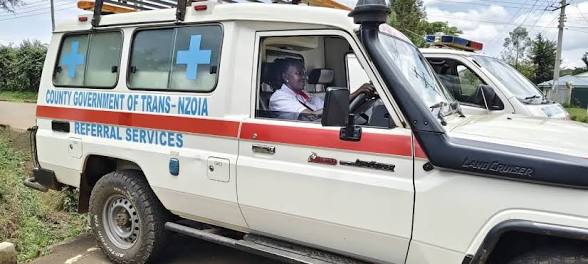
The Emergency Medicine Kenya Foundation has launched a new digital application designed to connect ambulance services across Kenya’s counties, to significantly reduce the time it takes for patients to receive emergency medical care.
The Ambulensi App, links county ambulance fleets to a coordinated dispatch system that can track vehicles in real time and direct the nearest available ambulance to a patient during an emergency.
During the launch, health leaders said the platform could transform pre-hospital care in Kenya, where emergency response systems have historically been fragmented and not well coordinated.
The system has already been tested in 12 counties and is now set to be integrated into the national dispatch centre, allowing counties to coordinate ambulance services more efficiently and respond faster to emergencies.
Speaking at the conference, Andrew Toro, Director of Curative and Nursing Services at the Ministry of Health Kenya, emphasized the importance of strengthening coordinated emergency medical services to save lives.
“Every day, thousands of Kenyans face life-threatening emergencies, from road traffic injuries to obstetric complications and acute medical conditions. Strengthening emergency medical services is not just about increasing the number of ambulances; it is about building systems that connect communities, ambulances, and hospitals to deliver timely, lifesaving care,” he said.
Dr. Toro added that stronger emergency care systems require collaboration across sectors. “Strengthening emergency healthcare systems cannot be achieved by the government alone. It requires strong partnerships between national and county governments, healthcare professionals, training institutions, the private sector, and development partners,” he said.
Dr. Gregorry Ganda, Kisumu County Executive Committee Member for Medical Services, said the initiative is part of a broader effort to strengthen pre-hospital care an area he says has long been overlooked.
“Pre-hospital care has been an ignored part of this country. We have always thought that care starts in the hospital,” he said. “But care should begin from the place where the emergency occurs and continue in the ambulance until the patient reaches the hospital.” he added
In Kisumu, the county has already established an Emergency Operations Centre that manages ambulance dispatch and public health emergencies from a central command point. The county currently operates a fleet of ambulances stationed across sub-counties.
Even with those systems in place, reaching patients in remote areas can still take time.
“For very far-flung places, the response time can go up to 90 minutes from the time a call is made to when the patient reaches hospital,” Dr. Ganda explained.
Health officials believe digital coordination through platforms like the Ambulensi App can help reduce those delays by identifying the nearest available ambulance and directing it immediately to the patient.
County governments are also working to strengthen emergency medical services through policies, improved infrastructure and dedicated budgets.
Joshua Jara, County Executive Committee Member for Health in Tana River County, said partnerships with emergency medicine organizations have helped counties rethink how ambulance services are structured.
“They have assisted us in setting standards and policies that guide emergency medical services,” he said, noting that counties are increasingly prioritizing emergency response systems.
Also speaking, Dr. David Ekwan, Chief Officer for Health, said a dispatch centre and toll-free emergency line already help coordinate ambulance response across the county.
“We have a toll-free number that anyone can call, and our staff are able to pick the call and direct the ambulance accordingly,” he said.
According to Emily Nyagaki, Director of Programs and Government Relations at the Emergency Medicine Kenya Foundation, progress is already being made as counties work together to strengthen emergency care systems.
“So far, 12 counties have dispatch centres coordinating pre-hospital services, over 20 counties have developed policies around pre-hospital care, and 32 counties have started including emergency healthcare services in their county budgets,” she said.
Health experts say if adopted across all 47 counties, the Ambulensi App could help create a coordinated national emergency response system, ensuring patients receive faster care and improving survival during medical emergencies.