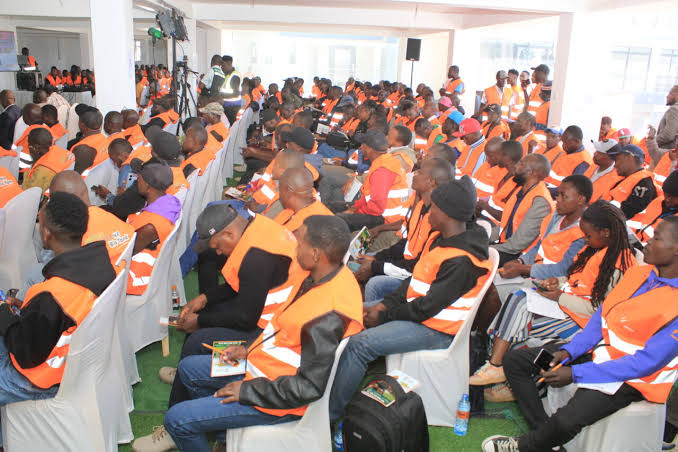

Africa Media Industry Leaders Advocate for Ethical AI Integration in Media Sector
By Sharon Atieno
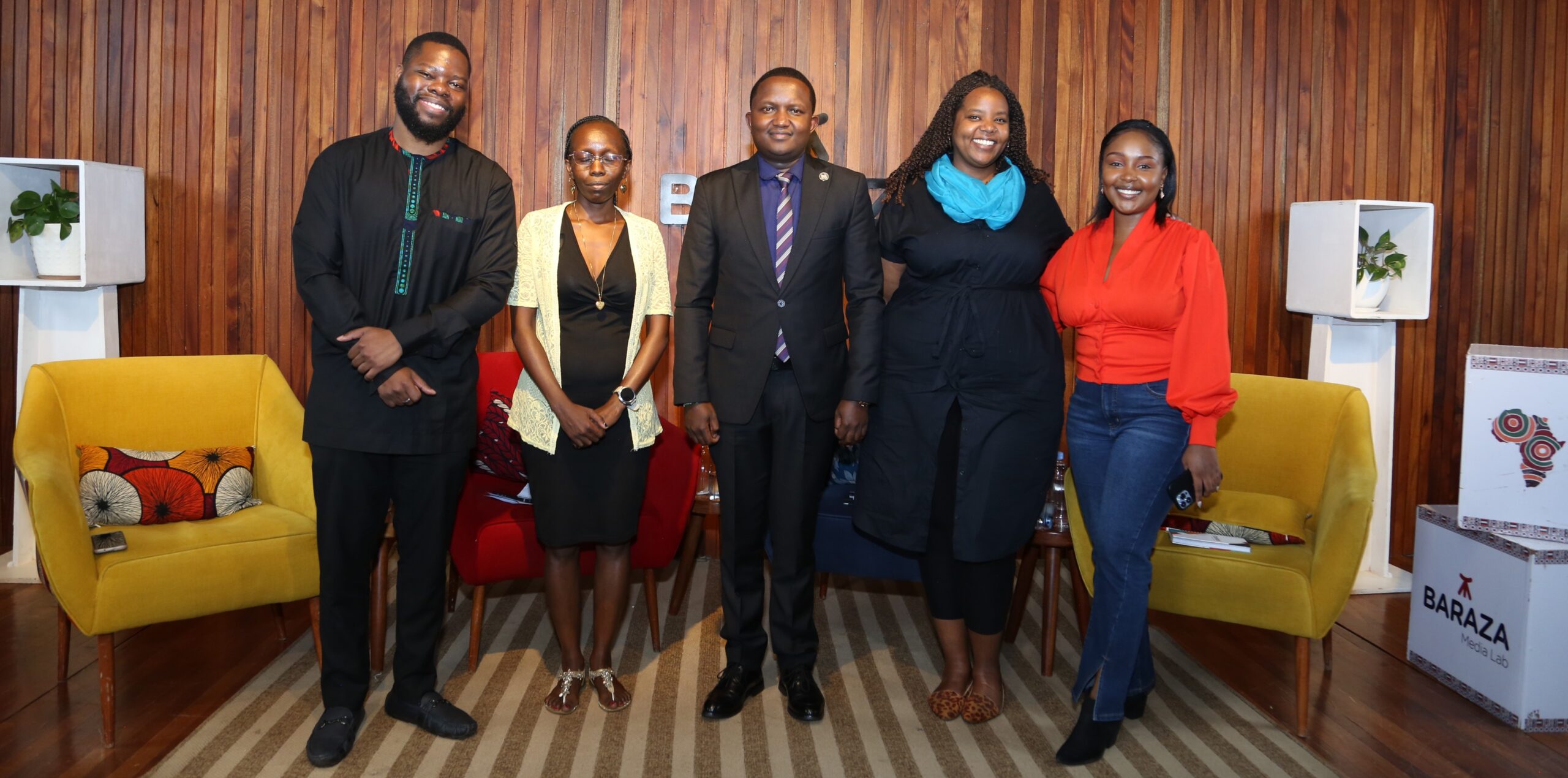
Africa Media Festival, in collaboration with Baraza Media Lab has convened a high-level media roundtable themed Innovation: AI for Sustainable Media Futures with the aim of exploring AI adoption and examining AI’s disruptive impact in the media sector.
This comes after recognizing a shift in Artificial Intelligence (AI) emerging as both a powerful tool and a disruptive force,making Africa’s media landscape to undergo a rapid transformation.
The forum brought together thought leaders, journalists, regulators, and AI experts a platform to discuss on how to exchange insights, showcase best practices, and collaborate on AI-driven solutions.
Participants explored AI’s potential to enhance journalism, optimize content creation, and streamline media operations while upholding ethical standards and regulatory compliance.
Recent studies indicate that over 50 percent of global media organizations have adopted AI tools for content generation, curation, and distribution. In Africa, AI uptake has been slower due to limited access to technology, inadequate training, and regulatory concerns. Despite these challenges, several media houses have begun integrating AI for newsroom automation, audience analytics, and fact-checking.
Baraza Media Lab acknowledged AI’s inevitability in journalism, participants emphasized the need for caution to safeguard editorial integrity.
Speaking during the roundtable at Baraza Media Lab Office, Executive Director, Baraza Media Lab Maurice Otieno underscored the delicate balance required in AI adoption.
“AI is too perfect where do we draw the line? As African journalists, we cannot remain passive, we must actively participate in shaping AI’s role. Reuters research shows that 50 percent of global media organizations use AI tools. We must protect creative and editorial autonomy while adopting AI responsibly through better regulation and training,” he said.
Making his remarks, Head of Partnerships, Africa Digital Media Group, Mukui Mbindyo highlighted Africa’s lag in AI adoption.
“Creativity and human intuition remain crucial, even in an AI-driven media world. Africa lags in AI adoption due to limited exposure, making us consumers rather than creators. Addressing this gap is essential to remain competitive,” he said.
Concurrently, Regional Coordinator, Media Council of Kenya,Karanja Jackson reaffirmed that Artificial Intelligence (AI) is not a threat to journalism but a tool to enhance media practice,emphasizing the importance of AI literacy.
“AI is not replacing journalists; rather, those who understand AI will replace those who do not. The Media Council of Kenya is actively training journalists to combat misinformation and developing ethical AI guidelines.”
He called for regulatory measures to ensure AI-generated content maintains accuracy and accountability.
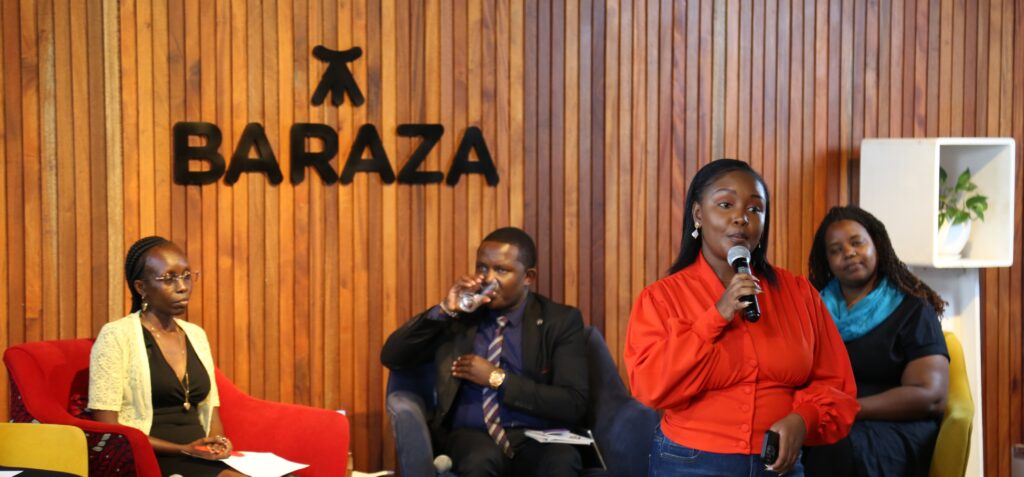
Karanja underscored the need for media practitioners to understand and utilize AI in storytelling, content creation and information dissemination while adhering to journalistic ethics.
“It is upon us as journalists to explore how AI can improve our work while ensuring we remain within the canons of journalism,” he said.
To guide AI adoption in the media, MCK has developed AI guidelines, accessible on its website.
“Journalists must familiarize themselves with these guidelines, particularly on fact-checking, to prevent misinformation,” Jackson advised.
He also cautioned against the misuse of AI, urging journalists to uphold ethical reporting standards.
“Our work should always be guided by impartiality, ensuring accuracy and responsibility in the information we share,” he added.
MCK is conducting sensitization forums to equip journalists with the necessary skills to integrate AI responsibly,hence urging journalist to embrace AI as an enabler of journalism.
From an academic perspective, Lecturer in Broadcast Multimedia Journalism at USIU,Dr Keziah Githinji emphasized the need for education to adapt to AI’s rise.
“It has become easier to detect AI-generated content, but the key question remains, how do we work smartly with AI rather than fear it?,” she questioned.
With AI adoption rising globally, Africa must invest in digital literacy and AI training to ensure media remains innovative and competitive.
The roundtable set the stage for deeper industry collaboration, policy recommendations, and strategic AI integration in media houses.
While AI enhances efficiency, industry leaders stressed that it should complement rather than replace human creativity, fact-checking and editorial oversight. The roundtable discussion at Baraza Media Lab also served as a prelude to the upcoming Africa Media Festival, scheduled for February 26–27 at the National Museums of Kenya.