
SISTARS Project Champions Gender Equity in STEM Leadership Across Africa
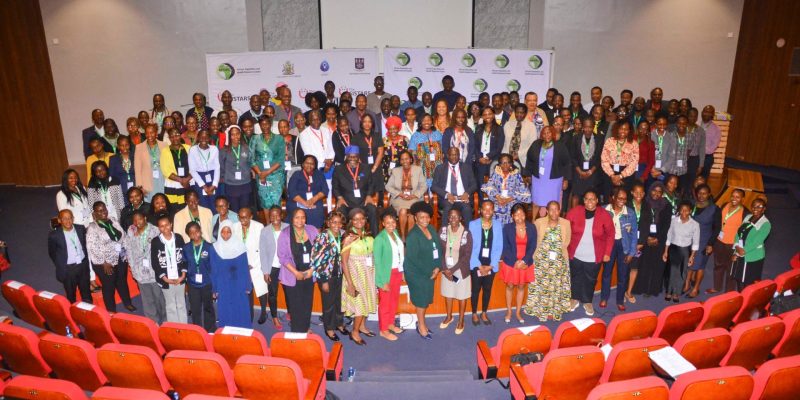
Advancing women’s leadership in science, technology, engineering, and mathematics (STEM) took center stage this week as stakeholders gathered at the University of Nairobi for a high-level dissemination workshop hosted by the SISTARS Project.
The event, held in partnership with the African Population and Health Research Center (APHRC), brought together policymakers, researchers, educators, and development partners to address persistent gender disparities in STEM careers especially within private industry.
With data on gender gaps in STEM in low- and middle-income countries still scarce, the SISTARS Project is working to close knowledge gaps and develop replicable solutions, focusing initially on the water sector. Chosen for its critical importance to public health and sustainability, water provides a strategic lens for understanding broader inequalities in environmental science fields.
Speaking during the event,Dr. Wale Akinyemi stressed the importance of creating environments that foster openness, shared vision, and accountability to improve outcomes for women in science.
Dr. Siphila Mumenya, Dean of Engineering at the University of Nairobi, highlighted that women make up just 30 percent of science professionals in Africa, with most occupying lower-paid academic and public roles. Men, in contrast, dominate leadership positions in the private sector. These disparities are compounded by systemic, societal, and individual-level barriers, from institutional bias and limited access to mentorship to family responsibilities and self-doubt.
Dr. Caroline Kabaria underscored the need for structural change, identifying key obstacles including unequal task allocation, lack of supportive workplace policies, and entrenched stereotypes that discourage women from pursuing or advancing in STEM careers.
Participants issued a strong call to action: academic institutions, governments, and industry players must collaborate to dismantle structural barriers and implement gender-responsive policies. Empowering women in STEM is not just a matter of equity it’s essential to Africa’s sustainable development and innovation.