
The Reality of School Feeding in Kenya Some Children Eat While Others Go Hungry
The Kenyan government’s latest promise to introduce chapati in Nairobi school meals has sparked fresh debate on inequality in the country’s school feeding programs.
While President William Ruto’s announcement of a chapati-making machine might seem like a step forward, it highlights deep disparities in food distribution across the country.
“Why should children in Nairobi be assured of chapati while others in drought-stricken counties struggle to get a basic meal?” posed David Karani, a human rights defender and a member of the Elimu Bora working group. This is not just about food; it’s about fairness and priorities in governance.”

David Karani, a human rights defender and a member of the Elimu Bora working group
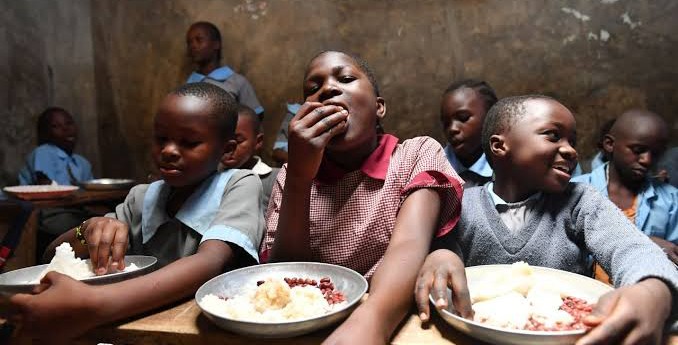
Across Kenya, millions of children in public schools rely on feeding programs for their daily meals. In arid and semi-arid regions, where drought has become more frequent, these programs are inconsistent at best.
Many children go to school on empty stomachs, while others drop out altogether because their families cannot afford food.The situation is equally dire in urban informal settlements like Mathare, where parents depend on the Nairobi County feeding program to ensure their children get at least one meal a day.For them, even a simple plate of maize and beans is a lifeline.
“Some days, the food runs out before all the children eat,” said a teacher from a public school in Mathare, who requested anonymity.
The decision to introduce chapati a more expensive and labor-intensive meal raises pressing questions about the government’s priorities. Why focus on adding a luxury item to Nairobi’s school meals while children in other counties face food insecurity?
Wouldn’t the funds be better spent ensuring a consistent supply of basic meals across the country?Kenya has a history of grand political promises that benefit select groups while ignoring systemic issues.
Experts argue that school feeding programs should not be about political gestures but about ensuring every child, regardless of location, gets a nutritious meal that allows them to focus on learning.If the government can afford to introduce chapati machines in Nairobi schools, critics argue, it should also ensure that no child in Kenya goes hungry.
Investing in equitable school feeding programs would be a more effective way to address the country’s education and nutrition crisis.
“Hunger should never be a barrier to education,” Karani emphasized, adding that long term political announcements are on need.
“We need long-term solutions, not short-term political announcements.”he said.
With millions of children still struggling to access basic nutrition, activists are calling for a nationwide, sustainable feeding program that prioritizes fairness over political showmanship.
By Rose Njeri