
Africa Unveils Zamba Heritage Initiative to Boost Forest Conservation and Climate Action
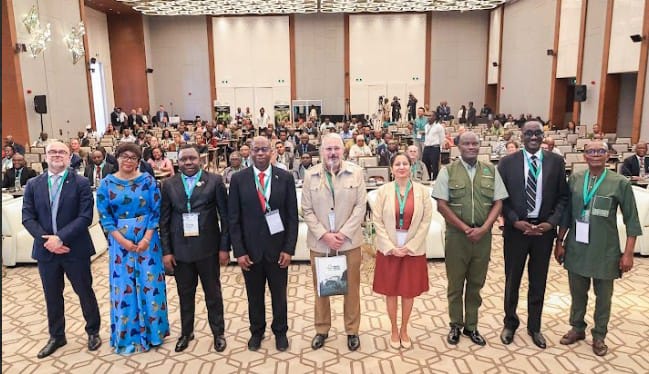
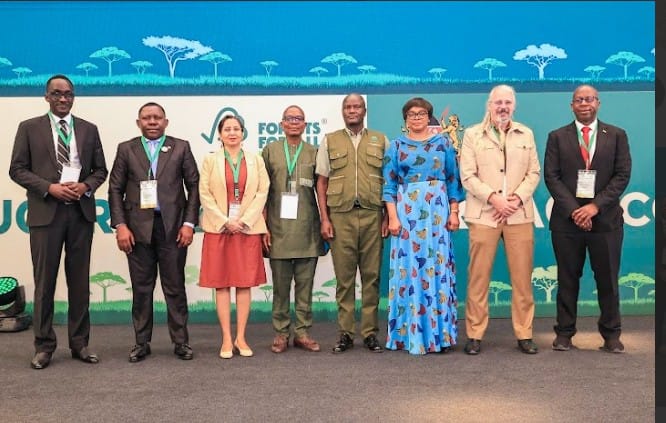
FSC Regional Director for Africa, Dr. Peter Alele ( 2nd right),Dr. Subhra Bhattacharjee (4th right) with other stakeholders poses for the photo during the Zamba Heritage Congress held in Nairobi on Tuesday ,10,February,2026.
Africa has marked a major milestone in its forest and climate agenda as the Inaugural Zamba Heritage Congress officially opened in Nairobi, bringing together governments, conservation leaders, development partners, and private sector actors to chart a new future for the continent’s forests.
The summit, which runs from 10–12 February 2026, is hosted by the Forest Stewardship Council (FSC) Africa in partnership with the Government of Kenya. It comes at a time when Africa’s forests despite their immense ecological, cultural, and economic value continue to face unprecedented pressure from deforestation, land degradation, and climate change, without corresponding gains in economic development.
Africa’s forests, including the Congo Basin tropical rainforests, Afro-montane ecosystems, dry woodlands, and peatlands, are globally significant climate and biodiversity assets. However, the economic potential of these ecosystems remains largely untapped, even as forest cover loss accelerates across much of the continent. These challenges have spurred FSC and its partners to launch the Zámba Heritage Initiative, a collaborative effort designed to unlock sustainable financing and strengthen responsible forest management across Africa.
The initiative is aligned with the United Nations Sustainable Development Goals (SDGs), the African Union’s Agenda 2063, and the African Union Sustainable Forest Management Framework (2020–2030). It is also intended to support Africa’s collective voice in global climate negotiations,by translating high-level commitments into practical, fundable action on the ground. This initiative seeks to bridge the gap between conservation and economic growth by mobilizing new financing and strengthening responsible forest governance across Africa.
Nairobi Hosts Inaugural Zamba Heritage Congress
The initiative was officially unveiled during the Inaugural Zamba Heritage Congress, held in Nairobi from 10–12 February 2026, hosted by FSC Africa in partnership with the Government of Kenya. The Congress brought together policymakers, conservation leaders, development partners, private sector actors, indigenous representatives, and civil society to chart a new path for Africa’s forests.
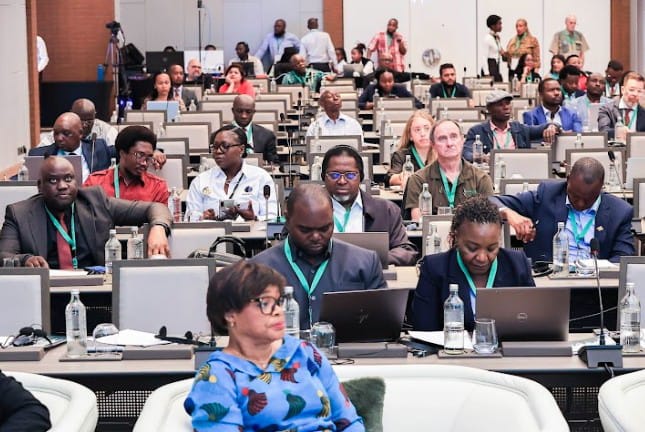
The Congress is positioned as a strategic platform to advance commitments under high-level continental processes, including the African Ministerial Conference on the Environment (AMCEN), Regional Economic Community (REC) protocols, and Africa’s forest management frameworks, while also serving as a fundraising mechanism to support implementation of sustainable forest programmes.
Kenya Highlights Forest Reforms and Certification Efforts
Speaking during the opening session, Alex Lemarkoko, Chief Conservator of Forests at the Kenya Forest Service (KFS), underscored the need for bold and coordinated action in forest governance, noting that forests are central to both national development and global environmental stability.
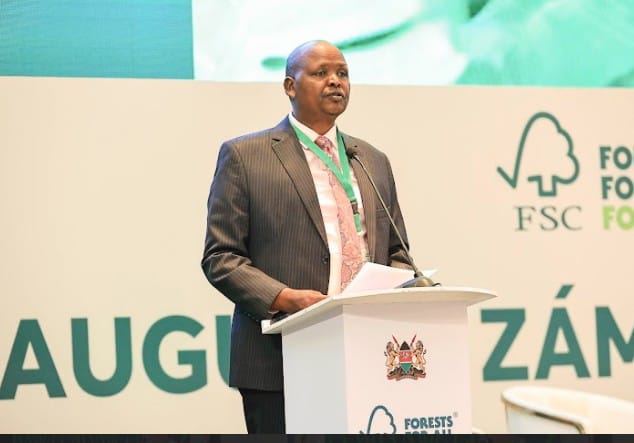
Lemarkoko highlighted Kenya’s ambitious policy agenda to expand forest and tree cover, anchored in the country’s long-term forest landscape restoration commitments. He pointed to reforms aimed at strengthening Chain of Custody (CoC) certification, internal standards, and sustainable timber trade to ensure that forest products entering both domestic and export markets meet international sustainability benchmarks.
He further emphasised Kenya’s investments in institutional capacity, including training forest personnel, piloting certification systems, expanding community access to forest-based markets, and supporting local livelihoods through responsible forest enterprises.
According to Lemarkoko, forest certification is not only an environmental tool but also a market enabler that builds trust, enhances product credibility, and opens access to global value chains while ensuring that benefits reach local communities living in and around forest landscapes.
The conversation on certification, Trade and Sustainable Supply Chains which explored how wood product trade can drive forest management ,strengthen market access and deliver a long term value for forest and people was also highlighted during the Panel discussion.
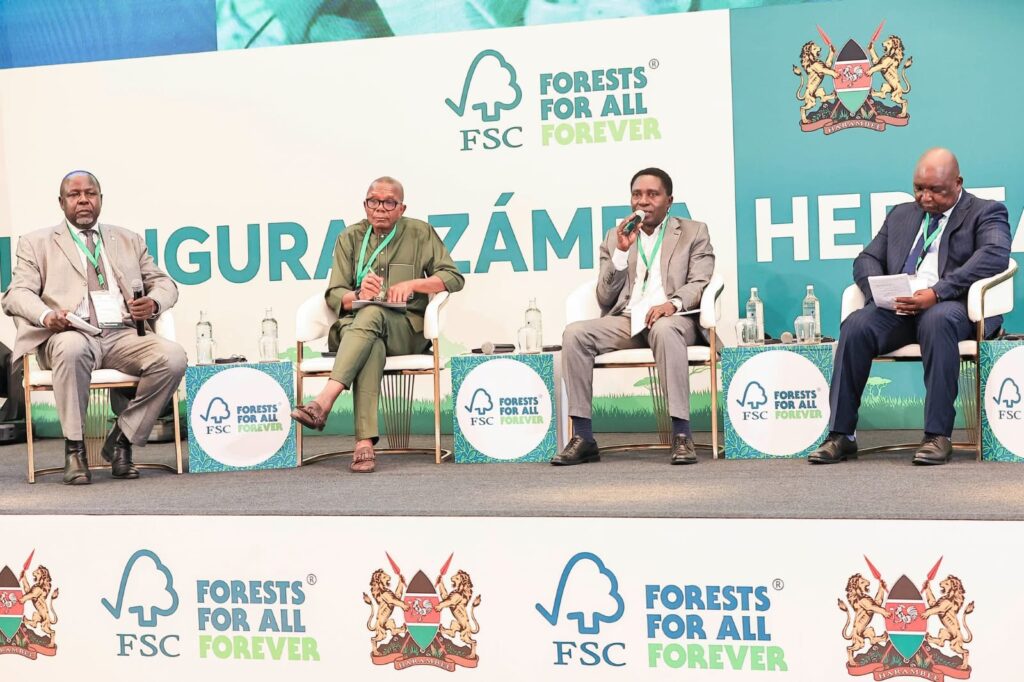
During the discussion the panelist highlighted the critical role of certification which aims to improve traceability, reinforcing sustainability supply chains and positioning African forest products competitively in regional and global markets, among the panelist include; CEO of the African Forests Forum, Edward Mupada, Prof. Labode Popoola and Peter Gondo the panel discussion was being moderated by FSC, Senior Advisor Harrison Ochieng Kojwang.
Forests at the Centre of Development and Climate Stability
Delivering a keynote address, Dr. Subhra Bhattacharjee, Director General of the Forest Stewardship Council (FSC) International -Global Conservation and Forest Leadership, challenged delegates to reflect on a future without forests, warning of the cascading impacts on biodiversity, livelihoods, and human well-being.
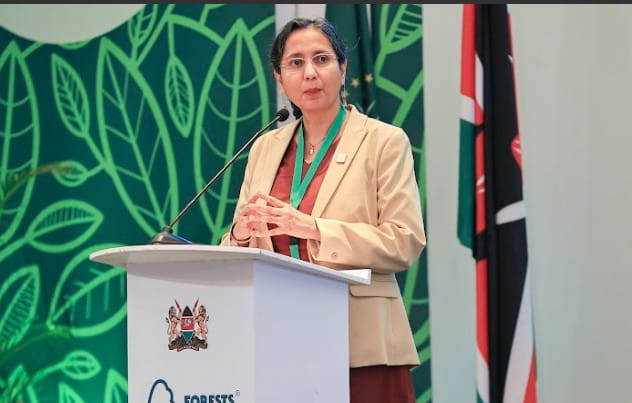
She described the Zamba Heritage Initiative as a response to a convergence of global crises declining official development assistance, rising climate risks, and weakening global solidarity at a time when Africa faces both urgent development needs and increasing pressure to protect forests as a global public good.
“Forests do not exist in isolation,” Dr. Bhattacharjee said, emphasising that sustainable forest management works best when local communities and indigenous peoples are recognised as custodians and partners. She stressed that Africa’s 615 million hectares of forest are not only ecological assets but also economic resources that must work for the 1.6 billion people on the continent.
She called for coordinated action by governments, the private sector, and international partners to ensure that responsible forest management is economically viable for communities, workers, and businesses, while contributing to global climate and biodiversity goals.
Africa-Owned Initiative for Global Impact
Dr. Bhattacharjee affirmed that the Zamba Heritage Initiative is Africa-owned and Africa-led, designed to translate global commitments into tangible benefits on the ground. She noted that the initiative would serve as a delivery vehicle for climate, biodiversity, and rights-based commitments by aligning finance, science, and markets with local realities.
She expressed optimism that the initiative would succeed due to growing demand for sustainable products, strong scientific evidence, committed African governments, and renewed momentum for collective action rooted in the spirit of Ubuntu.
From Rhetoric to Action
Addressing delegates today, FSC Regional Director for Africa, Dr. Peter Alele, described the Congress as a turning point where Africa moves “from dialogue to decisive Action.”
He explained that “Zamba”, meaning forest or untamed wilderness, symbolises both Africa’s natural heritage and its future promise. Dr. Alele announced a 10-year continental commitment to restore five million hectares of degraded land across Africa, positioning forests at the center of climate solutions, economic transformation, and social equity.
He called on political leaders, investors, civil society, and development partners to unite behind innovative financing mechanisms such as results-based finance, debt-for-nature solutions, and private sector partnerships that empower communities and unlock sustainable forest economies.
Over the three-day Congress, participants are expected to co-create the Zamba Nairobi Declaration, a unified African position on sustainable forest management, climate action, and equitable development aimed at influencing global negotiations and investment decisions.
As the Summit commenced today in Nairobi, leaders urged African nations and global partners alike to act with urgency, solidarity, and shared responsibility to safeguard the continent’s forest for current and future generations.
“The time for action is now, and the place is here,” Dr. Alele said, urging African nations to reclaim ownership of their forest narrative and lead restoration efforts that ensure people, nature, and prosperity thrive together.