
From Crisis to Change: How Clean Water Is Uplifting Kenya’s Slum Communities
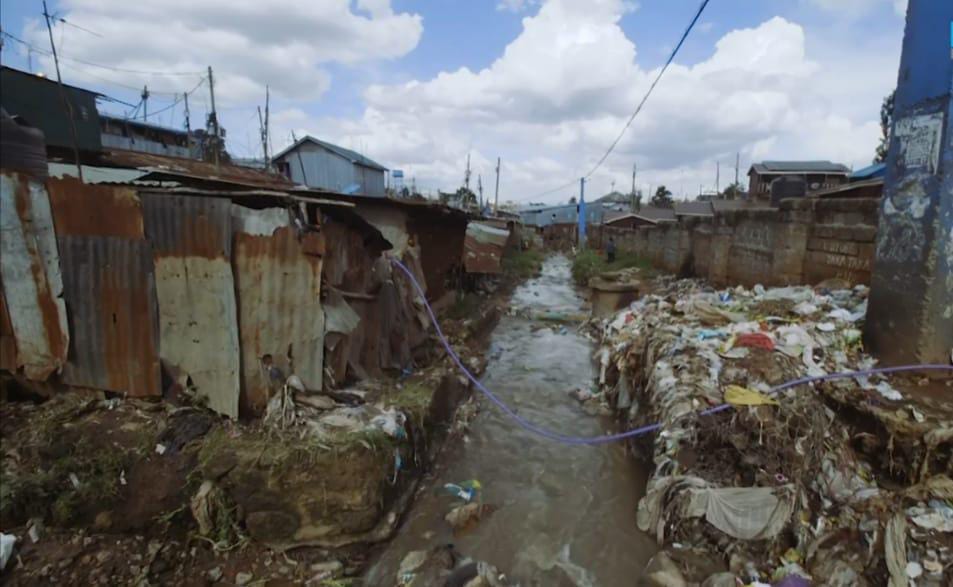
Nairobi, Kenya, November 24, 2025-Grace Akinyi remembers the 5 a.m. queue where hundreds of women stood clutching jerry cans, waiting for water vendors who charged 10 shillings for 20 litres of water that might have come from the polluted Nairobi River, water that had already sent two of her children to the hospital with typhoid.
“We called it liquid gold, sometimes I spent 100 shillings a day on water, that’s more than I spent on food,” says the 34-year-old mother of four.
Today, Akinyi walks 50 metres from her home to a SHOFCO water ATM, where she pays just 50 cents for 20 litres of clean, tested water piped directly from Nairobi’s municipal system. “My children haven’t been sick in two years. I save money, I have time to work, water gives me back my life,” says Akinyi
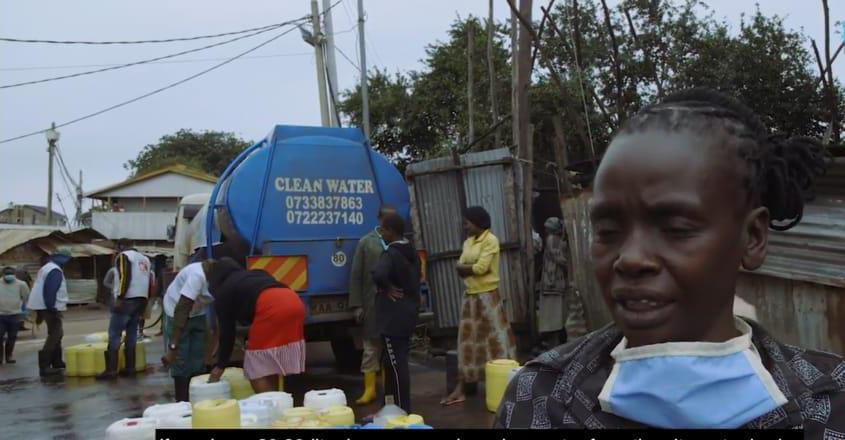
This is the quiet revolution that Shining Hope for Communities (SHOFCO) has engineered across ten informal settlements in Kenya. SHOFCO now provides over 60,000 people with daily access to clean water, dismantling one of urban poverty’s cruelest economic traps in the process.
Kennedy Odede, SHOFCO’s founder who grew up in Kibera remembers the brutal economics all too well. In Kibera, clean water was more expensive per litre than Coca-Cola. Water vendors controlled everything as they bought water cheaply from illegal connections or collected it from the river, then sold it at huge markups to people who had no choice.
The numbers tell a stark story. While Nairobi’s middle-class residents paid about Sh50 per cubic metre of piped water, slum dwellers paid up to Sh10,000 for the same amount from vendors, a 200-fold markup. Families spent up to 30 per cent of their income on water alone.
The health consequences were devastating, waterborne diseases like cholera, typhoid and dysentery ravaged communities with predictable regularity.
In 2012, SHOFCO launched its first water project in Kibera with a premise that seemed radical at the time, slum dwellers deserved the same clean, piped water that flowed freely in Nairobi’s affluent neighborhoods.
SHOFCO negotiated directly with the Nairobi City Water and Sewerage Company to legally extend water lines into the settlements. They built simple Water ATM kiosks , community managed taps where residents could purchase water using mobile money at subsidized rates.
The approach was revolutionary in its simplicity. Rather than treating slum dwellers as charity cases, SHOFCO positioned them as customers deserving of reliable service at fair prices. At SHOFCO’s health clinics in settlements with water access, cholera cases dropped by 87 per cent in the first three years. Dysentery cases fell by 72 per cent. School attendance, particularly for girls previously responsible for water collection, increased by 34 per cent.
“Before, I fetched water at 4 a.m., then went to school tired but now I sleep, wake up, study and go to school. My grades went from C to B+,” says 15-year-old Mercy Atieno from Kibera.
The economic transformation has been equally dramatic. Women like Mary Wambui who operate a salon in Mathare say reliable water has transformed their livelihoods entirely, explaining how she can now open her salon at 7 a.m. and serve clients throughout the day without interruption therefore getting steady water and steady income.
For Wambui, the water ATM meant more than convenience, it meant possibility. Before SHOFCO arrived, she spent half her morning fetching water and the other half explaining to customers why her salon had to close early which made the loss of income and dignity substantial.
Today, SHOFCO operates water systems in ten settlements across Nairobi and its environments, distributing over 100,000 litres daily through 21 water ATM kiosks. The World Bank has taken notice, partnering with SHOFCO in 2023 to replicate the model across East Africa.
Dr Rachel Omondi, a water and sanitation specialist says that what SHOFCO has done is prove that informal settlements can support formal infrastructure as they have shown that the problem was never about whether it’s possible but it was about whether anyone cared enough to try.
The model has attracted attention from governments and development organizations across the continent including Rwanda, Uganda and Tanzania who have all sent delegations to study SHOFCO’s approach in recent years.
According to Engineer Omondi, the formula seems deceptively simple through negotiating legal water access, building simple infrastructure, charging fair prices and involving the community in management but the real innovation lies in treating slum dwellers as customers rather than charity cases.
Despite the success, Odede remains realistic about the scale of the challenge ahead where an estimated 2 million Kenyans live in informal settlements with SHOFCO’s 60,000 beneficiaries representing just 3 percent of that population.
Funding remains challenging with each system costing approximately Sh15 million to install as the political obstacles persist bureaucratic red tape, territorial disputes and resistance from local power brokers who have built empires on water scarcity.
SHOFCO has ambitious plans to reach an additional 40,000 people by 2026, though Odede acknowledges that even this target will barely scratch the surface of Kenya’s water access crisis.
By Rebecca Kibegwa.