

Co-operative Bank Backs KES 1.7 Billion Hydropower Project to Lower Energy Costs for Tea Farmers
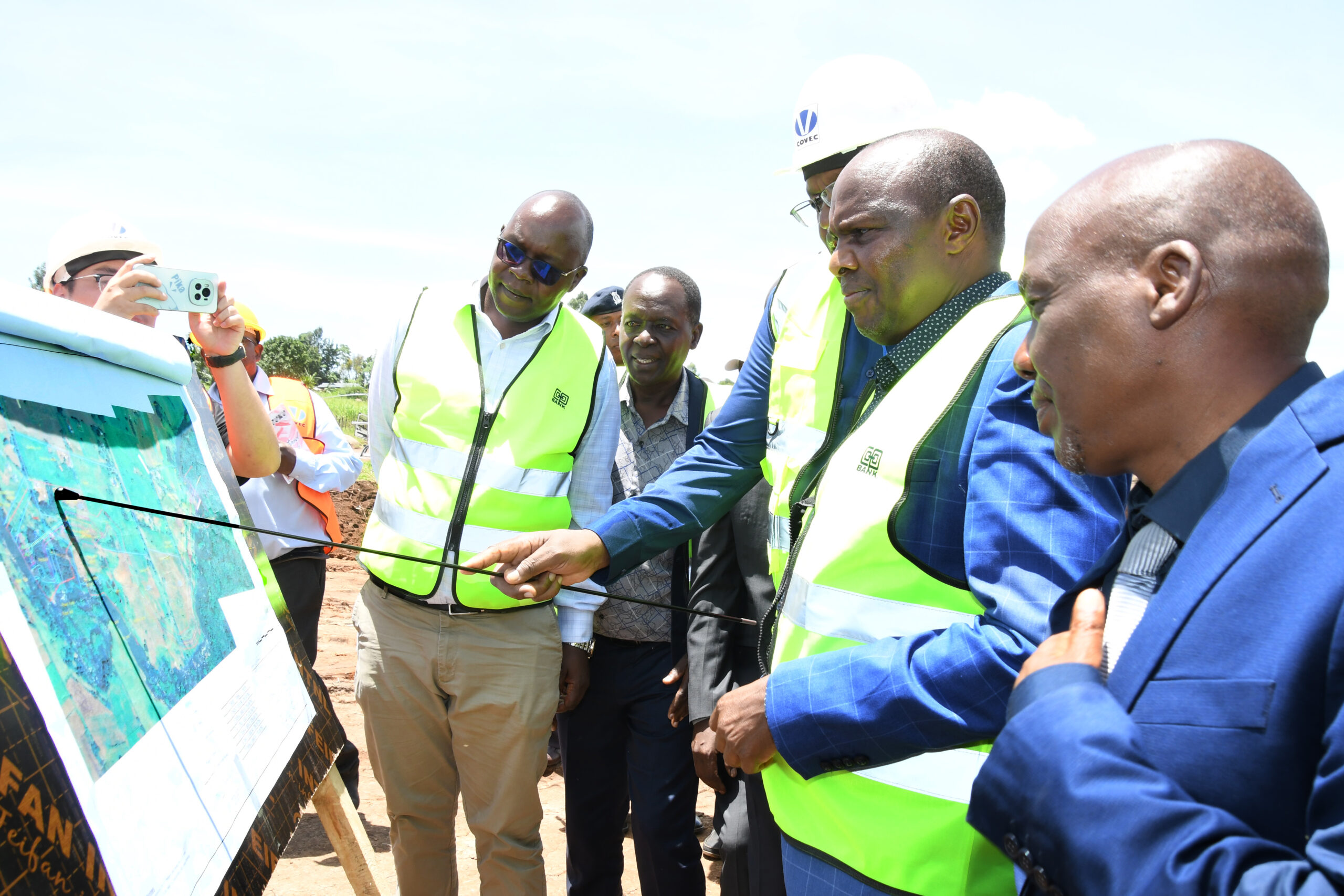
Felix Kosgei, Chief of Staff and Head of Public Service; Jesse Wanjiri, Trade Product Partner, Co-op Bank; Elipha Chebet, Relationship Manager, Co-op Bank; and Robert Kemboi, Chairman, Chebut Tea Factory, during the KTDA and Co-op Bank Taunet hydropower project groundbreaking in Nandi County.
Nairobi, Kenya 14.04.2026 — Co-operative Bank of Kenya is providing financing of KES 967.5 million (approximately US$7.5 million) towards the Taunet Small Hydropower Project that will supply dedicated, renewable electricity to four Kenya Tea Development Authority (KTDA) tea factories in Nandi County. Once commissioned, the 2.8MW run-of-river hydropower plant will provide the factories with a reliable, low-cost alternative to grid electricity, directly reducing the cost of tea processing and improving the competitiveness of Kenya’s export tea sector.
The project is being developed by Chemuka Power Company, a special purpose vehicle (SPV) formed by three KTDA tea factories; Chebut, Kapsara and Mudete, in partnership with KTDA Power Company Limited.
Speaking during the groundbreaking ceremony, Francis Miano KTDA Holdings Ltd Acting Group CEO, Eng, said “Shareholders of Taunet have fully embraced investment in green energy and also initiatives that will improve their returns through energy savings and climatic interventions and this would not have been possible without partnership with other stakeholders. We appreciate the financial support rendered by Co-operative Bank”.
The Taunet investment builds on Co-operative Bank’s existing partnership with KTDA Power Company, having previously advanced over KES 4.77 billion (approximately US$37 million) to finance the Gura, Chania, and Metumi small hydroelectric power plants, three run-of-river projects supplying electricity to tea factories in the Aberdare region. Surplus power from those plants is fed into the national grid under executed Power Purchase Agreements (PPAs) with Kenya Power. The success of that portfolio provides a proven blueprint for the Taunet project and underscores the Bank’s deepening expertise in financing captive renewable energy in Kenya’s agricultural sector.
Olivia Ong’ele, Co-op Bank’s Sector Head-Agribusiness, Manufacturing & Trade sector, noted that the financing reflects the Bank’s continued commitment to supporting climate-resilient infrastructure and strengthening Kenya’s agricultural value chains.
“At Co-operative Bank, we are proud to support projects that create long-term value for communities and industries that drive Kenya’s economy. Our financing of the Taunet Small Hydropower Project reflects our commitment to sustainable development, clean energy, and empowering smallholder farmers who are at the heart of the tea sector.”
Energy costs are one of the most significant overheads in tea processing, and dependence on Kenya’s national grid exposes factories to price volatility and supply disruptions. By generating captive hydropower, the three Chemuka factories are expected to substantially reduce their electricity expenditure, with those savings being passed on through improved farmer payouts. Collectively, the factories serve thousands of smallholder tea farmers across Nandi County, meaning the project’s economic benefits are expected to ripple across rural households in the region.
Beyond cost savings, the shift to renewable hydropower will reduce carbon emissions from tea processing operations, aligning the KTDA factories with Kenya’s national climate commitments and the growing global demand for sustainably produced tea. Run-of-river hydropower projects draw on natural water flow without requiring large reservoirs, making them one of the lowest-impact forms of renewable energy generation.
The Taunet project forms part of KTDA’s broader strategy to expand captive renewable energy capacity across its factory network.
For Co-operative Bank, the Taunet financing deepens its credentials as a leading structured financier of green infrastructure in Kenya. The Bank has increasingly positioned itself as a key enabler of ESG-aligned investments, providing capital to projects that deliver measurable environmental and social outcomes alongside financial returns.
The Chemuka transaction demonstrates the Bank’s ability to structure and deploy financing for complex renewable energy and agricultural value chain projects.