
Large Swathes of England Close to Drought as Hosepipe Bans to Affect Over 20 Million

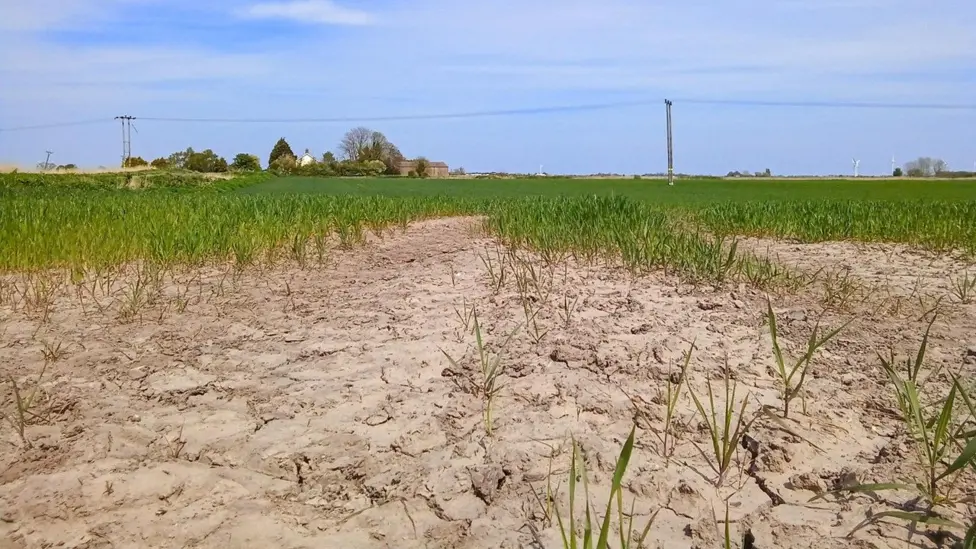
Parts of southern, central and eastern England are now close to drought, the National Drought Group has warned, as prolonged dry weather continues to put pressure on water supplies, agriculture and wildlife.
As of Monday, East Anglia, the West Midlands, Devon, Cornwall and the Isles of Scilly, Lincolnshire and Northamptonshire, Hertfordshire and London, Wessex, Thames, Solent and the South Downs are in “prolonged dry weather” status — the stage immediately before a formal drought declaration.
The assessment was announced on Tuesday by the National Drought Group, which brings together the Environment Agency, the Met Office, the National Farmers’ Union, water companies and other expert bodies.
The warning comes as Thames Water announced a hosepipe ban for all its customers from Thursday, meaning an additional 10.1 million people will be affected. By the end of this week, more than 20 million people across England will be living under hosepipe restrictions. Seven water companies have now implemented or announced bans.
Demand for public water supplies has surged by up to 30 percent on the hottest days in July, according to water companies. A hosepipe can use 1,000 litres of water an hour — more than a family of four uses in a day.
Agriculture and Environment Under Strain
Farmers are reporting significant impacts. Many have been forced to start harvests early, with warnings that cereal yields could be reduced.
“Parts of the country, particularly in the east and south, have seen exceptionally low rainfall this spring and summer,” said Paul Tompkins, deputy president of the National Farmers’ Union. He said farmers and growers are “working around the clock to harvest crops which have come early, keep fruit and vegetables watered, and care for their livestock,” warning of “another difficult and expensive harvest after extreme weather impacts in both 2024 and 2025”.
River flows have fallen sharply. According to the Environment Agency, 87 percent of catchments in England are now at “below normal to exceptionally low levels.” The Rivers Avon in Hampshire, Cam, Derwent in Yorkshire, Swale, Tone, Wye and Yare are all classified as exceptionally low.
National reservoir storage is 5 percent below the long-term average, while groundwater levels, though in seasonal decline, are notably low in the Cotswolds and Wessex Downs.
How Dry Has It Been?
Summer so far has been exceptionally hot and dry, with three widespread heatwaves and the longest run of dry days in central England since 1995. England has received only 3 percent of its long-term average July rainfall, with the south and east seeing no rain at all. Wisley in Surrey has recorded 33 consecutive dry days.
Up to mid-summer — July 15 — parts of eastern and north-eastern England had received just 26 percent of their expected summer rainfall. In Wales, where just 5 percent of July rainfall has fallen, Natural Resources Wales has moved the worst affected regions in the north and south-east into prolonged dry weather status.
Unlike most extreme weather events, drought builds slowly and can last from weeks to years, the Met Office notes. It is caused not only by lack of rainfall but also by high temperatures that evaporate moisture, as well as human factors such as intensive farming and high consumption.
The National Drought Group estimates that by 2055, England will need an additional 5 billion litres of water per day to meet public demand. Water companies are investing in 10 new reservoirs and exploring desalination.
High pressure is expected to dominate for the rest of the week, with no significant rainfall forecast for at least five days. Some coastal showers are possible midweek in south-east England and East Anglia, while weather fronts over the weekend are likely to bring rain mainly to Northern Ireland and Scotland, with little relief for the driest southern and eastern areas.