
Sweden-Backed IMARA Programme Restores 23,000 Hectares, Uplifts Livelihoods of 73,000 Kenyans in ASAL Regions
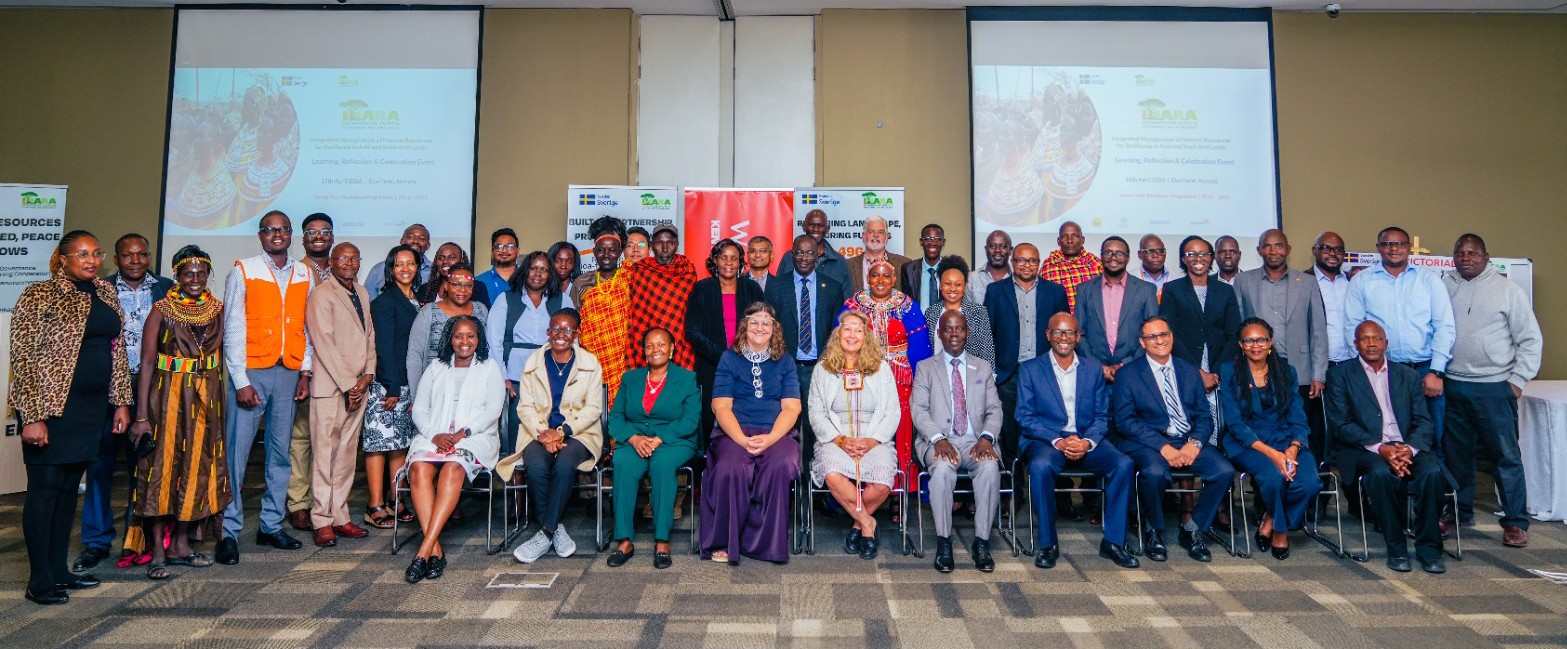
Nairobi, Kenya, April 15, 2026 — A seven-year climate resilience programme funded by the Government of Sweden has restored over 23,000 hectares of degraded land and improved livelihoods for nearly 73,000 people across nine arid and semi-arid (ASAL) counties, as partners marked its official close.
Implemented by World Vision Kenya with support from the Swedish International Development Cooperation Agency (Sida), the Integrated Management of Natural Resources for Resilience in ASALs (IMARA) programme drew an investment of SEK 211 million and operated in Baringo, Elgeyo Marakwet, Isiolo, Laikipia, Marsabit, Narok, Samburu, Turkana, and West Pokot counties.
The programme recorded a sharp rise in household incomes, with beneficiaries reporting an increase from 29 percent at inception to over 93 percent at closure, driven by diversified livelihoods such as beekeeping, coffee farming, gum arabic production, poultry, and mango value chains.
Over the implementation period, IMARA restored 23,496 hectares of land, supported the survival of 1.24 million trees, and established 428 community savings groups with a combined portfolio of over USD 88,000, strengthening financial resilience among vulnerable households.
Government: Restoration key to resilience
Speaking on behalf of Forestry Principal Secretary Gitonga Mugambi, Susan Boit from the Ministry of Environment said the programme demonstrates the importance of integrating environmental conservation with economic empowerment.
She noted that land restoration is not only an environmental intervention but also a social and economic tool that strengthens resilience in vulnerable communities.
Boit highlighted the role of partnerships between government, development agencies and communities, calling for scaling up proven approaches such as natural regeneration and investment in carbon markets.
She added that community ownership remains central to sustainability, noting that when local populations see tangible benefits, they are more likely to protect natural resources.
Leaders Highlight Impact and Partnerships
Speaking on behalf of the World Vision Kenya Board, Dr. Heglon Kitawi described IMARA as a transformative model built on integrating environmental conservation, economic empowerment, and peacebuilding.
He said the programme demonstrated that resilience in fragile regions can only be achieved by addressing ecosystems, livelihoods, and conflict simultaneously, noting that nearly 73,000 people directly benefited while communities transitioned from crisis response to sustainable investment in education and enterprises.
Dr. Kitawi commended the Government of Sweden for its long-term funding commitment, noting that the seven-year investment enabled lasting, system-wide change that short-term projects often fail to achieve. He also acknowledged national and county governments for embedding programme approaches into development plans, enhancing sustainability.
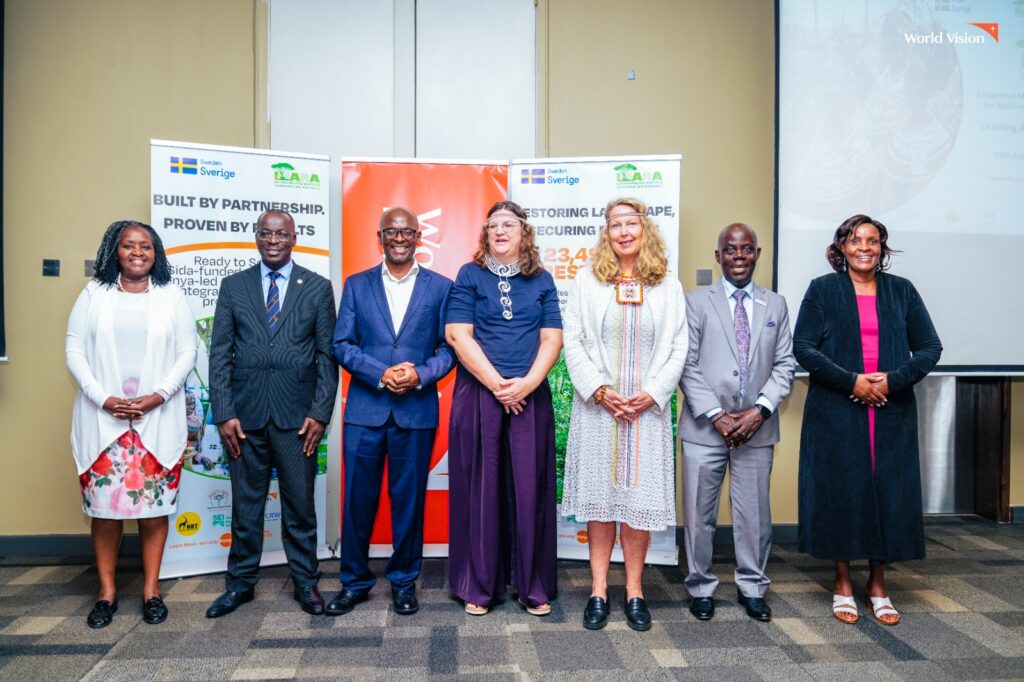
Representing the Embassy of Sweden in Nairobi, Marie Ottosson, Head of Development Cooperation, said the programme had delivered tangible results in improving livelihoods and strengthening community resilience.
She noted that more than 92 percent of households reported increased incomes, while thousands of families especially women gained financial independence through income-generating activities, enabling them to educate their children and improve household welfare.
Ottosson added that IMARA demonstrated the power of community-led development, emphasizing that local populations, particularly youth, are central to sustaining climate action and future resilience efforts.
Livelihood Diversification and Environmental Gains
IMARA Programme Director Obadiah Kisan said the initiative reached approximately 147,000 people both directly and indirectly by promoting alternative livelihoods beyond traditional livestock keeping.
He explained that communities embraced enterprises such as honey production, small businesses, and crop farming, with women increasingly participating in sectors like beekeeping that were previously male-dominated.
Kisan highlighted the programme’s approach of promoting multi-purpose tree species, noting that communities now grow trees such as moringa and gum arabic that provide both environmental restoration and income.
He said this strategy motivated communities to conserve land, as they benefit economically from tree products including seeds, leaves, and resins sold in local and international markets.
Peacebuilding and Resource Management
World Vision Kenya National Director Gilbert Kamanga said the programme also contributed to reducing resource-based conflicts, particularly those linked to water and pasture.
He noted that investments in water infrastructure, including solar-powered boreholes along county borders, reduced competition over scarce resources and helped lower incidents of conflict by an estimated 20 percent.
Kamanga added that IMARA restored nearly 24,000 hectares of land and emphasized the need to scale up proven interventions beyond the programme’s target areas.
He called on government and private sector actors to replicate successful models in other regions, noting that the need for resilience interventions remains significant across ASAL counties.
IMARA Transforms Turkana Livelihoods, Empowers Women and Farmers
Beneficiaries of the Sweden-backed IMARA programme in Turkana County are reporting transformative gains in livelihoods and social stability, driven by climate-smart initiatives and skills development. Mwia Simon, Chairperson of the Kinasia Self-Help Group, said members shifted to moringa farming after training by World Vision Kenya, growing their tree stock from 1,500 to 4,700.
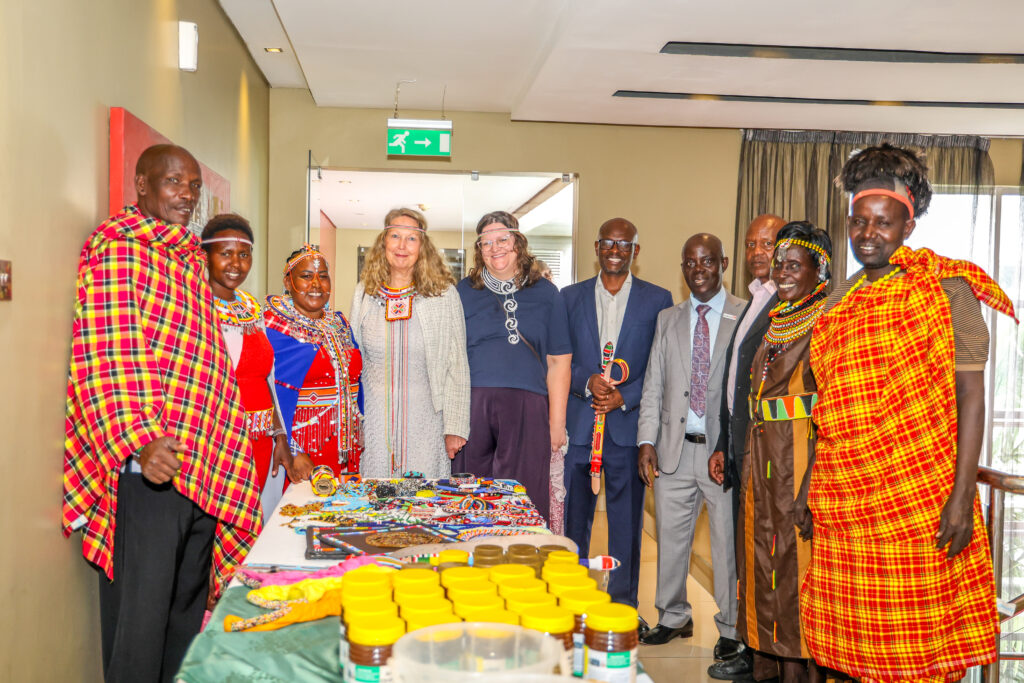
In a region prone to drought, he noted that moringa has provided a reliable source of income through market access and exhibitions, with proceeds saved through table banking. Beyond income, Simon said the crop’s medicinal value helping manage conditions such as ulcers and diabetes has increased its adoption at household level, while improved earnings have enabled families to educate their children and contributed to peace within the community.
Similarly, Ruth Acharait, another beneficiary, said the programme has expanded income opportunities for women through basket weaving and beadwork. With support from World Vision Kenya, including provision of materials and access to markets, young women are now earning a living from bead making. She noted that the initiative has played a key role in reducing early marriages, as more young women are engaged in productive work and are able to support themselves financially.
A Model for Future Climate Action
The programme also delivered broader social gains, including a 78 percent decline in livestock theft in some areas and sustained peace in conflict-prone zones such as the Teren Triangle. Additionally, 69 water projects improved access for approximately 179,000 people, reducing distances to water sources from up to two kilometres to about 200 metres in some communities.
As the IMARA programme concludes, stakeholders emphasized the importance of sustaining partnerships, scaling successful approaches, and investing in community-driven solutions to address the growing climate challenges facing Kenya’s dryland regions.