

Study Reveals East African Media Falling Short in Holding Perpetrators of Gender-Based Violence Accountable
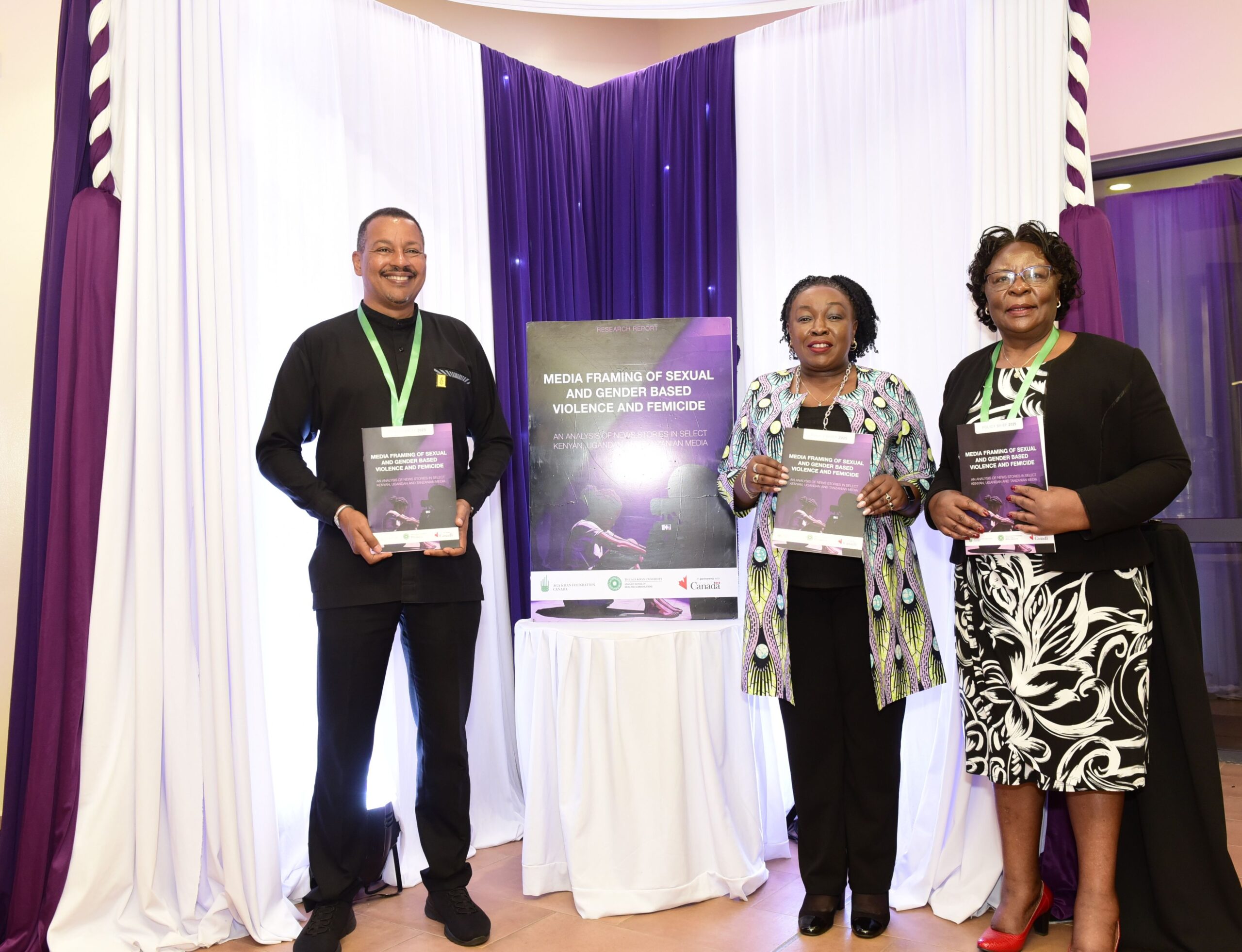
NAIROBI, October 23, 2025 – A groundbreaking study by the Aga Khan University’s Graduate School of Media and Communications (GSMC) has exposed critical shortcomings in how news outlets in Kenya, Uganda, and Tanzania report on sexual and gender-based violence (SGBV) and femicide.
The report reveals that a dominant focus on event-based coverage and official sources has resulted in limited accountability for perpetrators and missed opportunities to advance justice for survivors.
Titled “Media Framing of Sexual and Gender-Based Violence and Femicide in East Africa,” the study analyzed over 1,200 news stories published between January 2024 and April 2025.
It found that only 3% of the stories focused on perpetrators, while 78% adopted thematic framing situating violence within broader social structures without connecting incidents to accountability.
“This study underscores the critical role of the media in shaping how societies understand and respond to gender-based violence,” said Professor Nancy Booker, Dean at GSMC. “Journalists must move beyond surface-level coverage to tell stories that humanize survivors, question impunity, and hold systems accountable. Journalism should not just inform it should drive justice and change.”
Although the research noted progress in contextualizing violence as a societal issue, it highlighted a persistent lack of follow-up reporting and limited survivor representation. Only 11% of stories amplified survivor voices, while perpetrators often remained invisible. Kenya led in regional coverage with 54%, followed by Tanzania at 28% and Uganda at 18%, a trend linked to Kenya’s growing newsroom gender desks and targeted training initiatives.
Lead researcher Dr. Hesbon Hansen Owilla emphasized that this lack of focus on perpetrators perpetuates impunity. “There’s growing awareness that gender-based violence and femicide are systemic issues rather than isolated cases,” he said. “Yet coverage remains largely event-driven. When perpetrators disappear from the narrative, accountability and deterrence suffer.”
The findings form part of GSMC’s Advancing Gender Equality in Media and Civil Society in East Africa (AGEMC-EA) project. The report calls on media organizations to institutionalize gender desks, embed gender-sensitive reporting practices, and foster stronger partnerships with academia, policymakers, and civil society groups.
“The media is not just a mirror of societyi it is an agent of change,” added Professor Booker. “This report is a wake-up call to reimagine how we tell stories about gender-based violence and whose voices we choose to center.”