

Microfinance Sector Faces Profitability Pressures Despite Driving Jobs and Inclusion, Industry Leaders Say
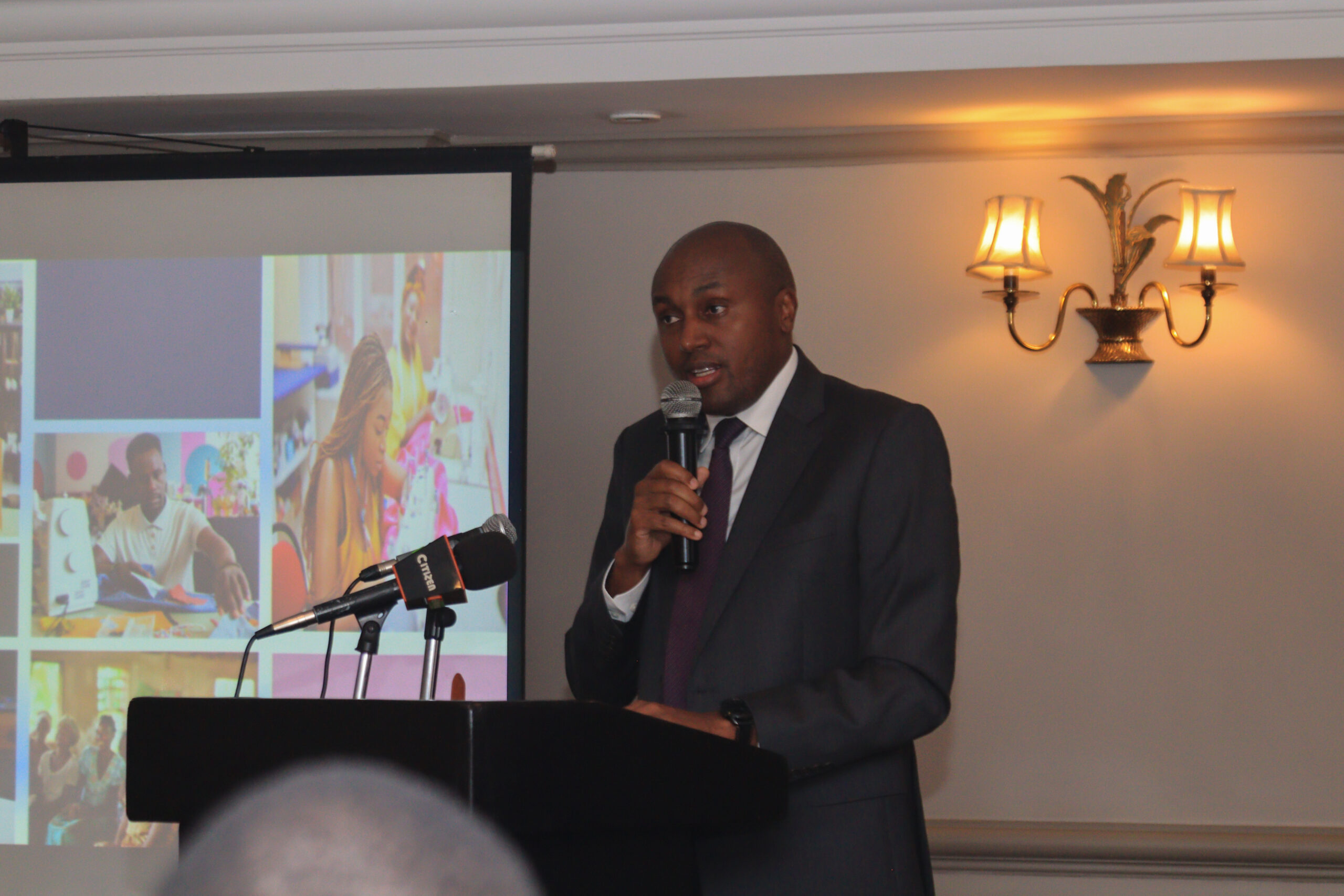
AMFI Chairman Wangaruro Mbira speaking the Association of Microfinance Institutions Kenya (AMFI-K) Media Breakfast and Sensitization Forum in Nairobi.
Nairobi, April 29, 2026 Kenya — Less than half of microfinance institutions in Kenya are currently profitable, a reality industry leaders attribute to high-risk lending models, expensive capital, and regulatory challenges, even as the sector continues to play a critical role in job creation and financial inclusion.
The discussion came into focus during the Association of Microfinance Institutions Kenya (AMFI-K) Media Breakfast and Sensitization Forum in Nairobi, which brought together journalists and sector players to strengthen engagement and deepen understanding of the microfinance landscape. The forum also served as a platform to share sector data, policy priorities, and promote more accurate and solutions-oriented reporting on microfinance.
Speaking during a press briefing at the AMFI-K Media Breakfast and sensitization forum in Nairobi, AMFI Chairman Wangaruro Mbira said microfinance institutions operate in a uniquely high-risk environment, often lending to segments overlooked by traditional banks.
He explained that microfinance players take on “residual risk” within the financial system, extending credit to individuals and businesses without collateral, including startups in informal settlements and small enterprises. This exposure, he noted, increases the likelihood of non-performing loans and directly impacts profitability.
Despite these challenges, Mbira emphasized the sector’s significant socio-economic impact. He noted that more than two million motorcycles operating in Kenya today have been financed through microfinance institutions and digital credit providers, supporting livelihoods for millions of young people.
“Over two million of the boda bodas on the road today, exist because microfinance organizations have taken the risk to underwrite this.This has supported employment for millions of young Kenyans,” he said.
However, the cost of capital remains a major constraint. Many institutions rely on foreign funding, which is often expensive and denominated in foreign currency. By the time such capital is converted into Kenyan shillings and extended to borrowers factoring in risk and operational costs it becomes costly for end users.
“Majority of us are depending on capital coming from abroad… and the capital doesn’t come here cheaply,” Mbira said.
To address this, the Association of Microfinance Institutions (AMFI-K) is exploring ways to secure more affordable and sustainable sources of capital for its members, with a focus on long-term solutions.
On regulation, Mbira acknowledged the role of the Central Bank of Kenya in strengthening the sector but noted that existing frameworks remain relatively young and fragmented. He pointed out inconsistencies such as stricter loan provisioning requirements for microfinance institutions compared to commercial banks, alongside conflicting tax treatment by the Kenya Revenue Authority.
He said the sector is anticipating a revised microfinance bill in 2026, expected to harmonize regulations and create a more level playing field.
The issue of over-indebtedness among borrowers, particularly in low-income households, also emerged as a concern. Mbira noted that while Kenya’s credit reference bureau system has improved significantly, gaps remain in capturing a complete picture of borrowers’ liabilities. Ongoing efforts to integrate data from lenders, SACCOs, and utility companies are expected to enhance transparency and responsible lending.
Microfinance institutions primarily lend to key sectors of the economy, including agriculture, trade, education, and transport. Industry data indicates that non-performing loans currently stand at an average of 14 percent, a figure Mbira described as manageable given the broader economic conditions and the high-risk nature of the sector.
Regulatory Barriers and Growth Constraints
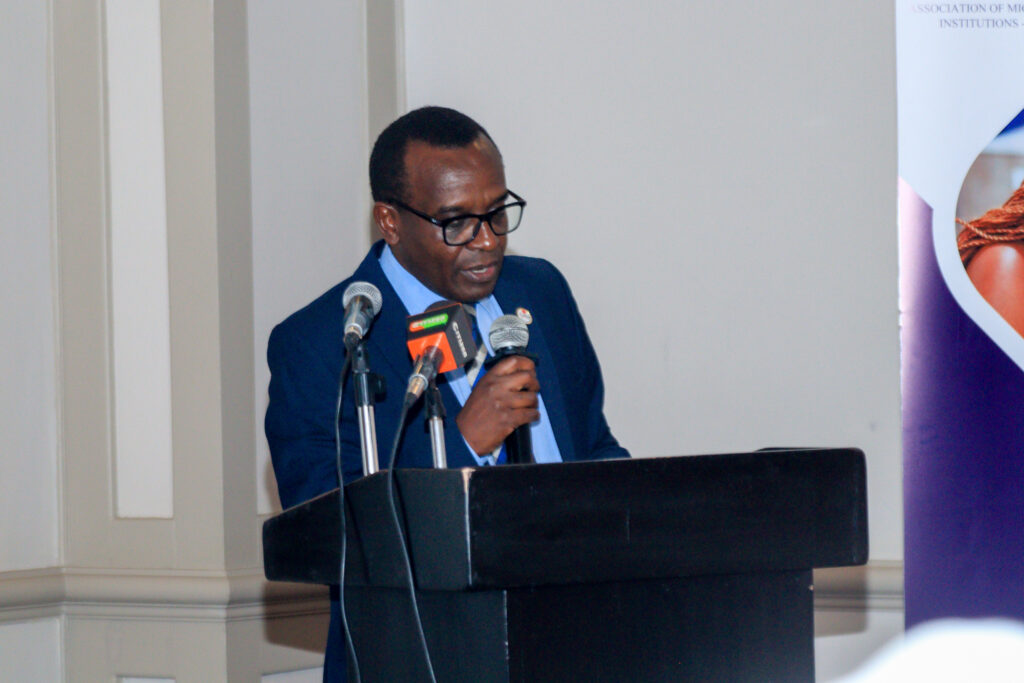
Caritas Microfinance Bank CEO David Mukaru highlighted structural challenges affecting the growth of microfinance institutions. He cited high capital requirements for commercial banks set at KSh10 billion as a barrier for smaller, locally rooted institutions seeking to scale up.
“It will be very difficult in future for local institutions to transit into becoming commercial banks because of that requirement of 10 billion,” he said, referring to capital requirements.
Mukaru called for reforms to the Microfinance Act to support the growth of home-grown financial institutions, noting that Kenya has only 14 licensed microfinance banks despite having over 200 microfinance institutions. He attributed this gap to regulatory constraints and emphasized ongoing engagements with the National Treasury and Parliament to address these issues.
“For the last 10 years, we have had 14 microfinance banks and yet we have over 200 microfinance institutions in this country,” Mukaru noted.
He also underscored the importance of microfinance institutions in advancing financial inclusion, noting that over 85 percent of Kenyans are financially included, but challenges remain in financial well-being, with 18.3 percent of Kenyans rated as having low financial health.
Mukaru further highlighted the sector’s digital transformation, stating that 99 percent of transactions in microfinance banks are conducted online rather than in physical branches.
Caritas Microfince Bank CEO added that strengthening microfinance institutions would enhance their ability to deliver community-based financial solutions, particularly for underserved populations.
Opportunities in Digital Finance and Inclusion

AMFI-K Research Manager Hillary Kibet pointed to emerging opportunities that could strengthen the sector’s future.
He highlighted key growth areas including expanding housing microfinance, scaling digital financial services and automation, increasing equity and blended finance solutions, and enhancing inclusion of underserved groups such as persons with disabilities and refugees.
Kibet also called for stronger engagement with the media to improve public understanding of the sector. He urged stakeholders to “strengthen collaboration with media” and promote accurate narratives that reflect the role of microfinance and position AMFI-K as a key voice in advancing and driving financial inclusion in Kenya.