

Kenya’s youth refuse to wait for a seat at the table
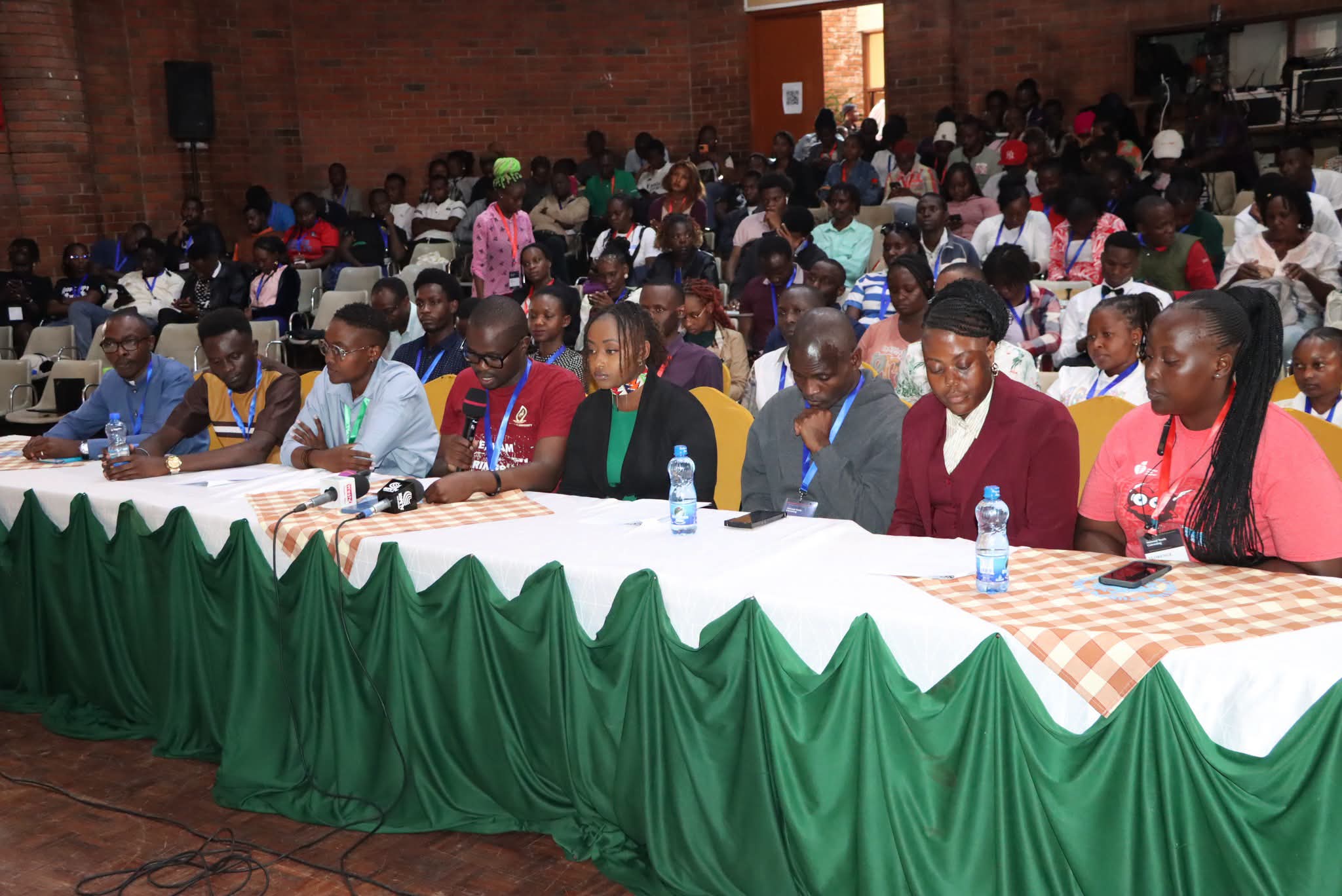
Group photo of youth addressing the press at the 4th youth convening
For years, young Kenyans have been told that they are the leaders of tomorrow. But for a generation confronting unemployment, rising living costs, political uncertainty and a rapidly changing digital economy, tomorrow is no longer good enough.
Young people want a say in the Kenya being built today.
That was the message emerging from the 4th National Youth Convening held under the theme **“Claiming Space, Shaping Kenya”**, where young people and stakeholders gathered to confront the realities shaping their lives — from governance and political participation to technology, entrepreneurship, mental health and dignified livelihoods. The meeting was held at CSLC-Ufungamano House on September 25, 2026.
The convening produced a communiqué that reads less like a list of grievances and more like a declaration of intent: young people do not want to remain passive beneficiaries of decisions made by others.
They want to occupy the spaces where decisions are made, influence policy and hold institutions to account.
At the heart of the discussions was a simple but powerful argument — Kenya cannot claim to be inclusive if its largest and most energetic generation is only remembered during election campaigns.
The youth called for participation that goes beyond being mobilised to vote. They want to be involved continuously in policy development, public participation, leadership and oversight, from the grassroots to the national level.
They also placed responsibility on themselves.
The communiqué acknowledges that meaningful governance requires informed and engaged citizens willing to demand accountability. As the country moves towards another electoral cycle, the youth said political participation must remain peaceful, informed and issue-based, rejecting misinformation, political manipulation and ethnic mobilisation.
But the struggle for space extends beyond politics.
For many young Kenyans, the smartphone has become a workplace, classroom, marketplace and newsroom all at once. Technology is already transforming how young people communicate, seek employment, market businesses and create opportunities.
A young entrepreneur can use WhatsApp to reach customers. A graduate can search for employment through a digital platform. A person living with disability can use assistive technology to access opportunities. A creative can reach audiences far beyond their immediate community.
Yet the digital revolution has not eliminated inequality.
The cost of devices and internet access, unreliable electricity, inadequate digital skills, lack of mentorship and limited access to capital and markets continue to keep many young people at the margins.
The youth therefore want technology that connects rather than excludes — technology that expands opportunity instead of deepening existing inequalities.
And while innovation is often presented as the answer to unemployment, the young people at the convening recognised that having an idea is only the beginning.
Across Kenya, thousands of young people are already hustling to survive. They are running small businesses, creating content, experimenting with technology and developing solutions to problems in their communities.
The challenge is moving from survival to sustainability.
Young enterprises face cash-flow problems, competition, taxation, licensing, registration and customer-retention challenges. Young founders without collateral also struggle to access financing, mentorship, networks and markets.
For creatives, there is another battle — having their work recognised as a profession and economic product, while ensuring they understand intellectual property, ownership and royalties.
Artificial intelligence has opened another frontier.
The youth welcomed AI and emerging technologies as tools that can support work, creativity, learning and entrepreneurship. But they also warned against surrendering human judgement to machines.
Concerns over data privacy, digital safety, misinformation, errors in AI-generated information, child protection and over-reliance on technology were highlighted as issues requiring greater attention.
The message was clear: young people should not merely consume technology. They must be equipped to create with it — while becoming more critical consumers of the information that reaches them.
Behind all these challenges, however, lies another crisis that is often harder to see.
Mental health.
Unemployment, financial pressure, rising living costs, repeated rejection, relationship difficulties, social expectations and a changing world of work are affecting how young people see themselves and their future.
The communiqué notes that distress can remain hidden behind productivity and the pressure to appear successful. A young person struggling privately may instead be labelled lazy, unmotivated or unfocused.
The youth want that conversation to change.
They are calling for stronger support systems, safe spaces for honest conversations, appropriate professional care and livelihood approaches that recognise the whole person rather than measuring young people only by their technical skills.
Ultimately, the convening was about more than young people demanding opportunities.
It was also about responsibility.
The youth said they are ready to work across generations, combining the experience of older people with the energy, creativity and innovation of younger generations.
They want government, the private sector, civil society, faith institutions and development partners to move beyond praising the potential of young people and invest in the systems that can help them realise it.
The closing message of the communiqué captures the spirit of the gathering: claiming space is not simply about occupying a position.
It is about using that space to create value, solve problems and influence the future.
For Kenya’s young people, the message is no longer **“wait for your turn.”**
Their answer is: **the time to shape Kenya is now.**