Huawei reaches 1,000 youths in Kenya-wide cyber security drive to tackle digital threats
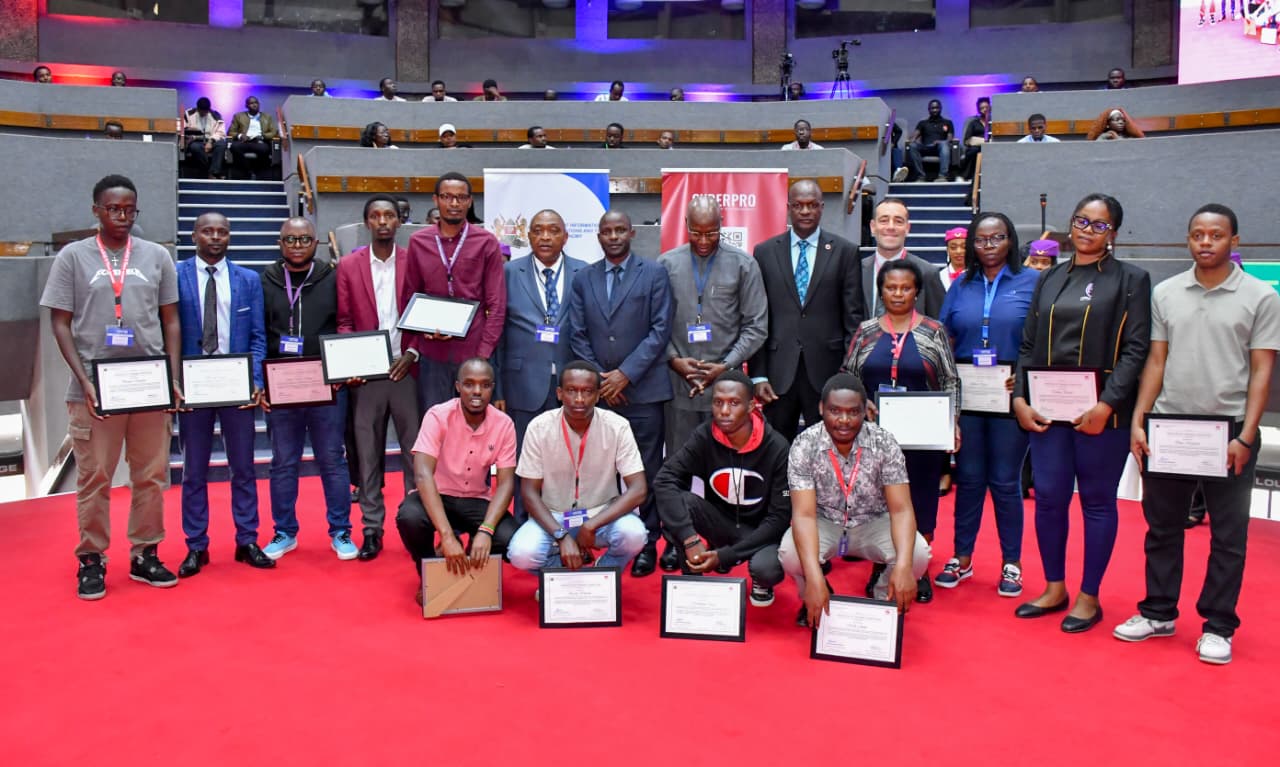
Young cybersecurity champions pose for a group photo after receiving their certificates during Cyberweek Africa 2026 in Nairobi.
Huawei Kenya has intensified efforts to strengthen the country’s cybersecurity capacity, reaching tens of thousands of young people through nationwide awareness campaigns while training government ICT officers to protect critical digital infrastructure against emerging cyber threats.
The initiative, undertaken in collaboration with the Ministry of Information, Communications and the Digital Economy, the Office of the Data Protection Commissioner (ODPC), the Ministry of Education and the State Department for Technical and Vocational Education and Training (TVET), has targeted universities and technical institutions across the country.
Speaking during the closing ceremony of Cyberweek Africa 2026 at the Kenyatta International Convention Centre (KICC) in Nairobi on Friday October 30,2026, Huawei Kenya’s Director of Policy and Partnership Development, Adam Lane, said the programme had reached more than 21 universities and TVET institutions across different regions.
Lane said the initiative was designed to equip young people with cybersecurity awareness, practical knowledge and information on career opportunities in the rapidly expanding digital security sector.
“We’ve visited over 21 TVETs and universities across the country, almost every region of the country, and I think there we’ve engaged tens of thousands of young people to help them understand the importance of cybersecurity, how to be safe online and how to protect themselves from threats,” he said.
He added that the engagements also sought to introduce students to professional development opportunities and possible career pathways in cybersecurity.
“We are also helping them understand how to get careers in cybersecurity and how to find training opportunities in cybersecurity, like the ICT Academy and the Huawei ICT Competition, amongst others,” Lane said.
The awareness campaign formed part of a broader programme through which Huawei is supporting the government’s efforts to develop a skilled workforce capable of responding to increasingly sophisticated cyber threats.
Beyond engaging students, the company has also been conducting specialised training for government ICT officers, focusing on network security and the protection of government information systems.
Lane revealed that approximately 130 government ICT officers had enrolled in the training programme, with more than 21 having received their certificates during the Cyberweek Africa 2026 closing ceremony.
“About 130 people started the programme. So far, over 21 have received their certificates today, and we’re continuing the training programme in the next few weeks,” he said.
He noted that the training was intended to strengthen the technical capacity of government officers responsible for managing and securing public sector digital infrastructure.
Lane said Huawei had deployed trainers and cybersecurity experts to support the engagements across the 21 institutions, while other specialists were involved in training government ICT officers.
“Huawei really was collaborating in that. We had people go to each of these 21 institutions to help teach and train the students, as well as our trainers to help train the government ICT officers,” he said.
The training and awareness programmes were highlighted during the fifth edition of Cyberweek Africa 2026, which brought together more than 1,200 delegates from over 20 countries under the theme, “Cyber Threat Intelligence in the Age of AI.”
Lane said Huawei participated in the conference as both a partner and sponsor, contributing expertise to discussions and activities aimed at strengthening cybersecurity awareness and institutional preparedness.
“For this conference, we’re a participant and a sponsor. We’re sharing some of our expertise, but the conference is really about the whole series of activities, including the training that we were doing and the awareness-raising at universities and TVETs,” he said.
The four-day conference brought together government officials, cybersecurity professionals, technology experts, policymakers and industry stakeholders to deliberate on the changing cybersecurity landscape and the implications of artificial intelligence.
One of the central issues discussed was how artificial intelligence is transforming cyber threats, creating new challenges for security professionals while also providing tools that can strengthen defence mechanisms.
Lane observed that AI was increasingly being exploited by cybercriminals to develop more sophisticated attacks, making it harder for individuals, businesses and governments to protect themselves.
He, however, noted that the same technology could also be deployed by cybersecurity professionals to detect threats, strengthen security systems and respond more effectively to attacks.
“The keynote speakers who spoke earlier talked a lot about the theme of the conference around AI, how it maybe makes life harder for the defenders because the attackers are using AI, but it also presents opportunities for those of us who are defending as well to also use AI to fight back against the attackers,” he said.
He described the discussions as important in understanding the rapidly changing nature of cybersecurity and the need for individuals and institutions to continuously adapt.
“I think it highlights the very fast and rapidly evolving nature of cybersecurity and how AI is affecting cybersecurity as individuals, in terms of frauds and scams and so on, deepfakes and the like, but also as institutions, whether governments or businesses,” Lane said.
The conference also examined the growing risks associated with AI-generated content, online fraud, identity manipulation and other emerging forms of digital exploitation.
Delegates discussed strategies for improving cyber threat intelligence, strengthening institutional preparedness and promoting responsible AI governance.
The forum, convened by the Kenya School of Government and CyberPro Global in partnership with government institutions and international organisations, also featured discussions surrounding the Nairobi Declaration on AI Governance and Cyber Threat Intelligence.
The event further recognised winners of the Youth Cyber Hackathon, highlighting the role of young innovators in developing solutions to emerging digital challenges.
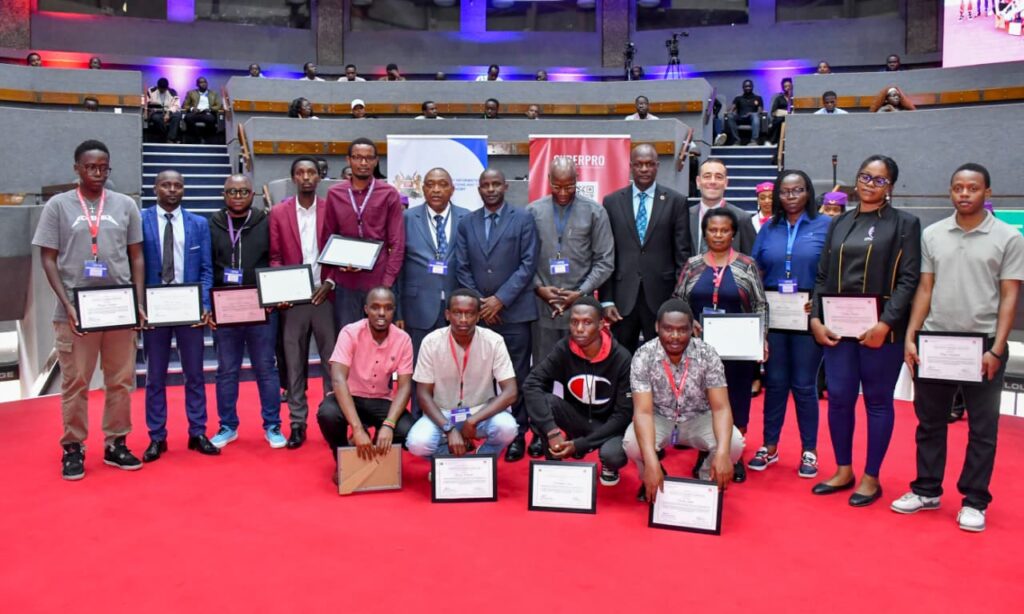
The Huawei Cybersecurity Associate Training Course was another key component of the company’s contribution to the conference.
The programme equipped participants with essential cybersecurity competencies, including network security, cyber threat prevention, firewall security, encryption and decryption technologies, and Public Key Infrastructure (PKI) certificate systems.
The beneficiaries received certificates during the closing ceremony, marking their successful completion of the training.
Lane said partnerships between technology companies, government agencies and educational institutions were essential in addressing the growing demand for cybersecurity expertise.
As Kenya continues to expand digital services across government and the private sector, the need for professionals capable of securing networks, protecting sensitive information and responding to cyber incidents has become increasingly important.
The nationwide engagements and specialised training programmes are expected to contribute to bridging the digital skills gap while creating opportunities for young people to participate in the country’s growing technology industry.
Through its collaboration with government institutions and educational establishments, Huawei Kenya says it will continue supporting cybersecurity capacity-building initiatives aimed at developing local expertise and strengthening the country’s digital resilience.