

Kenya’s Construction Sector Turns to Cloud Technology to Boost Efficiency and Customer Experience
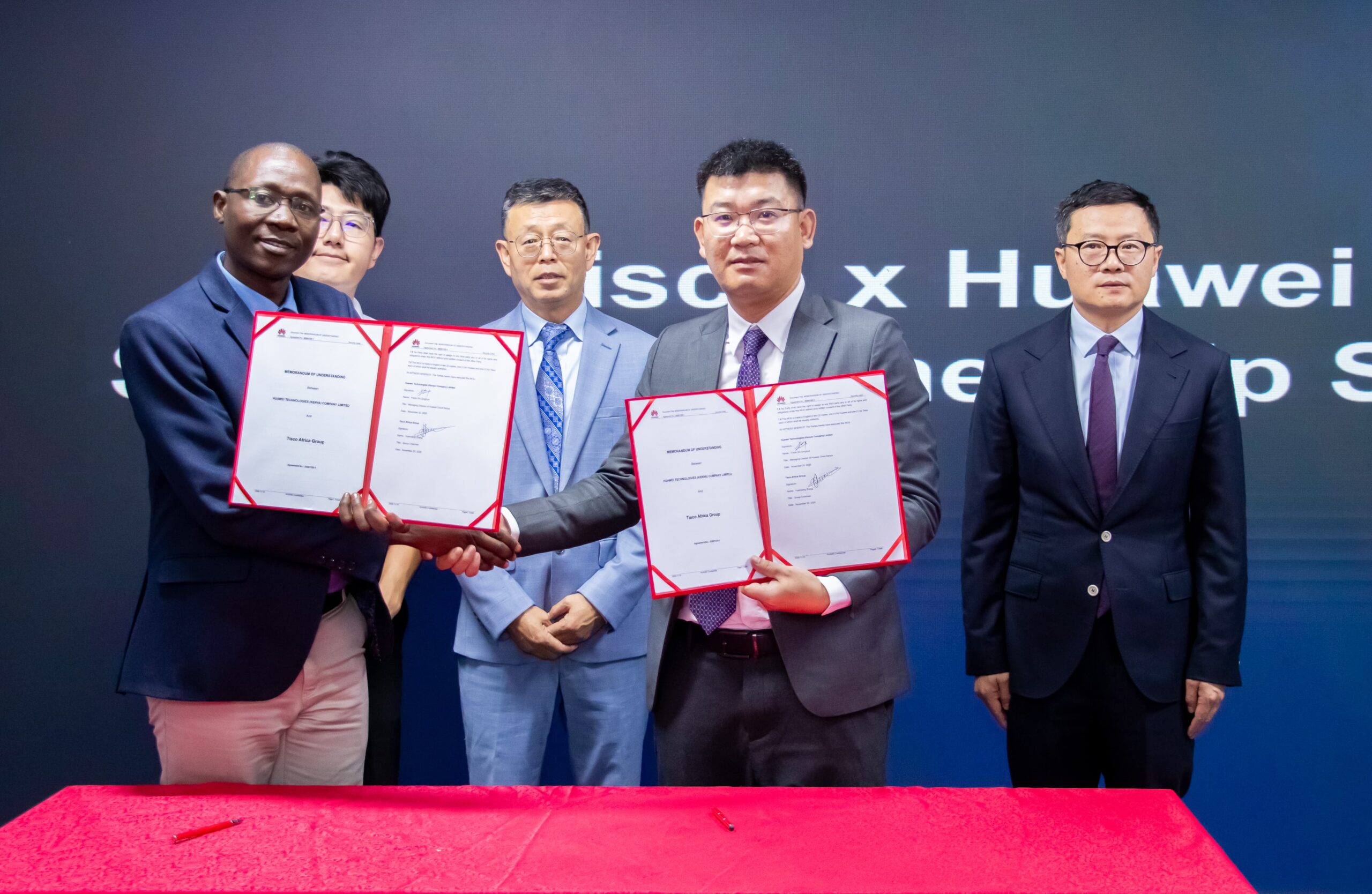
Huawei Cloud and Tisco Group representatives during the signing of their strategic partnership agreement in Nairobi.
Kenya’s construction and equipment sector is increasingly embracing digital technology to streamline business operations, improve customer service and strengthen competitiveness, as companies move beyond traditional operational models to adopt cloud-based solutions.
The shift is reflecting a growing recognition that technology is becoming an integral part of business performance, even in industries traditionally associated with machinery, infrastructure development, physical assets and on-site operations.
Through cloud computing, enterprise resource planning (ERP) systems and integrated digital platforms, businesses are seeking to improve internal coordination, enhance efficiency and respond more effectively to changing customer expectations.
This transition was highlighted during the Enhancing Client Service and Experience Forum held at Huawei offices in Tiara Park, Nairobi, where Huawei Cloud and Tisco Group formalised a strategic partnership aimed at strengthening Tisco’s digital infrastructure and supporting its operational transformation.
The collaboration will see Huawei Cloud provide cloud infrastructure and hosting services to Tisco Group, laying the foundation for the company to modernise its operations, improve service delivery and enhance the experience of its customers.
The partnership underscores the growing role of technology providers in supporting digital transformation across traditional industries, as businesses increasingly seek scalable and reliable digital solutions to support their growth.
By leveraging cloud infrastructure, Tisco Group will be able to strengthen its technology capabilities, improve the management of digital systems and create greater flexibility in responding to operational demands.
Cloud computing allows businesses to host applications, store information and access computing resources without necessarily investing heavily in physical IT infrastructure. This enables organisations to scale their systems as their operations expand while improving accessibility, efficiency and reliability.
For businesses in the construction and equipment sector, where operations often involve multiple departments, suppliers, customers and service teams, the integration of digital platforms can play a critical role in improving operational coordination.
The partnership also complements Tisco Group’s broader efforts to digitise its business processes through the adoption of Odoo Enterprise Resource Planning (ERP) solutions.
The ERP system is designed to integrate key business functions, including sales, inventory management, customer service and after-sales support, allowing the company to improve information flow and coordination across its operations.
By consolidating these functions into an integrated digital platform, businesses can reduce fragmented processes, improve access to operational information and strengthen decision-making.
The integration of cloud infrastructure with ERP systems is particularly important for companies dealing with equipment sales, maintenance and technical support, where timely access to information can determine the effectiveness of customer service.
Efficient inventory management, for instance, enables businesses to track the availability of spare parts and equipment, while integrated customer service systems can help improve communication and response times when clients require technical assistance.
For customers, the benefits of digital transformation could translate into more responsive services, improved turnaround times and a more seamless experience when engaging with a business.
The forum brought together representatives from Huawei, Tisco Group, technology partners and other industry stakeholders to explore how digital solutions can support business performance and improve customer engagement.
The discussions highlighted the importance of aligning technology investments with business objectives, particularly as customer expectations continue to evolve and companies face increasing pressure to deliver services more efficiently.
Rather than treating digital transformation as an IT undertaking alone, businesses are increasingly positioning technology as a strategic investment capable of influencing productivity, customer satisfaction and long-term growth.
Cloud infrastructure also provides businesses with the flexibility to expand their digital capabilities without necessarily having to undertake extensive physical infrastructure investments every time their operational requirements change.
This is particularly relevant for growing businesses seeking to manage increasing volumes of information, improve system accessibility and support collaboration between different departments.
Huawei Cloud’s partnership with Tisco Group reflects a broader push to extend cloud computing and enterprise digital solutions into sectors beyond the traditional ICT industry.
As Kenya continues to advance its digital economy, cloud technology is increasingly emerging as an important enabler for businesses seeking to modernise operations, improve resilience and remain competitive.
The construction and equipment industry, like other traditional sectors, is increasingly recognising that operational efficiency is no longer determined solely by physical infrastructure, machinery or workforce capacity, but also by the strength of its digital systems.
Through its cloud infrastructure and hosting solutions, Huawei Kenya is positioning itself as a technology partner for enterprises seeking to transition towards more integrated, data-driven and customer-focused business models.
The Huawei Cloud–Tisco Group partnership therefore signals a growing shift in how businesses in Kenya’s construction ecosystem are approaching technology, with digital infrastructure increasingly becoming part of the foundation for growth, efficiency and improved customer experience.
As more companies embrace cloud computing and integrated enterprise solutions, the sector could increasingly move towards smarter business operations, better service delivery and greater responsiveness to customer needs in an increasingly digital economy.