



Kenya’s Agriculture Sector Set for Transformation Through Sustainable Financing

Kenya’s agriculture sector continues to be the backbone of the economy, contributing 20 percent of the Gross Domestic Product (GDP) directly and another 27 percent indirectly through linkages with other sectors. Employing over 40 percent of the population and more than 70 percent of rural communities, the sector remains a priority for economic growth and food security.
However, to sustain and enhance productivity, farmers require financial support for essential inputs such as seeds, fertilizers, land leases, and marketing costs.
Addressing this need, the upcoming FINAS Summit is expected to provide a crucial platform for stakeholders to explore innovative financing solutions for a more sustainable and resilient agri-food system across Africa.
The government, through the Ministry of Agriculture, is making significant investments to strengthen the sector. The 2025/26 fiscal year has seen an increased allocation of Ksh 77.7 billion to agriculture, up from Ksh 73.9 billion in the previous year.
Speaking at the event at Nairobi Hotel on Tuesday, Principal Secretary (PS) Rono for the Ministry of Agriculture emphasized the government’s commitment to ensuring that these funds are channeled towards impactful programs.

Principal Secretary for Agriculture Dr.Paul Rono
“Over the past year, we have supported farmers by enhancing their access to inputs, extension services, and mechanization. These efforts are key to increasing productivity, reducing post-harvest losses, and empowering smallholder farmers, particularly women and youth,” Rono stated.
The government is aligning its policies with continental frameworks, including the Comprehensive Africa Agriculture Development Programme (CAADP) and the Malabo Declaration, to drive sector transformation. The recently adopted Kampala Declaration further strengthens Kenya’s efforts in sustainable agriculture, agro-industrialization, and regional trade.
With a decline in traditional donor support, Kenya is exploring alternative funding models such as blended financing, green bonds, diaspora remittances, and increased private-sector participation. The upcoming FINAS Summit will be a key avenue to discuss and implement these solutions.
“The global funding landscape is shifting, and agriculture is one of the sectors significantly affected. This reality compels us to rethink our financing models. We are engaging the private sector and development partners to ensure we secure sustainable investments for the sector,” Rono added.
Recognizing the urgency of sustainable funding, the Ministry of Agriculture, with support from GiZ, is developing a policy framework for sustainable financing and subsidy management in agriculture. The framework will guide the allocation of public funds towards initiatives that enhance food security, productivity, and climate resilience.
As the FINAS Summit approaches, stakeholders are urged to turn discussions into tangible action. The event will bring together experts, policymakers, and financial institutions to craft solutions that will drive Africa’s agricultural transformation.
“This summit is not just about financing; it is about reimagining how we invest in agriculture to create resilient and inclusive food systems. Our decisions today will determine the future of smallholder farmers, our rural communities, and the continent’s economic growth,” PS Rono emphasized.
Making her remarks during a press briefing, FINAS Secretariat Charity Mutegi highlighted the importance of fostering a policy environment that supports sustainable financing solutions, particularly for African nations that rely on key global partnerships.
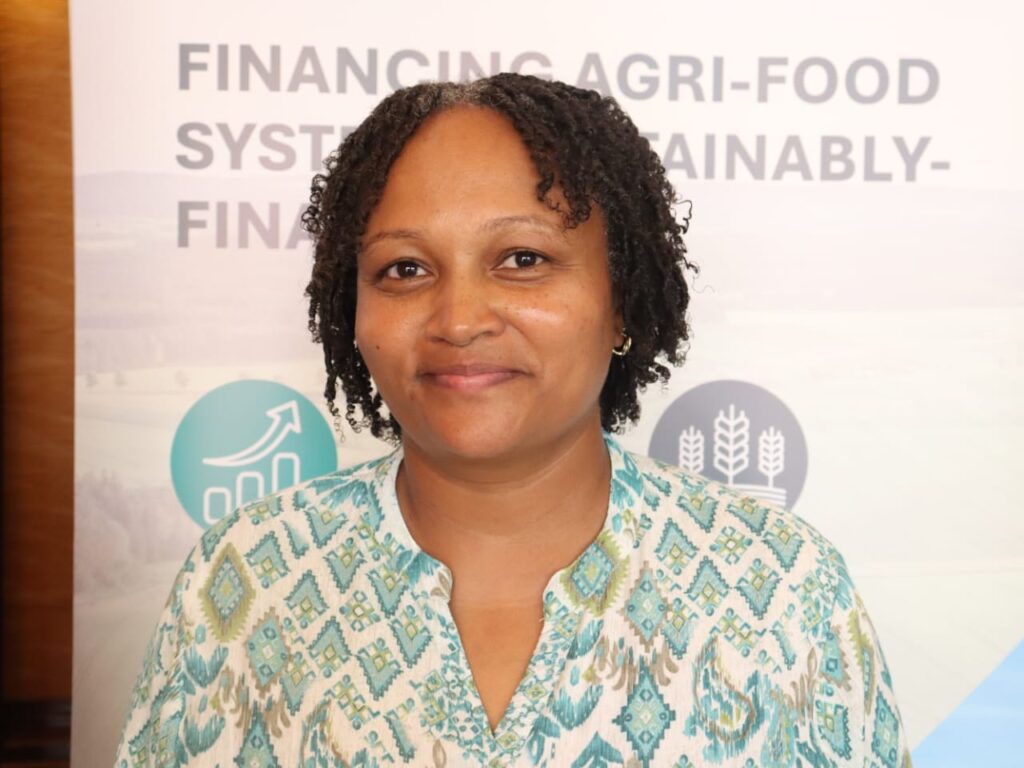
FINAS Secretariat Charity Mutegi
“We look at the policy environment around food systems financing and discuss recalibrating financing where needed. You know sometimes you have to recalibrate either because of climate shocks, pandemics, or even shifting global policies affecting financing for several countries that have been key partners for Africa,” Mutegi said.
She further emphasized the need to de-risk investments for smallholder farmers and other stakeholders in food systems to enhance resilience and economic viability.
FINAS aims to bridge the gap in data-driven decision-making for financing food systems while fostering collaboration through Business-to-Business (B2B), Business-to-Consumer (B2C), and Business-to-Government (B2G) interactions.
“There are solutions out there that people can benefit from when they come together. That’s really what FINAS is all about,” she added.
The FINAS main summit, set for May, is expected to bring together key stakeholders to deliberate on innovative financing solutions.
Mutegi stressed the central role of government in these discussions, noting that sustainable food systems financing cannot be achieved without strong government involvement.
“It’s anchored in government because this is a conversation you cannot have without government being the bedrock of this discussion,” she affirmed.
The upcoming summit remains open to all stakeholders interested in contributing to the evolving discourse on financing Africa’s food systems.
With a collective commitment from government, private sector players, and development partners, Kenya is poised to achieve a thriving and sustainable agricultural sector that will boost food security, create jobs, and strengthen economic resilience.
By Sharon Atieno

One thought on “Kenya’s Agriculture Sector Set for Transformation Through Sustainable Financing”