

Kenya Unveils Second Phase of Ending Drought Emergencies Programme
Kenya has launched the second phase of the Ending Drought Emergencies Common Programme Framework (EDE-CPF), reaffirming its commitment to long-term resilience and proactive drought risk management across the arid and semi-arid lands (ASALs), which make up over 80 percent of the country’s landmass.
These regions, rich in natural resources, cultural heritage, and economic potential, remain the most vulnerable to climate change, particularly prolonged and frequent droughts that continue to devastate lives and livelihoods.
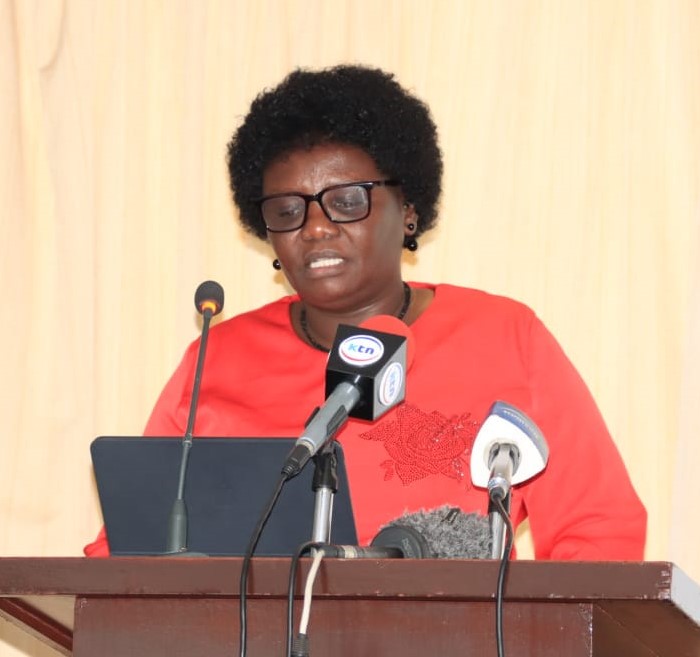
Speaking during the unveiling of the strategic roadmap set to run through 2032, ASALS and Regional Development Cabinet Secretary Beatrice Askul Moe noted that between 1.5 and 4.9 million Kenyans are affected by droughts annually, with dire social and economic impacts.
Historical data highlights the magnitude of the crisis, with the 2008–2011 drought costing an estimated Ksh 1.5 trillion (USD 12.1 billion), while between 2021 and 2023, response efforts alone amounted to over Ksh 71 billion.
“This sobering reality makes it clear that we must move beyond emergency responses. We must shift from reactive crisis management to proactive risk reduction,” She stated.
The EDE-CPF II builds on the foundations laid between 2013 and 2022, where key achievements included strengthened coordination, enhanced drought risk systems, and active participation from government, private sector, and development partners.
However, the persistent recurrence of drought emergencies, including a national emergency declared in 2021, underscores the need for more transformative action.
The new framework prioritizes three pillars including Drought risk management ,Investment in development foundations and resilience-building Institutional coordination and knowledge Management importantly, the approach reflects a deliberate departure from siloed interventions to integrated, cross-sectoral collaboration involving both state and non-state actors.
“The success of EDE-CPF II hinges on sustained political will, institutional alignment, and inclusive financing,” said the Council of Governors Chair, adding that the initiative must be anchored in national and county planning frameworks, including County Integrated Development Plans and Medium-Term Plans.
She further emphasized the need for a collaborative spirit. “ASALs cannot walk this path alone. We must align all industries and ministries in a unified effort. The framework must be inclusive, and we welcome proposals from all stakeholders to enhance its coherence and effectiveness.”
Acknowledging the leadership of the National Drought Management Authority (NDMA) and the steadfast support from development partners, the Chair concluded with a call to action.
“Let us commit, not just in words but in action, to a future where drought no longer spells disaster. Let us reimagine ASALs, not as regions of vulnerability, but as frontiers for inclusive and sustainable growth.”
By Sharon Atieno