
Kenya Marks International Day of Care and Support 2025 with Renewed Call to Value Care Work
By Samuel Kivuva
Kenya joined the rest of the world in marking the International Day of Care and Support under the theme “Care and Support for All: Realizing Human Rights of All Those Providing and Requiring Care and Support.”
The national celebration, held in Nairobi, brought together top government officials, development partners, county leaders, civil society, academia, and caregivers to highlight the importance of care work in strengthening families, communities, and the economy.
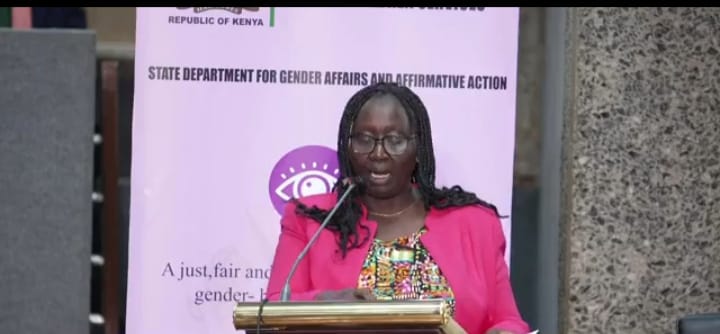
In her keynote address, Cabinet Secretary for Gender, Culture and Children Services, Hon. Hannah Wendot Cheptumo, described care work as a cornerstone of human well-being and national development, yet one that remains undervalued.
“Care work is not just a private responsibility; it is a public good and a cornerstone of social and economic development,” she said.
The Cabinet Secretary cited findings from the 2021 Kenya Time Use Survey showing that women spend an average of four and a half hours daily on unpaid domestic and care work five times more than men. This imbalance, she said, limits women’s opportunities in education, employment, and leadership.
Wendot reaffirmed the government’s commitment to advancing the National Care Policy 2025, guided by the “five Rs of care”: recognize, reduce, redistribute, reward, and represent. She called for collective action among county governments, the private sector, civil society, and citizens to make care work visible and valued.
“When we invest in care, we invest in people. When we support caregivers, we build stronger families,” she emphasized.
Principal Secretary for Gender Affairs and Affirmative Action, Ms. Anne Wang’ombe, echoed the call to appreciate caregivers as the backbone of families and communities.
“Care is the currency of a connected world. Let us make a wise investment,” she remarked, urging shared responsibility between men and women in caregiving roles.
Representing the International Center for Research on Women (ICRW) and Oxfam, Purity Jebor emphasized that care should be recognized as essential national infrastructure that drives economic inclusion and gender equality.
“If we seek faster and fairer growth, we must treat care as infrastructure recognize care work as professional labour, and anchor care systems in law, budgets, and accountable institutions,” she stated.
ICRW proposed three accelerators to advance Kenya’s care agenda: a clear legal anchor, dedicated budget allocations, and a coordinated national framework linking ministries and county governments. Jebor also applauded the inclusion of caregivers in the Social Protection Act, 2025, and urged the formalization and fair remuneration of care workers, many of whom remain unrecognized in the labour force.
The event also celebrated caregivers across the country from parents and domestic workers to community volunteers and health workers for their compassion, dedication, and contribution to national development.
As Kenya moves closer to adopting the National Care Policy, speakers reaffirmed that recognizing and investing in care work is both a social imperative and an economic strategy that can unlock equality, productivity, and dignity for all.