
High Production Costs Threaten Kenya’s Push to Grow EU Exports
Kenyan manufacturers must overcome high production costs, unreliable energy supplies and regulatory hurdles to capitalise on opportunities in the European Union market, the Kenya Association of Manufacturers (KAM) has said.
The association warned that structural constraints, including expensive transport and logistics, complex regulatory processes and the cost of meeting international standards, continue to undermine the competitiveness of local producers.
KAM said addressing the challenges would enable manufacturers to improve productivity, meet European market requirements and fulfil export orders consistently.
The association is working with the government and development partners to advocate policies that lower the cost of doing business while helping manufacturers navigate export requirements through market intelligence, internationally recognised certifications and capacity-building programmes.
“Addressing these challenges will make it easier for Kenyan businesses to produce competitively, meet European market requirements and fulfil orders consistently,” said Hitesh Mediratta of KAM.
He said business linkages, training programmes and trade missions were helping connect Kenyan manufacturers with international buyers and investors.
The initiatives are intended to translate opportunities under the Kenya–European Union Economic Partnership Agreement (EPA) into higher exports, increased investment and industrial growth.
Erik Thomas Johnson, general manager of Danish Industries East Africa Emerging Markets, said improving the visibility of Kenyan products and suppliers was critical to expanding trade with European buyers.
“The Kenya–EU Export Catalogue provides a platform for European buyers to discover the breadth of products and capabilities available in Kenya,” Johnson said.
He said stronger commercial relationships would help diversify sourcing options, strengthen supply chains and establish long-term partnerships between Kenyan enterprises and European businesses.
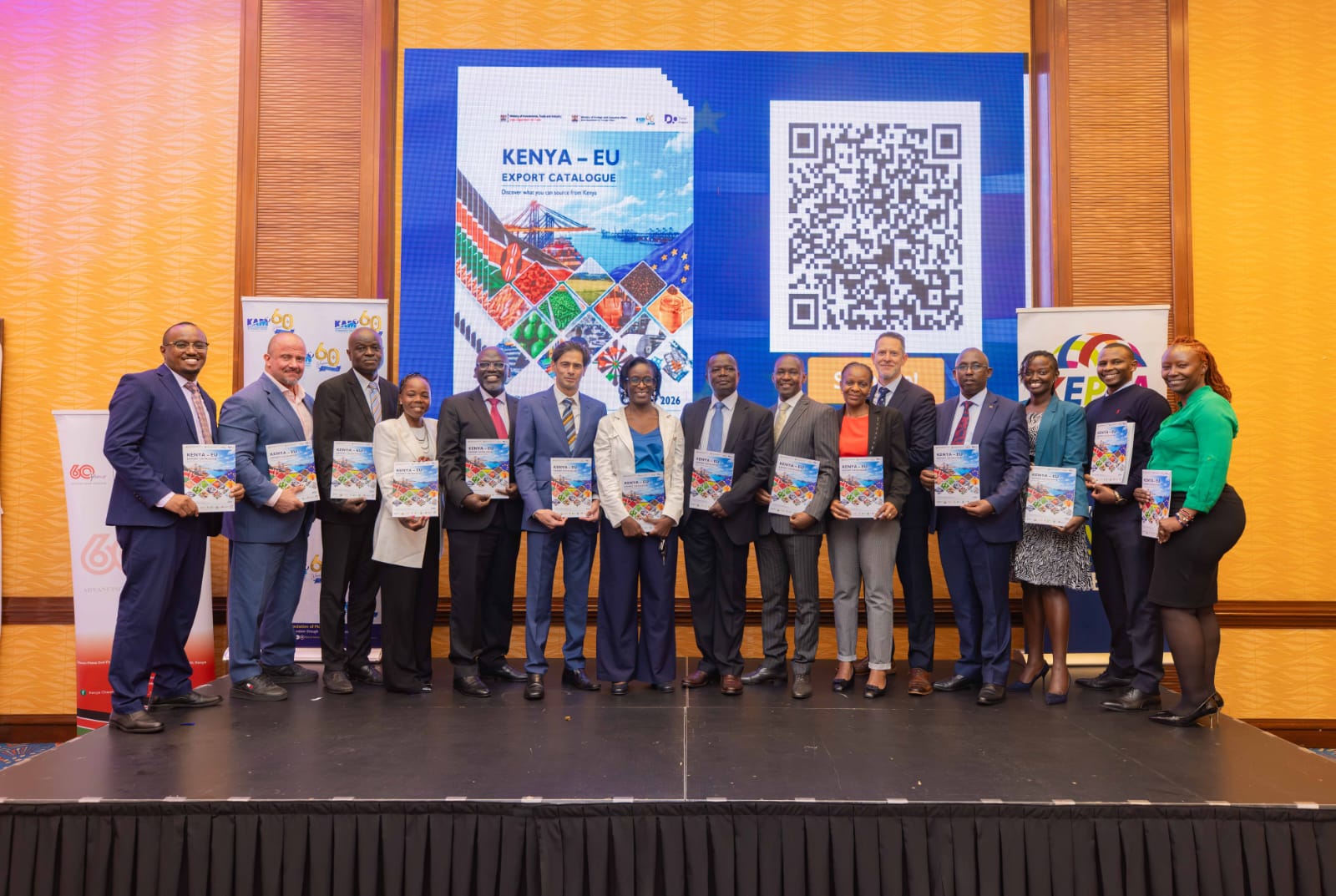
The Kenya–EU Export Catalogue 2026 seeks to connect local manufacturers, producers and exporters with buyers in the 27-member European Union, a market with more than 450 million consumers and a gross domestic product exceeding €18.8 trillion.
Kenya’s exports to the bloc are valued at approximately $1.85 billion, according to information provided by the catalogue’s organisers.
The catalogue aims to increase export earnings by showcasing Kenyan products, identifying new commercial opportunities and encouraging manufacturers to scale up production to meet international demand.
Its development involved industry associations and private-sector organisations, including the Agriculture Sector Network, Avocado Society of Kenya, Fresh Produce Consortium, Fresh Produce Exporters Association of Kenya, Kenya Flower Council, Kenya National Chamber of Commerce and Industry, and Kenya Private Sector Alliance.
The State Department for Trade, the State Department for Foreign Affairs and other government agencies also contributed to the initiative.