
New Guidelines Target Safer, More Accountable Mining Operations
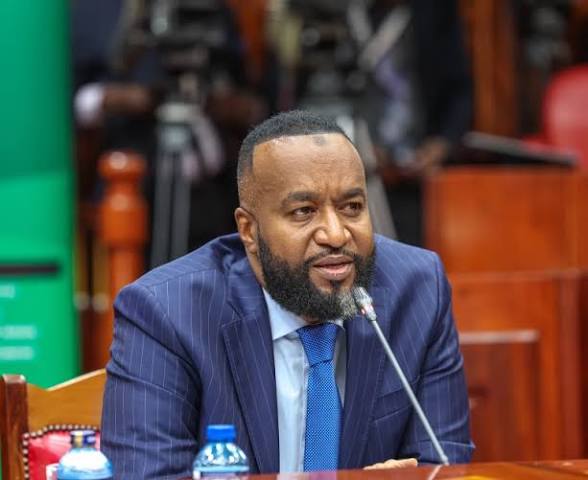
Cabinet Secretary for Mining, Blue Economy and Maritime Affairs Hassan Joho during a post event.
The Government has launched new policy documents aimed at strengthening governance in artisanal mining and promoting environmentally responsible operations as Kenya seeks to increase the mining sector’s contribution to the economy.
The Artisanal Mining Committee Manual and the Environmental and Social Impact Assessment (ESIA) Guidelines for the Mining Sector were unveiled during the Annual Mining Policy Brief and Stakeholders’ Forum in Nairobi.
Cabinet Secretary for Mining, Blue Economy and Maritime Affairs Hassan Ali Joho said mining had significant potential to contribute to national development, with the Government targeting to raise the sector’s contribution to Gross Domestic Product (GDP) from less than one per cent to 10 per cent by 2030.
He said artisanal and small-scale mining supported livelihoods, particularly in rural communities, but continued to face challenges including informality, unsafe working conditions, environmental degradation, limited access to finance and markets, and inadequate technical support.
Joho said the Artisanal Mining Committee Manual would strengthen grassroots governance, accountability, coordination and dispute resolution while improving safety and oversight in mining areas.
He noted that effective implementation would require training, capacity building and dissemination of the manual to counties to ensure that local mining committees understood their roles and responsibilities.
The CS emphasised the need to distinguish between artisanal, small-scale and large-scale mining, saying the different categories required appropriate governance and operational arrangements.
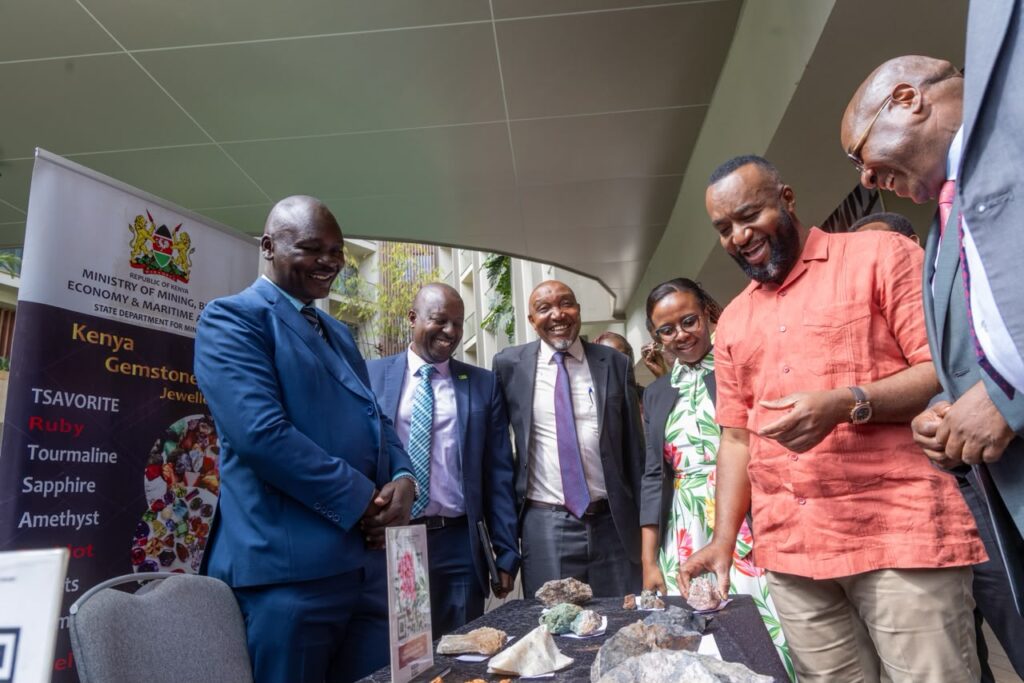
He said the Government wanted artisanal miners to progressively develop into small-scale operators as their activities expanded, adding that proper organisation and formalisation would improve productivity and accountability.
The ESIA guidelines, he said, would strengthen environmental and social risk assessment and management in the sector, including public participation, mine closure and rehabilitation.
Principal Secretary for the Blue Economy and Fisheries Betsy Muthoni Njagi said environmental governance was essential in ensuring that mining activities did not undermine aquatic resources and marine ecosystems.
Njagi noted that mining took place both on land and in the deep sea, warning that chemical residues and other pollutants flowing into rivers, lakes and oceans could threaten aquatic resources, food safety and food security.
She said Kenya’s Exclusive Economic Zone had an estimated economic potential of between Sh300 billion and Sh350 billion, compared with approximately Sh54 billion currently generated.
The PS called on stakeholders to ensure that mineral resources were exploited sustainably, while commending the ministry’s leadership and partners for supporting the Environmental Governance Programme (EGP).
Deputy Programme Manager of EGP Elisabeth Simelton said the programme was supporting Kenya and four other countries to improve environmental management in the mining sector through training, compliance support and participatory monitoring.
Speaking virtually from Stockholm, Simelton said the programme promoted practical assistance to mining operators to improve compliance rather than relying solely on punitive enforcement.
She said its interventions included training on mine closure and environmental management, occupational health assessments, efforts to reduce mercury use and support for alternative practices.
Simelton called for stronger coordination among government agencies, the private sector and communities, noting that formalisation should be accompanied by incentives, technical support and access to finance.
She also emphasised the need to integrate gender equality, human rights and safe working conditions into mining governance, while urging governments to allocate resources to sustain successful initiatives.
UNDP Deputy Resident Representative Madelena Monoja said the extractive sector supported more than 800,000 rural livelihoods, with artisanal and small-scale mining providing an important source of income for women and young people.
Monoja said the value of mining should not be measured only by mineral production but also by the safety of workers, protection of communities, environmental health and proper rehabilitation of mining sites.
She said the EGP, working with the National Environment Management Authority (NEMA), the State Department for Mining and county governments, had supported the strengthening of mining committees, participatory environmental monitoring and compliance assistance in five counties.
Monoja called for improved coordination among agencies responsible for mining, environment, land, labour and occupational safety, as well as stronger collaboration between national and county governments.
She also proposed a government-led development partners’ working group to improve coordination and support the implementation of mining sector reforms.
Joho said the Government was working to clarify the different categories of mining and address cases where cooperatives established to support artisanal miners were allegedly issuing licences to unauthorised operators.
He said the ministry had undertaken geophysical surveys to establish the location and quantities of mineral deposits, adding that increased exploration would help guide investment and development in the sector.
Other participants called for more training opportunities, better access to mining sites, improved electricity connectivity and transparency in the management of mineral revenues.
Invest Kenya representative Laban Buru said stronger coordination between national and county governments, reliable sector data and partnerships between investors and communities were necessary to attract responsible investment.
Transparency International representative Leting Andrew called for mechanisms to track mineral revenues to curb illicit mining, while Lugong Machinery representative Christine urged the ministry to provide clearer timelines for reviewing rejected or revoked licence decisions.
The forum brought together government officials, development partners, mining industry players and artisanal miners to discuss policy and institutional measures for developing a safer, more accountable and sustainable mining sector.