

New HRMPEB Chair Releases Exams as Board Expands Access to HR Certification
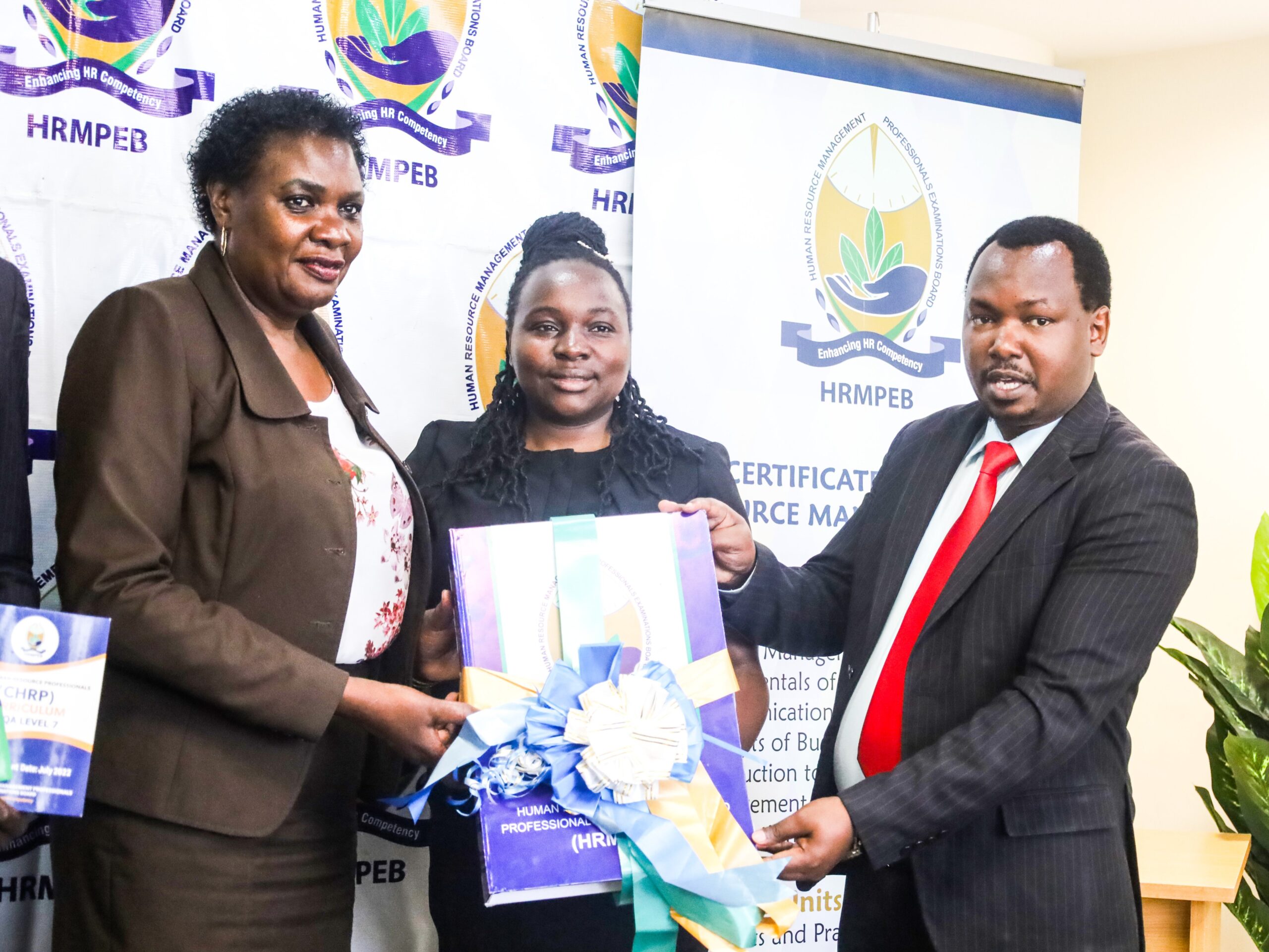
The New Human Resource Management Professionals Examination Board (HRMPEB) has officially released the December 2025 Certified Human Resource Professional (CHRP) and Competency-Based Education and Training (CBET) examination results, marking the third examination sitting under the revised three-cycle annual calendar.
Speaking during the release, HRMPEB Chief Executive Officer Margaret Nguu said the Board continues to offer three structured programmes the flagship CHRP, the Diploma in Human Resource Management and the Certificate in Human Resource Management designed to provide flexible and inclusive entry points into the profession.
“We want to be inclusive. We do not only focus on candidates with high grades but also give opportunities to those with lower grades to start at certificate level, progress to diploma and ultimately attain the CHRP,” Nguu said.
Under the current framework, the minimum entry requirement for the Certificate is a D grade, C- for the Diploma and C+ for the CHRP. The structure allows candidates to build competencies progressively, expanding access to professional certification for a wider pool of learners.
Nguu noted that in 2025, HRMPEB administered three examination sittings in April, August and December compared to two in previous years, in order to enhance flexibility and shorten completion timelines for candidates.
Board Chairperson Wycliffe Nyakina (FIHRM), while officially releasing the results, said the milestone went beyond the announcement of grades, describing it as a celebration of professionalism, discipline and ethical commitment within the HR sector.
“These results reflect not only competence but a commitment to integrity, resilience, ethical practice and service the core values that define our profession,” Nyakina said.

The December examinations were conducted between 3rd and 10th December 2025 across 15 centres nationwide. A total of 1,502 candidates sat for examinations under the Old and Revised CHRP curricula, while 324 candidates were examined under the CBET Diploma and Craft Certificate.
Female candidates continued to dominate the cohort, accounting for 75.3 percent of CHRP candidates and 78 percent of CBET candidates. The Board noted the persistent gender imbalance, with male candidates representing less than one-third, and called for stronger industry collaboration to promote diversity through mentorship, internships and role modelling.
Under the Old CHRP Curriculum, 295 candidates were examined, with an overall mean score of 62.45 percent and an average pass rate of 90.20 percent across Parts I, II and III. The highest mean scores were recorded in Human Resource Administration (77.21), Labour Laws (70.25) and the HR Research Project (66.31). The lowest mean scores were in Introduction to HRM (44.94), Organisation Change and Development (52.76) and HR Accounting (51.85). The old curriculum will be fully phased out after the April 2026 sitting.
Under the Revised Curriculum, 1,207 candidates sat for examinations. The highest mean scores were recorded in HR Management Information Systems (69.60), Performance Management and Productivity (70.18) and HR Consultancy and Advisory (67.36). The lowest means were in Accounting and Financial Management (52.92), Human Resource Development (60.95) and Organisational Development and Transformation (57.65).
Nyakina highlighted key reforms including the introduction of Part certificates, allowing candidates to receive recognition after completing each stage, and the launch of the Recognition of Prior Learning (RPL) pathway for professionals with over 15 years of experience.
The Board has also introduced dual certification partnerships with universities, enabling students to pursue academic degrees alongside the CHRP qualification. Universities yet to sign Memoranda of Understanding were invited to engage the Board.
The Board also cited inclusivity efforts, highlighting a candidate with a physical disability who successfully sat her examinations at the Nairobi MKU Centre, demonstrating that ability is not limited by disability.
The transition period for the Old Curriculum has been extended to April 2026, after which all remaining candidates will be moved to the Revised Curriculum.
“I urge all candidates under the old curriculum active or dormant to take advantage of this window and complete what you started,” Nyakina said.