
From a Struggle for Credit to an African SME Financing Mission
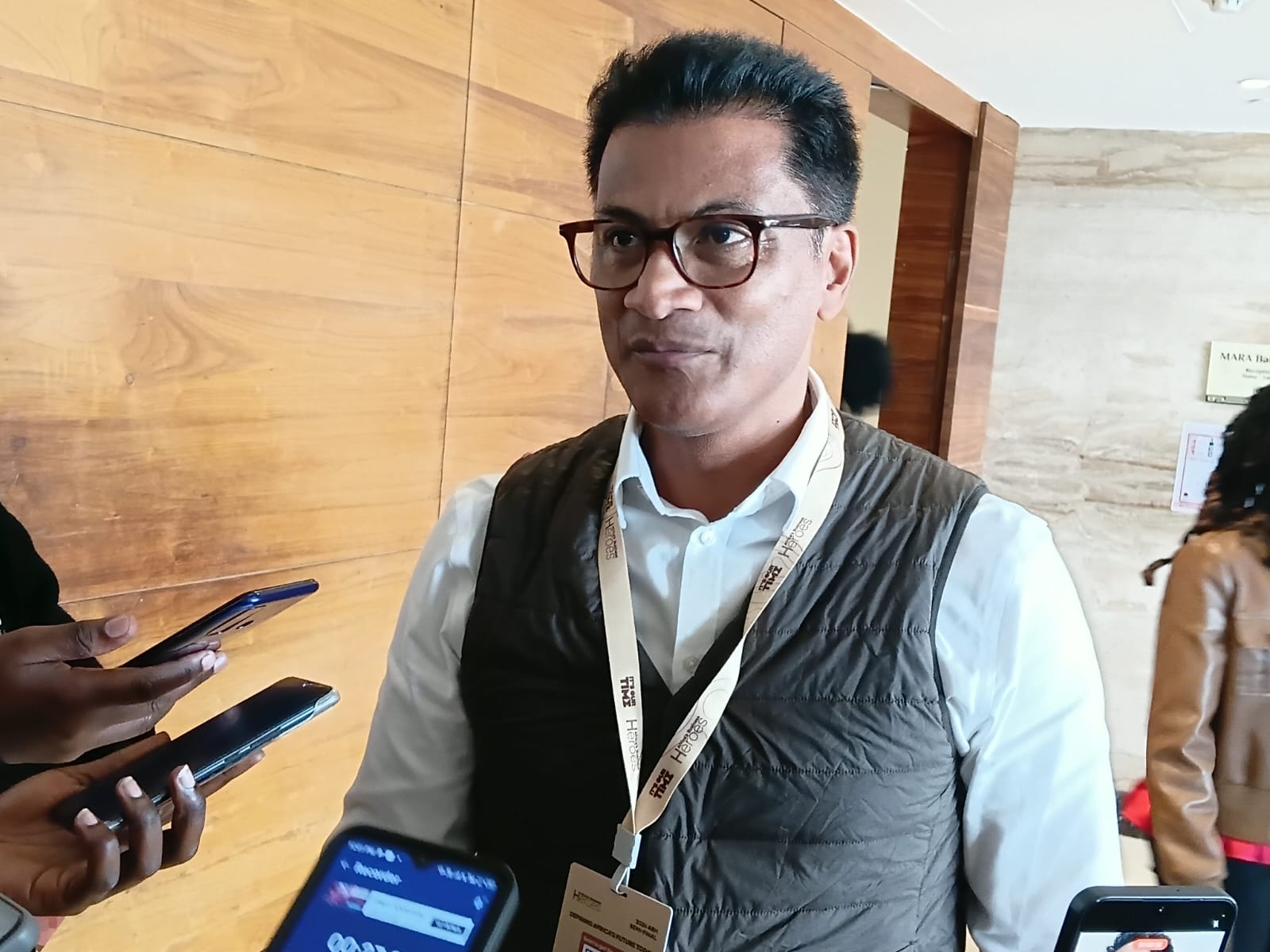
Hagasata Rakotoson, founder, Madagascar guarantee fund Photo/ Courtesy
For many entrepreneurs, the search for business financing can be as difficult as building the business itself. Without collateral or guarantees, even a promising idea can remain trapped on paper, unable to secure the credit needed to grow.
For Madagascar entrepreneur Hagasata Rakotoson, that struggle was not something he heard about from other business owners. He experienced it himself three decades ago.
As an entrepreneur, Rakotoson says he struggled to obtain credit because he did not have the guarantees lenders demanded. Instead of accepting the obstacle as part of doing business, he began thinking about a solution that could help entrepreneurs like himself access financing.
“30 years ago, as entrepreneurs, I struggled to have a credit because of lack of guarantees,” Rakotoson says. “The idea is to say, OK, so if we are lack of guarantees, let’s set up a guarantee fund. This is the idea.”
That idea eventually developed into a financial guarantee model designed to help banks lend to small and medium enterprises (SMEs) that would otherwise struggle to meet conventional lending requirements.
Eighteen years after starting the initiative, Rakotoson says the model had helped facilitate more than 40,000 SME credits in Madagascar, backed by more than $100 million in guarantees.
Now, he wants to take the experience beyond Madagascar and explore opportunities across Africa.
A different way of looking at SME financing
Rakotoson says his business is not primarily about directly lending money to SMEs. Instead, it provides guarantees to financial institutions, giving banks greater confidence to extend credit.
“We’re offering guarantees for the bank,” he explains. “It’s easiest for the bank to lend money when they say that behind there is a guarantee.”
The approach is built around a simple problem: many entrepreneurs may have viable businesses but lack the collateral required by traditional lenders.
For Rakotoson, providing a guarantee can help bridge that gap between the entrepreneur seeking capital and the financial institution concerned about the risk of lending.
He says the impact can extend beyond individual businesses.
In Madagascar, he says, SMEs supported through the model have doubled their turnover, creating a wider economic effect.
“When you help SMEs to be financed, then you develop the country,” he says, describing his motivation as a combination of entrepreneurship and patriotism.
Looking beyond traditional banking
Rakotoson’s ambition is no longer limited to conventional bank lending.
He sees the rapid growth of telecommunications and mobile-based financial services as another opportunity to address the financing gap facing small businesses.
According to him, telecommunications companies are already delivering nano-credit through mobile phones, but entrepreneurs can still struggle to access such financing because of the absence of guarantees.
His proposed solution is to incorporate guarantees into these small digital loans.
“The target is to put guarantees in each nano-credit,” he says.
The idea reflects his broader belief that Africa’s financing challenges require new approaches rather than relying entirely on traditional lending models.
The trust challenge
But taking the model across borders comes with its own obstacles.
Rakotoson says the emergence of telecommunications-based lending has changed the financial landscape, creating the need to convince telecommunications companies that guarantees can encourage them to extend more credit.
“The challenge is to have the trust of the telco,” he says.
For potential partners, questions about the source and strength of the guarantee fund are inevitable.
He says partnerships with institutions such as the World Bank and French development agencies have helped establish credibility around the model and its ability to support SMEs.
Building that trust will be central to Rakotoson’s African expansion plans.
Why Kenya matters
Kenya is among the markets he is now exploring.
Rakotoson was in the country seeking partnerships rather than presenting himself as an established player in the Kenyan market. His immediate strategy is to introduce the model to banks and demonstrate how it could complement existing financing systems.
“I’m exploring for partnership,” he says. “I’m just marketing my business to all of the banks in Kenya to make it attractive.”
But entry into the Kenyan market would require more than convincing individual financial institutions.
Rakotoson says he will also need to convince the Central Bank of Kenya that the business model is viable, based on the experience gained in Madagascar.
“After that, we have to convince the central bank that our business model is working, because it worked in Madagascar,” he says.
For now, Kenya represents an opportunity rather than a completed expansion.
Turning one entrepreneur’s problem into a wider solution
Rakotoson’s journey illustrates how a personal business challenge can evolve into a broader financial intervention.
The lack of collateral that once prevented him from accessing credit became the starting point for a model intended to give other entrepreneurs a better chance of obtaining financing.
His ambition now stretches beyond Madagascar, with Kenya providing a potential gateway for partnerships and eventual expansion.
At the heart of his mission is a belief that SMEs are not simply small businesses operating on the margins of an economy. They are, in his view, a crucial part of Africa’s economic transformation.
His message is straightforward: when entrepreneurs can access finance, businesses can grow; when businesses grow, economies can benefit.
For Rakotoson, the next chapter is about taking a solution born from his own struggle and testing whether it can help remove one of the continent’s most persistent barriers to SME financing: the absence of guarantees.