


Experts Back Indigenous Role in Africa’s Forest Protection at Zamba Heritage Congress
NAIROBI, 12,February,2026 ,Kenya — Indigenous peoples and local communities are central to the future of Africa’s forests, experts at the Zamba Heritage Congress said on the third and final day of deliberations on Indigenous Peoples and Sustainable Forest Management (SFM).
Opening the session, moderator Annah Agasha underscored that discussions throughout the congress had repeatedly highlighted Indigenous peoples, smallholders and forest-dependent communities as key actors in conservation.
“It is the last day, and we have gone through many technical discussions, but what keeps coming back is the people the Indigenous peoples, the smallholders, the communities,” she said. “This room is like a forest. Just as we celebrated, shared meals and built connections last evening, forests nourish and sustain us in the same way.”
Agasha noted that Indigenous communities bring unique knowledge systems rooted in ancestral territories many of which are forest landscapes making them indispensable partners in sustainable management.
Globally, Indigenous peoples account for about 6.2 percent of the population across 90 countries and contribute to the management or protection of at least 11 percent of the world’s forests. They are also estimated to safeguard nearly 80 percent of global biodiversity through stewardship of their traditional lands.
In Africa, Indigenous peoples represent between 4 and 5 percent of the population, a figure Agasha described as significant and often overlooked in environmental governance.
Quoting United Nations documentation, she emphasized that Indigenous peoples are “not just custodians of heritage, but central partners in conserving Africa’s landscapes, cultures and the future.”
However, participants acknowledged persistent challenges, noting that while legal and institutional frameworks recognizing Indigenous roles exist in many countries, they are still evolving and often inadequately implemented.
Call for Stronger Policy Support
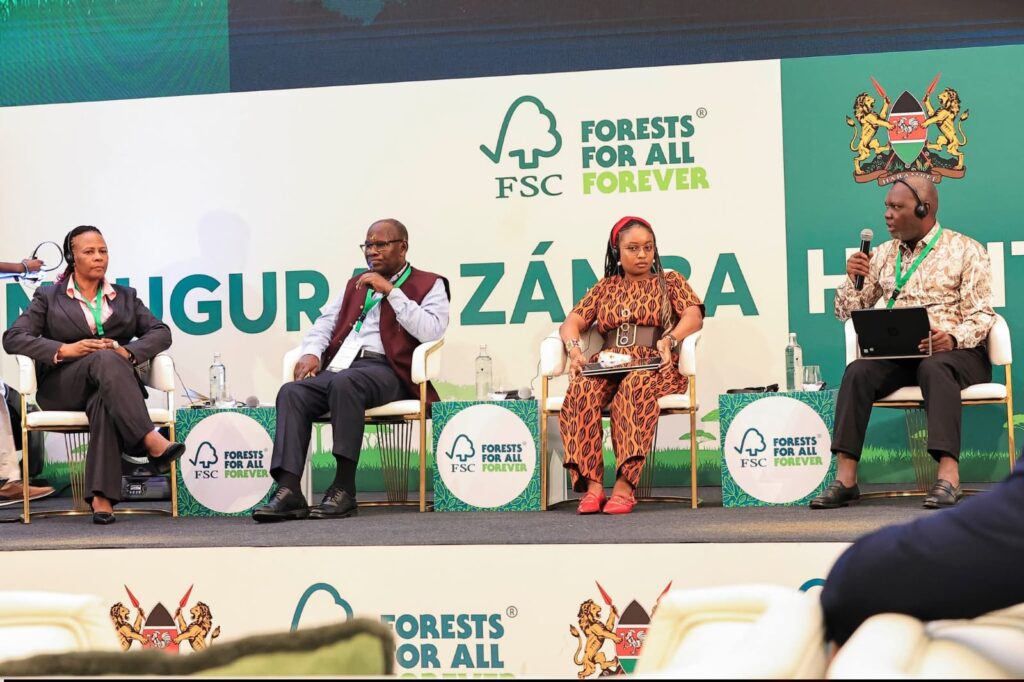
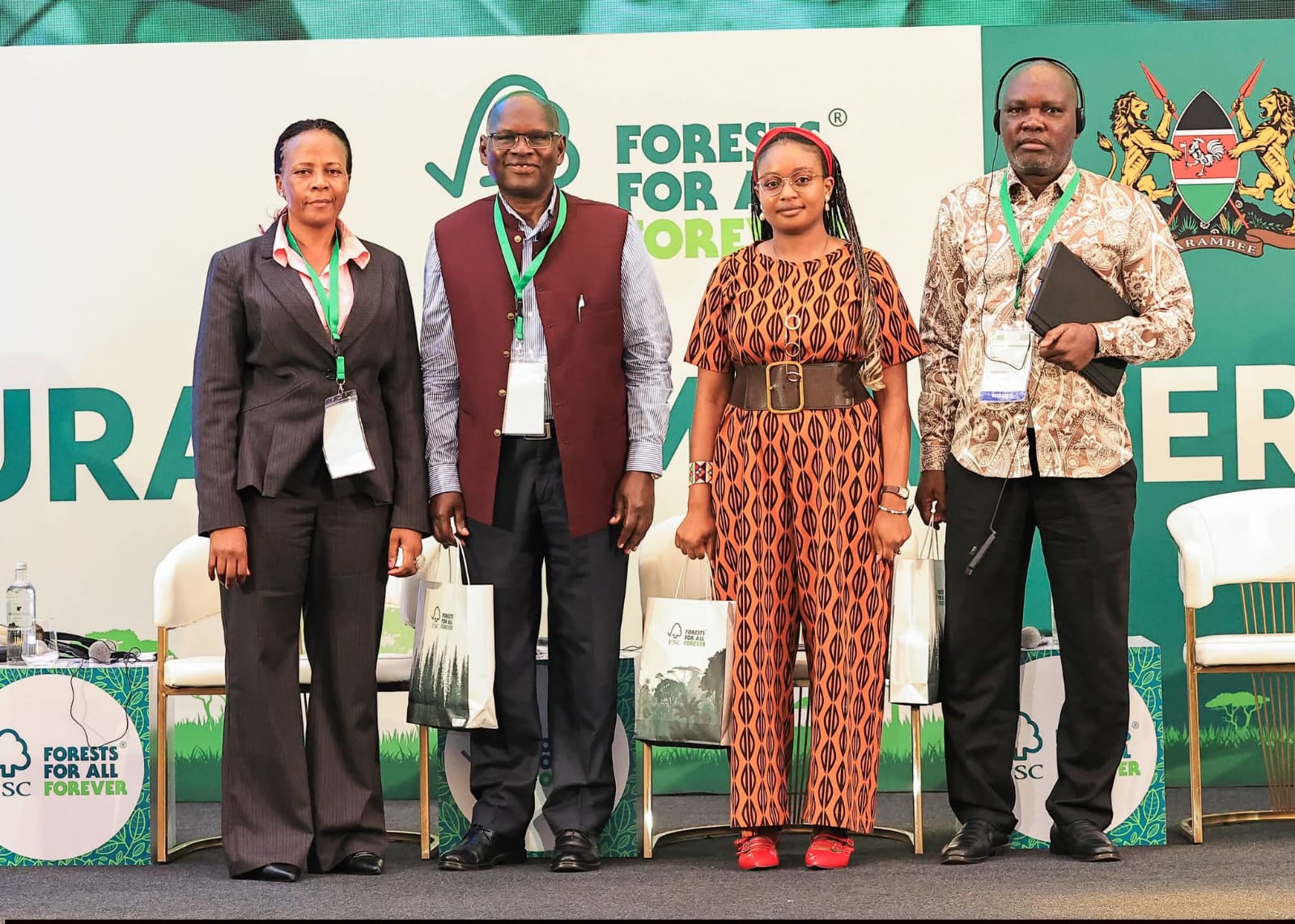
During a Panel discussion, Professor John Ole Kiyiapi, FSC Africa Advisory member and forestry expert, highlighted the need to strengthen community ownership and access rights as a priority for governments and partners.
Drawing from his experience assessing a community-managed forest in Narok County locally known as the “Forest of the Lost Child” Kiyiapi described it as entirely owned and run by the community, with support from local and international organizations.
“The community was deeply invested in it. They saw the forest not only as a source of livelihood, but also as a spiritual and cultural space they treasured,” he said. “Across the world, Indigenous communities are often more committed to protecting forests and natural resources than we assume.”
He stressed that many Indigenous groups remain marginalized despite their desire for development and improved livelihoods, calling for better organization and empowerment to enable them to take their rightful role in forest governance.
“In Kenya, we already see a wide variety of community participation in forest management, but the key issue has always been access whether communities own the forest or have clear user rights,” Kiyiapi explained. “Empowering policies must allow them to benefit from forest resources and nature-based enterprises.”
He also pointed to civil society’s role in mobilizing communities and building grassroots capacity that eventually shapes national policy frameworks.
“Awareness begins locally, spreads across regions, and ultimately reaches the policy level,” he said, noting that Kenya’s forest and wildlife laws now recognize community roles, including the establishment of community forest associations and conservancies.
Indigenous Leaders Demand Inclusion and Fair Benefits
Adding the perspective of Indigenous rights advocates, RAPALEAC representative Moussele Diseke Guy called for stronger collaboration to ensure forest-adjacent communities directly benefit from conservation and forest-based economies.
“We must ensure that Indigenous people living next to forest exploitation benefit and receive the minimum needed to live with dignity,” he said, stressing that integrating traditional knowledge with scientific approaches leads to better forest management outcomes.
Guy emphasized the need for legal recognition of land and territories to address land grabbing and unsustainable exploitation, alongside mechanisms ensuring communities participate fully in decision-making processes.
“Our needs are clear: involvement in governance, respect for traditional knowledge, equitable sharing of benefits, and support for community enterprises,” he said.
He further called for capacity-building programmes, simplified access to information, legal and technical support, and transparent grievance mechanisms to help communities defend their rights and resolve conflicts.
Promoting bio-economy approaches and value chains linked to forest resources, he added, could provide sustainable alternatives to destructive practices while improving livelihoods.
Additionally, Cindy Kobei, Advocacy Officer and Lawyer from Ogiek Community speaking during a panel discussion, recommended collaboration and teamwork at Zamba Heritage Congress while she underscored the need to fully integrate Indigenous communities into forest restoration and conservation initiatives from the very beginning, stressing that the UN Declaration on the Rights of Indigenous Peoples and Forest Stewardship Council (FSC) principles require projects to uphold Free, Prior and Informed Consent (FPIC) as a continuous process rather than a one-time formality.
She emphasized that Indigenous peoples must participate across the entire value chain from planning to implementation and benefit-sharing so they can exercise their right to self-determination and negotiate how activities take place on their ancestral lands, including natural forests and plantations.
Kobei noted that Indigenous communities have long safeguarded biodiversity through traditional knowledge and sustainable management practices, calling for stronger partnerships with Indigenous organizations, including in resource mobilization efforts, to ensure they have direct access to funding and play a central role in shaping solutions that affect their territories.
Shared Responsibility for Africa’s Forest Future
Speakers agreed that governments, civil society, private sector actors and development partners must work collaboratively to strengthen Indigenous leadership in forest stewardship.
The Zamba Heritage Congress discussions has a renewed call for inclusive policies, rights-based approaches and long-term investment in community-led conservation as essential to safeguarding Africa’s forests and biodiversity.
Participants maintained that recognizing Indigenous peoples as partners rather than beneficiaries will be critical to achieving sustainable forest management across the continent.

I have been surfing online more than three hours today, yet I never found any interesting article like yours. It is pretty worth enough for me. Personally, if all site owners and bloggers made good content as you did, the net will be much more useful than ever before.