
Drought Drives Cross-Border Displacement into Dadaab as Rights Crisis Deepens
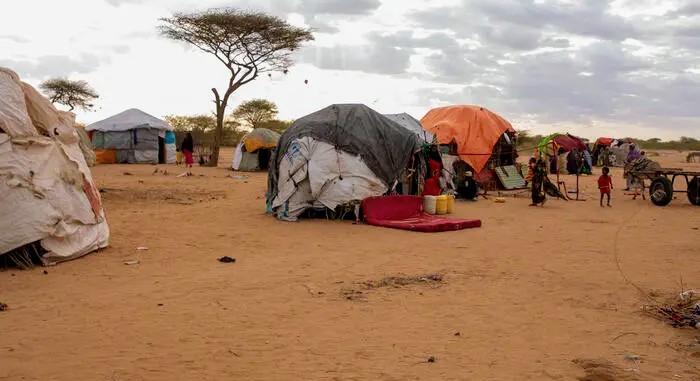
Somali refugees in Dadaab have been pitching makeshift shelters on the outskirts of one of the camps.Photo Courtesy|© UNHCR/Charity Nzomo
Families Flee Only When Survival Collapses
Nairobi, Kenya, April 2, 2026 – Prolonged drought in Somalia is forcing families to flee across borders into Kenya. Humanitarian agencies warn of a growing human rights crisis.
At a stakeholders’ forum in Nairobi ,William Ejalu, Head of Office in Dadaab for United Nations High Commissioner for Refugees (UNHCR),while speaking virtually, said displacement is no longer a choice but a last resort. “People move when there is no rain, no food, and no livestock left,” he said, noting that most families exhaust all their options before fleeing.
Drought, Conflict and Poverty Fuel Crisis
Ejalu described drought as a factor that worsens existing problems like conflict, poverty, and weak public services in Somalia.
He explained that repeated failed rainy seasons have destroyed livelihoods, especially among pastoralist communities. This makes cross-border movement into Dadaab a predictable outcome rather than an unusual trend.
Displacement Happens in Stages
The crisis does not happen suddenly, Ejalu noted. It unfolds gradually. Families often move from villages to towns, then to informal settlements, and finally across borders, facing risks like violence, exploitation, and family separation along the way.
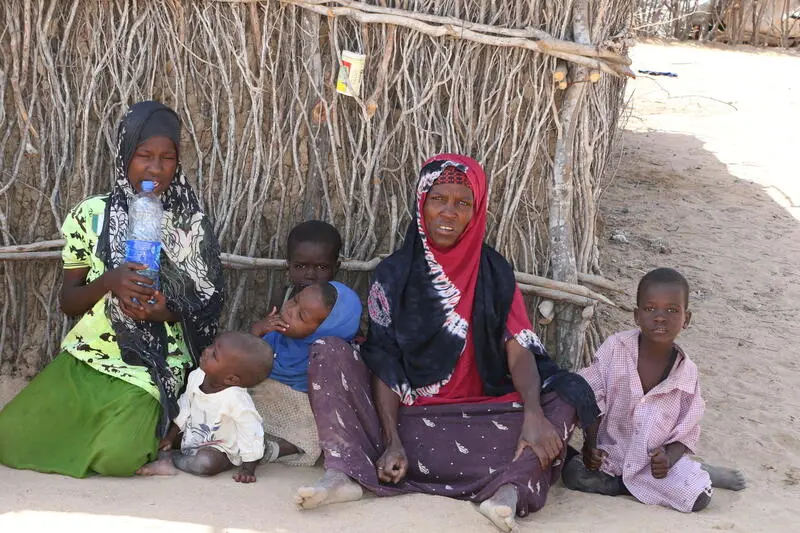
Photo & Caption Courtesy of|© UNHCR/Abdullahi Mire
He called for a response that focuses on people’s rights and protects them throughout their journey, not just at their destination.
Pressure Mounts on Dadaab and Host Communities
The rising number of arrivals is stretching services in Dadaab, including water, healthcare, education, and shelter. Host communities, already affected by climate stress, are also facing increasing pressure.
Ejalu pointed to Kenya’s Shirika Plan as a path toward integrated solutions that support both refugees and local populations through improved infrastructure and services.
Somalia Pushes for Adaptation Amid Growing Challenges
Meanwhile, Somalia is enhancing climate adaptation efforts, according to Faiza Yusuf, Director of Climate Change at the Ministry of Environment and Climate Change ,Federal Government of Somali.
She mentioned that the country faces erratic weather patterns, with prolonged droughts followed by floods. This worsens water scarcity and food insecurity. National adaptation plans now prioritize areas like water management, food security, urban development, and energy.
Limited Financing Slows Progress
Despite advances in policy, Yusuf acknowledged that implementation remains slow due to limited climate funding, weak institutional capacity, and coordination issues.

She warned that climate shocks are happening faster than response systems, leaving millions vulnerable.
At the same time, Maureen Okoth,Senior Attorney, from Women’s Link Worldwide noted the key challenges include limited access to climate finance for women due to structural inequalities like land ownership barriers, a lack of relevant information, and weak institutional coordination across countries in the region. These gaps continue to hinder effective adaptation efforts.
Despite some progress, such as including gender considerations in national climate policies like Kenya’s National Climate Change Action Plan, Okoth stated that implementation is still weak. She questioned whether policy commitments have resulted in real protection for women and children, concluding that the answer is mostly negative.
Okoth called for stronger legal and policy frameworks that are responsive to gender, better access to climate finance, and awareness campaigns aimed at vulnerable communities. She also urged governments and stakeholders to use indigenous knowledge, especially from women, to create locally relevant adaptation strategies.
“Women are central to community resilience. Their knowledge and lived experiences must be at the heart of climate solutions,” she said.
According to the Report Authored by David Otieno from Amnesty International (A.I) , A.I interviewed three women survivors who had moved with their families to Dadaab from Dalhiska. Their testimonies outline how drought destroyed their village farms, and how Dalhiska camp, their first destination, was slightly better but also experienced drought-related challenges, including inadequate food and water.

Dalhiska camp appeared to be a meeting point for people escaping two different climate change impacts: IDPs who had survived the four-year drought in their home areas but moved because of devastating floods that followed, and others who had stayed behind despite flooding but subsequently moved due to drought.
Abdullahi, a 65-year-old man originally from Bulagadud, moved to Dadaab with 18 children, two wives and his mother from Dalhiska:
“I was a farmer in Bulagadud. I used to grow maize, potatoes, onions, beans and vegetables. I was also doing business. However, in 2023, river Jubba flooded both our homes, shop and farms. There was no clean water, and we had to drink the flood water. Many people had diarrhoea and left the village. I also had to leave and moved to Dalhiska. At Dalhiska, we used to get some little food from the World Food Programme. But we would mostly make porridge although the situation here was slightly better than Bulagadud. At some point they were only giving food to pregnant women. Clean water was also unavailable in Dalhiska and you had to pay for it or else you had to use salty water. Many people had diarrhoea. That is why we left Dalhiska and moved to Dadaab.” he narrates.
Call for Urgent, Coordinated Action
The experts emphasized that climate-driven displacement is already a reality, not a future risk.
“Without sustained investment and inclusive policies, displacement will continue to rise,” Ejalu said. He urged governments and partners to strengthen protection systems and build long-term resilience in the region.