
Gender-Blind Climate Policies Leaving Women and Children Exposed in Horn of Africa, Experts Warn
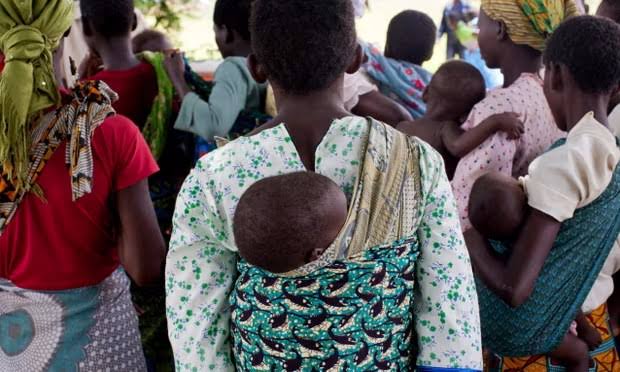
Photo showing gender and child rights in climate adaptation strategies across the region. Photo courtesy| The Guardian.
Nairobi, Kenya, April 2, 2026– Experts are concerned about climate policies in the Horn of Africa. These policies do not adequately address how climate change disproportionately affects women and children. They warn that current interventions are mostly gender-blind, even though there is increasing evidence of vulnerability.
During the Amnesty International forum on climate displacement in Somalia, Maureen Okoth, Senior Attorney at Women’s Link Worldwide, explained that the effects of climate change are not the same for everyone. Marginalized groups carry the heaviest burden. Policy frameworks and financial mechanisms often ignore these groups, so it is essential to deliberately include gender and child rights in climate adaptation strategies across the region.
Okoth pointed out that women are not a single group. Their experiences differ based on geography, socio-economic status, and cultural contexts. In arid and semi-arid areas, women and girls must walk longer distances for water, which increases their risk of insecurity and limits their chances for education and economic participation. In coastal and conservation areas, displacement has harmed livelihoods, worsening inequality.
She noted that children, especially in Somalia, Ethiopia, Sudan, and Eritrea, are among the most vulnerable to climate shocks. Disasters like floods and droughts disrupt education, cause disease outbreaks, and lead to both internal and cross-border displacement.
“Children are missing school, facing health risks, and living in increasingly precarious conditions due to climate-related disruptions,” she said.
The forum also addressed worsening food insecurity and malnutrition. Women often give up their own nutrition to feed their families. Climate stressors also contribute to rising gender-based violence, especially in displacement situations where basic services and protection are limited.
Despite some progress, such as including gender considerations in national climate policies like Kenya’s National Climate Change Action Plan, Okoth stated that implementation is still weak. She questioned whether policy commitments have resulted in real protection for women and children, concluding that the answer is mostly negative.
Key challenges include limited access to climate finance for women due to structural inequalities like land ownership barriers, a lack of relevant information, and weak institutional coordination across countries in the region. These gaps continue to hinder effective adaptation efforts.
Okoth called for stronger legal and policy frameworks that are responsive to gender, better access to climate finance, and awareness campaigns aimed at vulnerable communities. She also urged governments and stakeholders to use indigenous knowledge, especially from women, to create locally relevant adaptation strategies.
“Women are central to community resilience. Their knowledge and lived experiences must be at the heart of climate solutions,” she said. Without intentional and inclusive action, climate change will keep worsening inequality across the Horn of Africa.