

Wajir Youth Trained on Data Privacy and Online Safety in Safer Internet Day Initiative
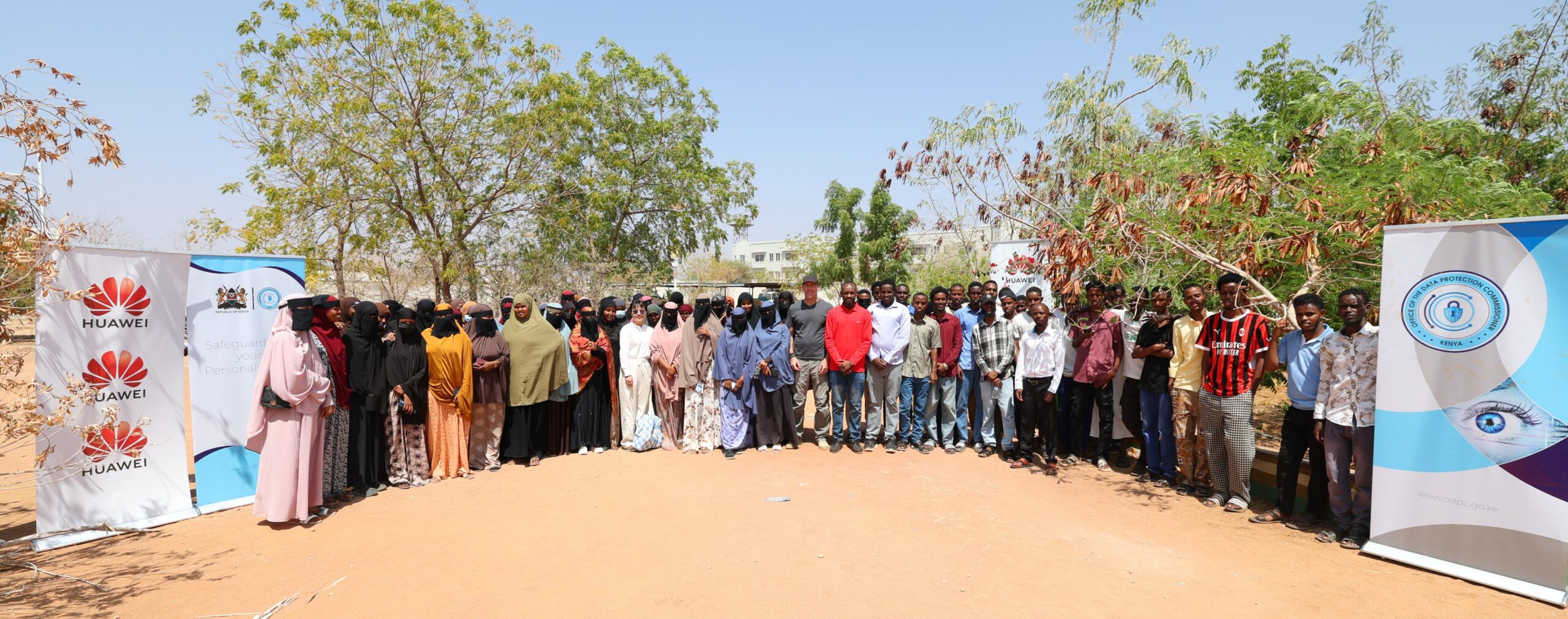
Participants and Facilitators from ODPP and Huawei pose for a photo during the training.
Wajir, February 16, 2026 — More than 200 young people in Wajir County have been equipped with critical digital safety and data protection skills following a four-day training programme led by the Office of the Data Protection Commissioner in partnership with Huawei Kenya and the Ministry of ICT and the Digital Economy.
The training, held from February 9–12 to mark Safer Internet Day, focused on empowering students many of them first-time internet users with practical knowledge on how to safeguard personal data, recognise online risks, and engage responsibly in the digital space under this year’s theme, “Together for a Better Internet.”
Organisers placed special emphasis on reaching girls and young women, who face greater barriers to digital access and skills. National statistics indicate that only 35 percent of women in Kenya use mobile internet compared to 50 percent of men, highlighting a persistent gender digital divide.
Participants were introduced to key principles of data privacy, responsible digital citizenship, and safe online behaviour, aligning with Kenya’s legal framework on personal data protection. Trainers also demonstrated how individuals can seek redress when their information is misused.
Vincent Musyoki, a trainer with the data protection authority, said direct engagement with youth was essential as connectivity expands into previously underserved regions.

“As more young people come online, especially in regions with growing connectivity, awareness becomes the first layer of protection. Marking Safer Internet Day through direct engagement allowed us to translate rights and responsibilities into practical knowledge,” he said.
The programme also included facilitators from Computers for Schools Kenya, who guided learners on understanding their rights as data subjects and how to report violations.
“Participants gained a clear understanding of internet safety, data protection principles, and their rights. Importantly, they now know how to engage the Office of the Data Protection Commissioner if their personal information is misused,” said trainer Adams Makau.
For many students, the sessions marked their first structured exposure to digital literacy and online safety.
“I now understand how to protect my personal data and what my rights are online. Learning this showed us that creating a better internet starts with informed and responsible users,” said trainee Abdimajid Hassan Hussein.
Another participant, Muna Hassan, noted that the training helped build confidence among girls navigating digital platforms.
“Understanding data protection and online rights is essential for anyone using digital platforms today. This training gave girls and young women the knowledge and confidence to navigate the internet safely,” she said.
Stakeholders said the initiative is particularly significant for frontier counties, where limited connectivity and digital literacy gaps have historically excluded many young people from opportunities in the digital economy. With millions of Kenyans employed in micro, small and medium enterprises increasingly relying on e-commerce and mobile technology, digital awareness is becoming a prerequisite for inclusive economic participation.
Musyoki emphasised that the effort goes beyond online safety to long-term empowerment.
“Training youth in Wajir was not just about online safety. It is about empowering them to engage in the digital economy, access information, and protect their rights so they can thrive locally and nationally,” he said.
The partners said the programme reflects a broader national push to bridge the digital divide, noting that a significant portion of Kenyans remain offline, particularly in rural and marginalised areas. By targeting young people with foundational digital skills, the initiative aims to build a generation that can safely harness technology for education, livelihoods, and civic engagement.
Through the Safer Internet Day activities, the organisations reaffirmed their commitment to promoting online safety, digital inclusion, and rights-aware internet use across all regions of the country.