
IPF Launches Study on Wealth Tax, Urges Gradual Reforms Before Implementation
The Institute of Public Finance (IPF) on December 9, 2025, launched its latest research paper titled “Tax the Rich: Can Kenya Get Wealth Taxation Right?” at the Ngong Hills Hotel, bringing together policymakers, government agencies, civil society actors, development partners and journalists to interrogate the feasibility of wealth taxation as a tool for reducing inequality in Kenya.
Speaking during the launch, Victoria Justus of IPF said the study offers timely, evidence-based and practical insights into how Kenya can strengthen revenue mobilisation systems while rebuilding public trust in taxation. She noted that the research contributes to ongoing discussions on how fiscal policy can better support development, equity and sustainable growth, adding that IPF’s work spans finance, macroeconomic analysis, inequality and refugee inclusion. Victoria said the institute looks forward to robust public debate on the findings and their implications for policy formulation.
Providing an overview of the study, IPF economist Veronica Ndegwa said the paper is a contribution to the growing global and national debate on taxing wealth at a time when Kenya’s inequality continues to widen despite years of economic growth.

She noted that nearly half of the population still lives in poverty, with millions pushed into extreme deprivation, while wealth continues to concentrate among a small elite.
According to the report, the country’s public finance and redistribution systems have struggled to adequately address inequality, making wealth taxation not just an economic issue but one that touches on social cohesion, stability and Kenya’s long-term development prospects.
Ndegwa emphasized that the study does not advocate for the immediate introduction of a wealth tax. Instead, it proposes a carefully sequenced reform pathway that begins with strengthening Kenya’s administrative, legal and institutional capacity before considering the design and implementation of such a tax. She said Kenya “cannot tax what it cannot see,” underscoring the need for foundational reforms to improve wealth visibility and transparency.
Presenting the paper, lead author Daniel Murakaru, in collaboration with Oxfam, outlined key recommendations beginning with the establishment of a centralized and comprehensive wealth database.
The database should capture detailed information on real property ownership, rental income, mortgages, securities, digital and cryptocurrency assets, domestic and foreign bank accounts, as well as beneficial ownership through trusts and nominee arrangements.
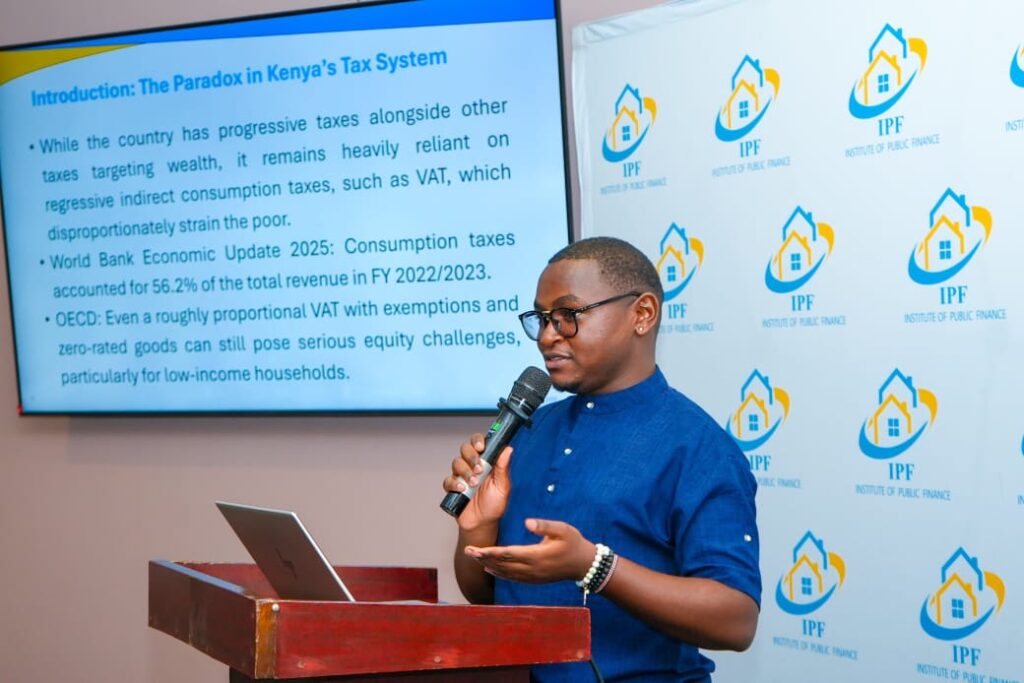
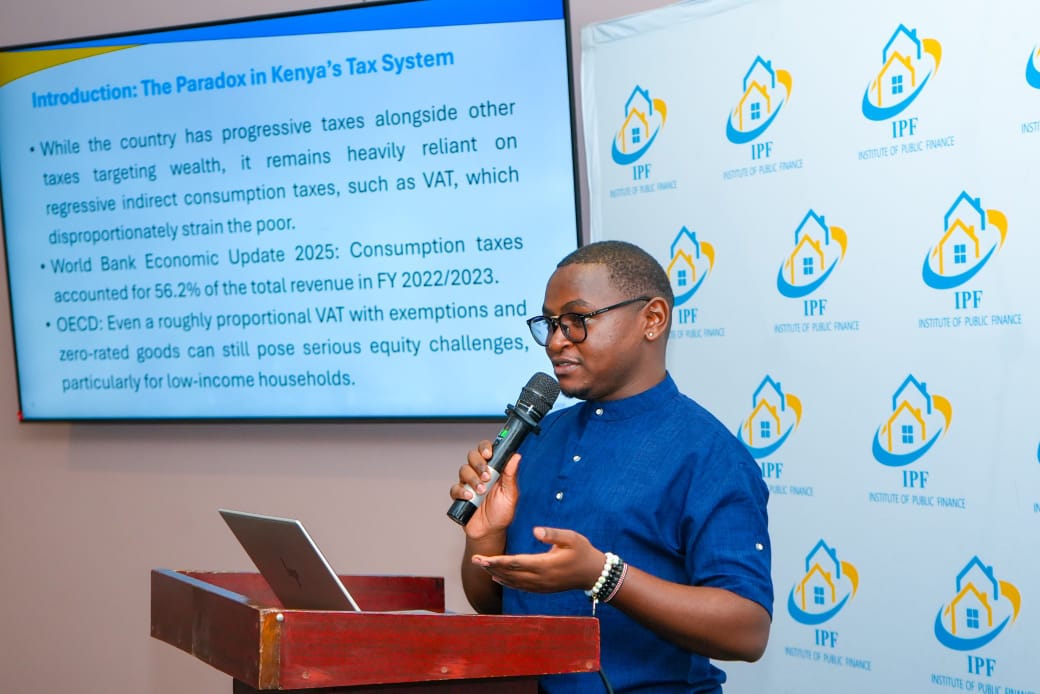
Daniel Murakaru The IPF Report Author.
The study recommends integrating this database across institutions such as the Lands Registry, Companies Registry, Kenya Revenue Authority (KRA) and financial reporting entities to enable real-time cross-referencing and effective enforcement.
The report further calls for Kenya to develop mechanisms for cross-border information exchange in line with the OECD’s Common Reporting Standard to curb offshore tax evasion. It also proposes the introduction of a voluntary disclosure programme ahead of any wealth tax, offering limited amnesties or reduced penalties to encourage asset declaration, drawing lessons from compliance approaches used in Uganda and Rwanda.
To safeguard public trust, the study stresses strict adherence to constitutional privacy protections and the Data Protection Act, including secure data systems, encryption and transparent oversight.
In the interim, the paper recommends reforming existing wealth-related taxes, including harmonising capital gains tax with the 30 per cent corporate income tax rate as an immediately actionable step.
It also highlights the role of civil society and civic coalitions, working with regional networks, in advocating for progressive tax reforms and countering elite resistance through evidence-based engagement.
Also Read: https://newslightkenya.co.ke/7720-2/
On future design, the study proposes that any wealth tax should target only the truly wealthy through a high exemption threshold of about KES 129 million, apply modest progressive rates ranging from 0.01 to 3.5 per cent, avoid double taxation, and include safeguards against capital flight such as mandatory offshore asset declarations and alignment with international transparency standards.
Revenues from such a tax, the paper concludes, must be transparently channeled towards redistributive priorities including universal healthcare, quality public education and social protection to gain public legitimacy.
IPF noted that while implementing a fair and effective wealth tax is achievable, it will require deliberate institutional reform, strong political will and sustained public dialogue to ensure Kenya builds a more inclusive and just society.