
What Yara’s ‘Village Experience’ Taught Agribusiness About Scaling In Kenya
MWEA, KENYA —David Onyunde, a maize and horticulture farmer from Aboke village in Siaya County, once embodied the struggle of Kenya’s agricultural heartland. “For years, I relied on guesswork and recycled seed, and I didn’t understand what my soil truly needed,” he recalled. “My yields declined despite all my effort.”
David’s plight mirrors Kenya’s agricultural sector, a vital quarter of the national GDP currently battling erratic rains, soaring input costs, and land degradation. Modernization is no longer a choice; it is an economic survival tool. The search for a viable, scaled blueprint was the agenda for the thousands of attendees of the Agitech Grand Expo 2025 in Mwea.
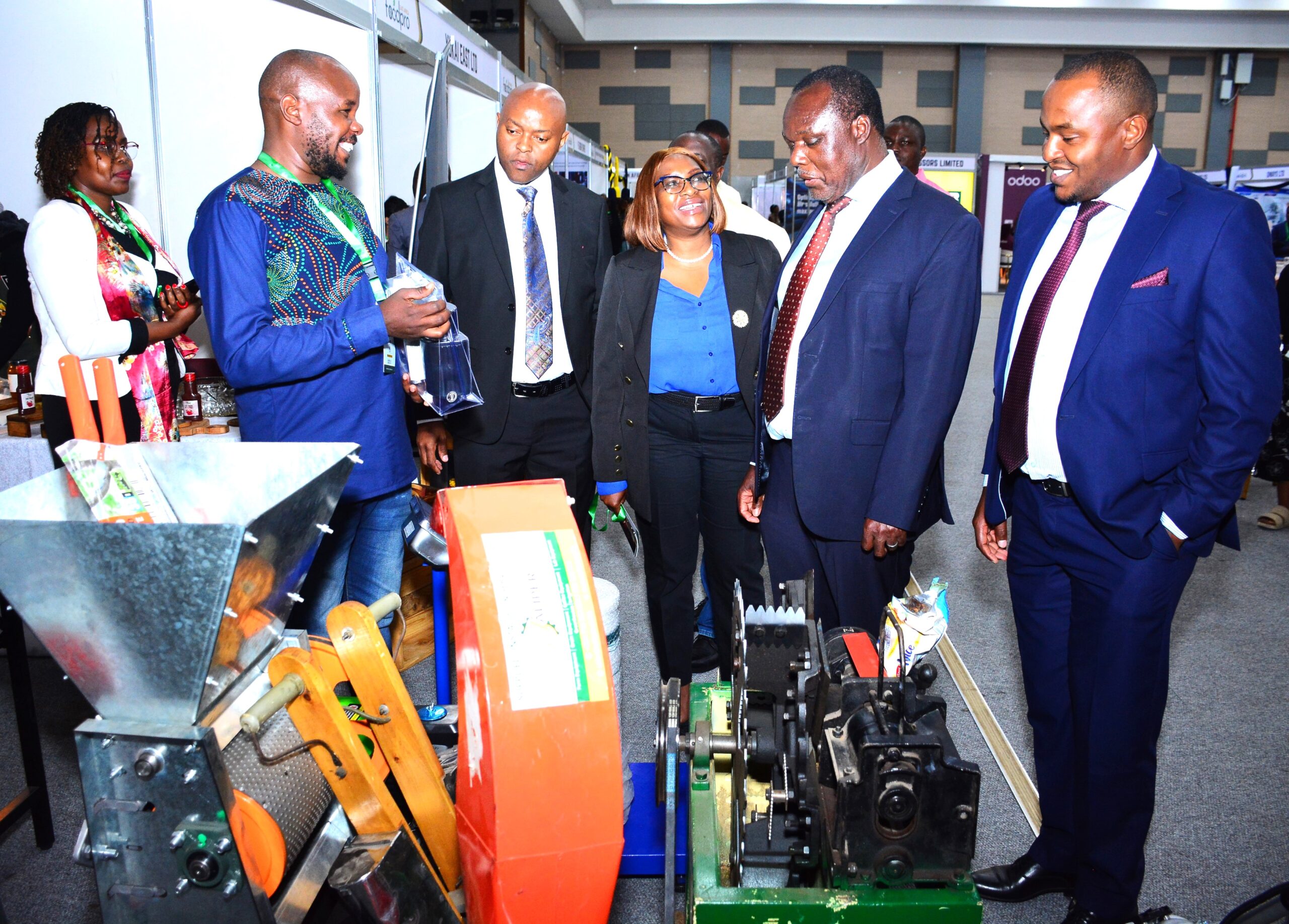
Amidst the gleaming displays of drones and hydroponics, the most potent lesson was contained within a retrospective exhibit: The Yara Village. Marking the company’s 30 years in Kenya, the Village was less a showcase and more an immersive, three-decade case study demonstrating how large-scale agricultural transformation is achieved, not through technology alone, but through deep, strategic, community-embedded partnership.
The essence of the Yara Village, according to Yara Kenya Managing Director, William Ng’eno, was the shift in focus from merely selling fertilizer to cultivating knowledge and capacity. “Our focus has always been to help farmers get more from every acre,” Ng’eno stated. “We’ve seen how knowledge and the right nutrition can transform not just productivity, but entire communities.”
The exhibit revealed three core strategic lessons that turned a corporate journey into an industry blueprint for scaling impact:
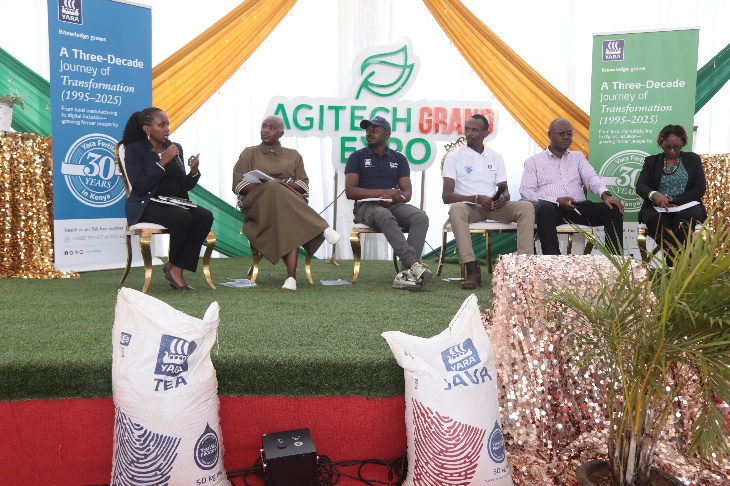
Panel sessions during Yara 30 years celebrations at Agitech Expo 2025 held in Mwea Kirinyanga County.
Lesson 1: Go Local: Embedding Expertise for Maximum Impact
The first strategic insight came from the evolution of Yara’s input strategy. The Village displayed the company’s progression from standard blends to new formulas tailored specifically for Kenya’s evolving soil and climate conditions. Crucially, this commitment to a tailored product is physically supported by an embedded knowledge infrastructure.
This includes local blending plants and a nationwide network of agronomists placed at the local level. These experts embed themselves in farming communities, advising on effective and sustainable crop nutrition programmes. This is amplified by Knowledge Centres, which serve as local hubs for education.
William Ng’eno underscored this point: “Transformation in agriculture is no longer optional. No country has reached middle-income status without first transforming its farming systems.” He added that the goal is to “deepen that work to see every farmer understand their soil, apply the right nutrients, and build resilience against climate shocks.” This commitment to localised expertise and supply de-risks new practices for smallholder farmers.
Lesson 2: The Hybrid Model: Fusing High-Tech with High-Touch
The Village demonstrated that the future of farming advisory is a hybrid one, leveraging the precision of digital tools and the confidence of human experts. Yara showcased its FarmCare app, a digital tool integrating soil data analytics, crop nutrition recommendations, and digital purchasing via M-PESA.
Agronomy Lead Godfrey Ikigu highlighted the strategic necessity of technology to achieve this scale of precision: “Digital tools are becoming as important as fertilizer itself. They allow farmers to make decisions based on data, not guesswork.”

Farmers attending the Yara demo farm during the Agitech Expo 2025.
Crucially, the exhibit stressed that data remains inert without human validation and trust. This high-tech advice is inseparable from the high-touch human element. Farmers like David confirmed this model’s effectiveness: “Things began to turn around when I started working with Yara Kenya’s agronomists. They helped me understand my soil and the specific nutrients my crops needed. Since then, my yields have improved noticeably and so has my income.” The strategic takeaway is that the FarmCare app provides the precision; the agronomist provides the confidence and context.
Lesson 3: Building a Self-Sustaining Ecosystem through Agro-Dealer Partnerships
The final, and perhaps most potent, lesson showcased how Yara invests outside its direct customer base to strengthen the entire agricultural value chain. This investment creates an ecosystem-like support structure that leverages local leaders.
The Village featured the story of Sabina, whose family agro-dealer shop, New Downtown Stores, was struggling to stay afloat. Through Yara’s partnership and the Yara Leadership Academy, she gained business mentorship, market insights, and reliable access to quality crop nutrition solutions. Sabina attributed her multi-franchise growth to this support: “Yara equipped us with the tools and confidence to scale. Their consistent supply, training, and partnership approach enabled us to better serve farmers, expand our reach, and offer fair, dependable solutions to our customers.”
Furthermore, successful farmers like David move beyond being customers; they become educators. After his yields improved, David diversified his farm and eventually hosted a regional Yara Knowledge Centre, training over 300 neighbouring farmers. These stories underscore that scalable growth is not merely transactional; it is achieved by de-risking and empowering the entire value chain; farmers and local retailers, through credit, training, and leadership development.
The Next 30 Years
As Yara Kenya positions itself for the next chapter, defined by climate neutrality and regenerative agriculture, the lessons from the ‘Yara Village’ provide a clear strategic roadmap for the industry.
Dr. Winnie Ng’ang’a, Director of Public Affairs and Government Relations for Yara Africa, summarized the imperative: “The future of food security depends on how well we collaborate. No single actor can transform the sector alone.”
The Agitech Expo concluded with a powerful realization: the blueprint for agricultural resilience is grounded in a blend of high-tech and human capital. Success in the next three decades will belong to those who apply these lessons, nurturing growth not only in crops but in the communities and leaders across the country.