

Africa Moves to Curb Climate Aid Dependence as Kenya Champions Homegrown Green Financing
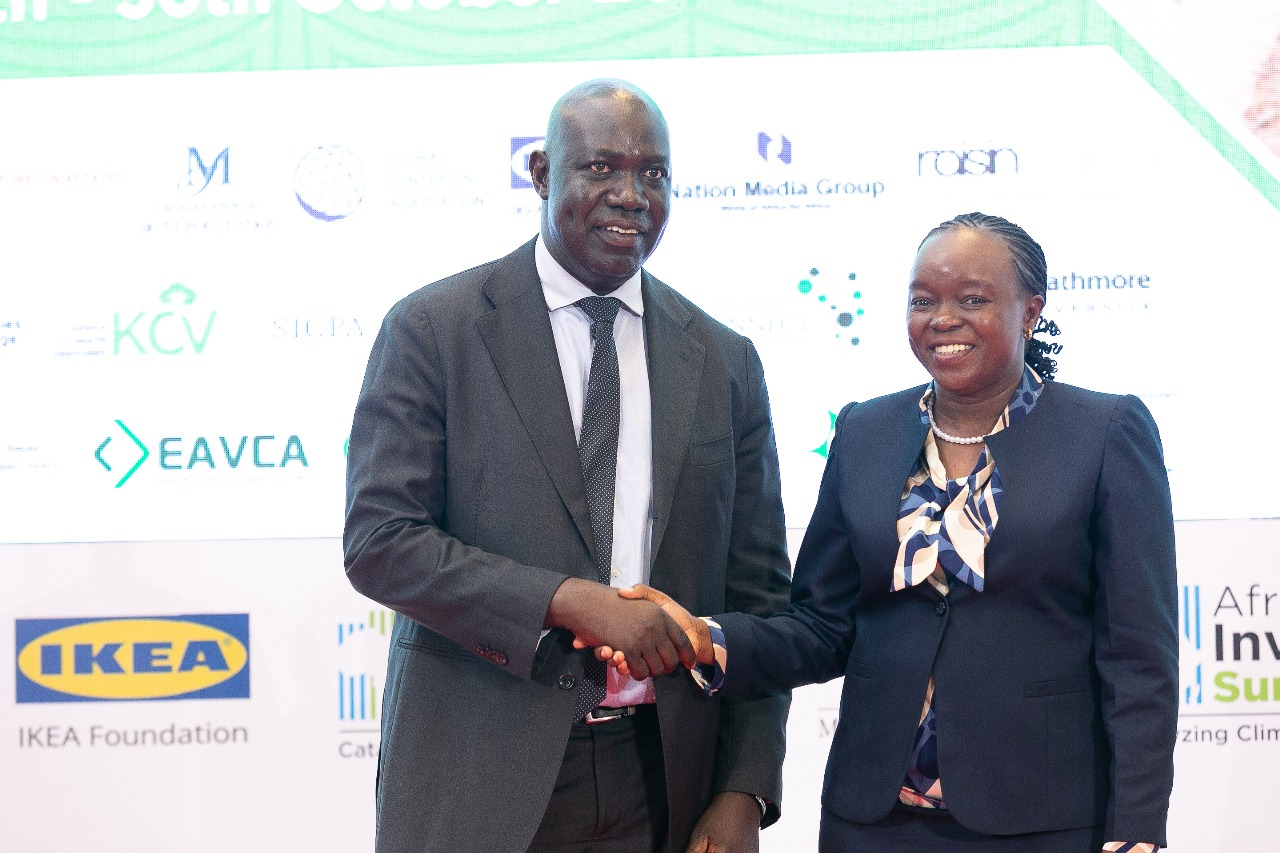
Cabinet Secretary for Environment, Climate Change and Forestry, Hon. Dr. Deborah Mlonga Barasa, and Kenya Climate Innovation Centre CEO Joseph Murabula stand together during the opening of the Africa Climate Investment Summit 2025 at The Edge Convention Centre, Nairobi.
Nairobi, Tuesday, October 28, 2025- Kenya has emerged as the rallying point for Africa’s ambition to finance its own green transition, hosting the Africa Climate Investment Summit (ACIS) 2025 in Nairobi a platform that underscored the continent’s growing resolve to reduce reliance on external aid and mobilize domestic resources for climate action.
The three-day summit, organized by the Kenya Climate Innovation Centre (KCIC) at The Edge Convention Centre, has brought together policymakers, financiers, innovators, and development partners under the theme “Unlocking African Investments into the Green Economy.”
Kenya’s Policy Drive for Green Growth
Cabinet Secretary for Environment, Climate Change and Forestry Dr. Deborah Mlonga Barasa said Kenya is positioning itself as Africa’s green hub by creating a predictable and investor-friendly regulatory climate.
“Kenya is open for green business. We have policy certainty and regulatory stability,” she said, highlighting new frameworks such as the Climate Change (Carbon Trading) Regulations, 2025, and incentives for green bonds and public-private partnerships.
Dr. Barasa noted that while Africa’s natural wealth remains vast, access to climate finance continues to be slow and uneven.
“Finance has become both the key to and a barrier against climate action. Access remains complex, leaving Africa’s climate ambitions largely unfunded,” she said.
She urged investors to move beyond outdated risk perceptions and invest in Africa’s climate solutions.
“Let this summit be defined not by speeches but by deals sealed, not by pledges but by projects funded,” she added as she opened the summit.
Shifting from Donor Dependence to African Capital
KCIC Chief Executive Officer Joseph Murabula said the summit aims to shift Africa’s climate financing narrative from donor dependency to local ownership.
“Africa’s green transition cannot rely solely on external financing. It must be powered by African institutions, entrepreneurs, and investors,” he emphasized.
Murabula revealed that Africa faces a $1.6 billion annual funding gap in climate investment, even as small and medium enterprises (SMEs) continue to drive local innovation.
To address this, KCIC unveiled two new mechanisms the Africa Climate Investment Platform, which will facilitate collaboration on investment barriers, and the Green Revolution Fund, created to mobilize long-term, patient capital for emerging climate enterprises.
“By unlocking local and regional capital, we are not only addressing climate challenges but building resilient economies and livelihoods,” Murabula added.
Bridging Africa’s High Cost of Capital
The African Development Bank (AfDB) Division Manager for Renewable Energy, Mr. Joao Cunha, said high borrowing costs continue to limit green investments in Africa.
“Africa is blessed with resources and talent, but the tragedy is that the cost of capital here is the highest in the world,” Cunha said.
He noted that while global investors in developed regions access capital at 5–7 percent interest, African entrepreneurs face rates of 15–20 percent, alongside stringent collateral requirements.
To help de-risk early-stage ventures, Cunha said the AfDB has launched a $600 million blended finance facility and is partnering with Diamond Trust Bank to roll out green credit lines offering longer repayment terms and lower interest rates.
He also urged African governments to channel pension funds and fossil fuel subsidies into climate investment.
“The resources are here, the ideas are here, the businesses are here Africa must finance its own transition without dependence on donations,” he said.
Africa’s Unified Climate Finance Vision
The Africa Climate Investment Summit continues through October 30, with delegates expected to adopt the Africa Climate Investment Manifesto, a document that will be presented at COP30 in Brazil to showcase Africa’s collective approach to financing climate resilience and sustainable growth.
From Nairobi, Africa’s message is clear: the continent is no longer waiting for aid it is building the financial systems, partnerships, and confidence to fund its own green future.