


Kenya Hosts 2nd Eastern Africa Agroecology Conference to Advance Sustainable Farming
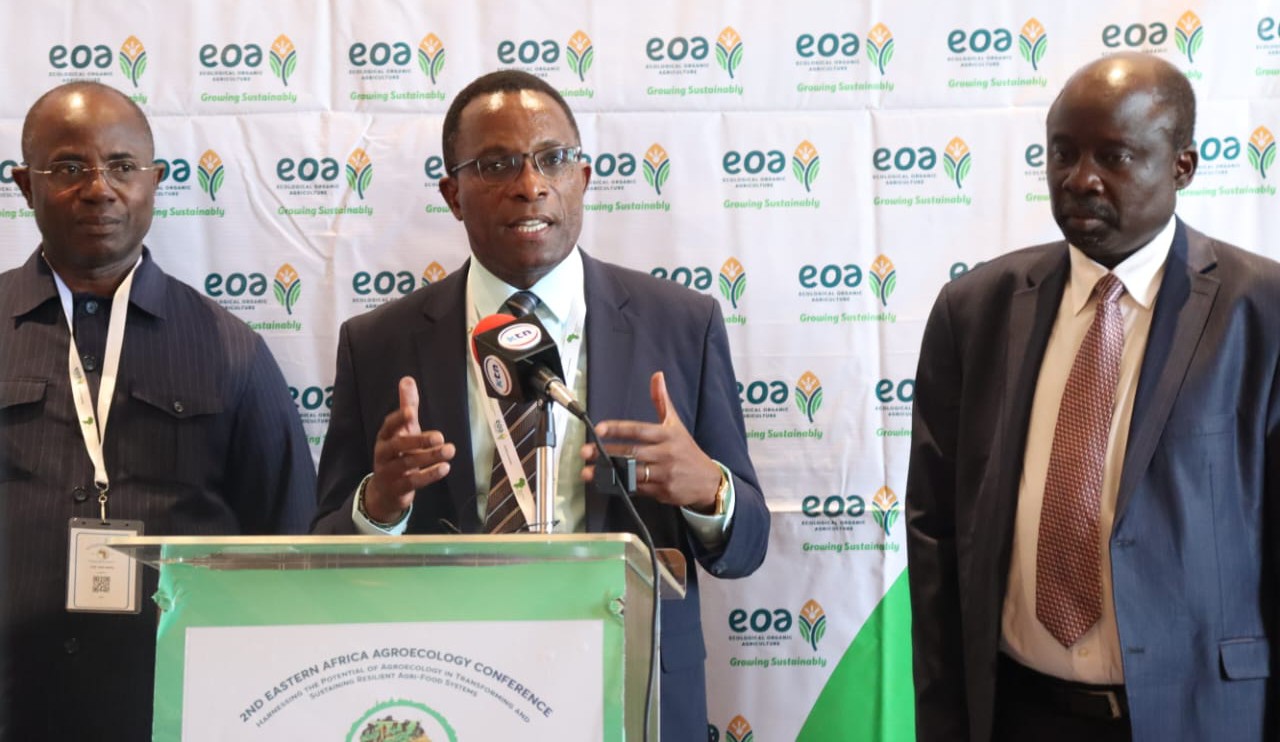
Nairobi is set to host the 2nd Eastern Africa Agroecology Conference (EAAC) from March 25-28, 2025, bringing together key stakeholders to discuss sustainable farming practices.
The event, co-organized by the Ministry of Agriculture and Livestock Development, Biovision Africa Trust, and other regional partners, aims to build on the success of the 2023 inaugural conference, which attracted over 600 participants from 17 countries.
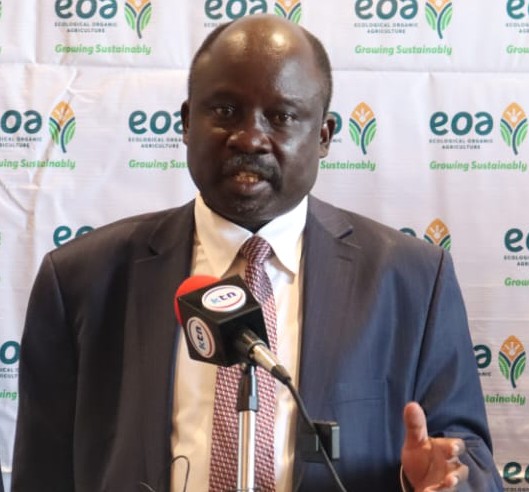
Speaking on behalf of Cabinet Secretary for Agriculture, Mutahi Kagwe, Dr. Christopher Wanga of the Ministry of Agriculture emphasized the importance of agroecology in transforming Kenya’s agricultural landscape.
He noted that the government is fully committed to fostering resilient and sustainable agri-food systems that nourish the population while safeguarding the environment.
The theme of this year’s conference, Strengthening Agri-Food System Transformation for Resilience, Sustainability, and Socioeconomic Development, aligns with Kenya’s Bottom-Up Economic Transformation Agenda (BETA) and continental frameworks such as the African Union’s Agenda 2063.
Despite agriculture contributing 21.8 percent of Kenya’s GDP and supporting over 80 percent of the rural population, the sector faces climate change, soil degradation, and high input costs.
Dr. Wanga highlighted that recent wildfires across Kenya’s protected areas from Isiolo to Maasai Mara underscore the urgent need for climate-smart agriculture. He stressed that agroecology provides a science-driven, community-based solution to these challenges by promoting soil health, biodiversity, indigenous knowledge, and circular economy principles.
To scale up agroecology, Kenya launched the National Agroecology Strategy for Food System Transformation (2024-2033) in collaboration with the Intersectoral Forum for Agroecology and Agrobiodiversity (ISFAA).
The strategy prioritizes climate-resilient crops such as millet, sorghum, sweet potatoes, and indigenous vegetables, which improve biodiversity, nutrition, and food security.
Additionally, the government is advancing organic fertilizers, biopesticides, and integrated pest management to reduce reliance on synthetic inputs.Dr. Wanga also noted that Kenya is leading in data collection and reporting on agroecological indicators under the African Union’s Ecological Organic Agriculture Initiative.
The country is currently in its 5th cycle of the Comprehensive Africa Agriculture Development Programme (CAADP) Biennial Review, measuring progress on organic fertilizer use, agroecological land coverage, and farmer-managed seed systems.
This data-driven approach informs national agricultural policies and strategies.The conference will showcase successful agroecological practices from counties such as Makueni, Kitui, Bungoma, Kisii, and Nyandarua, where farmers have embraced organic farming, composting, and apiary enterprises.
These initiatives have improved productivity, reduced input costs, and restored soil health. The Women in Agroecology Program, spearheaded by CGIAR and county governments, has trained over 5,000 female farmers in organic farming and regenerative agriculture, boosting household incomes and environmental conservation.
Kenya’s agroecology movement is also gaining traction in global markets. The country ranks among Africa’s top ten in organic farming, with over 173,000 hectares of certified organic land and 83,000 organic producers.
To support this transition, the government is enhancing access to financing, digital marketplaces, and extension services for farmers and agripreneurs.
The conference will generate policy recommendations aligned with Kenya’s Agriculture Sector Transformation and Growth Strategy (ASTGS) and international commitments like the African Continental Free Trade Area (AfCFTA).
Dr. Wanga called on all stakeholders government agencies, development partners, private sector players, researchers, and consumers to collaborate in scaling up agroecological solutions that ensure food security and economic resilience.
As the conference approaches, the call to action is clear: Investing in agroecology is not just an option but a necessity. Stakeholders must commit resources to research, farmer training, enterprise development, and market access.
By working together, Kenya and the region can build a food system that is sustainable, climate-resilient, and economically viable for future generations.
making his remarks at a pre-event media briefing, Dr. David Amudavi, Executive Director of Biovision Africa Trust, highlighted the urgent need for resilient food systems.
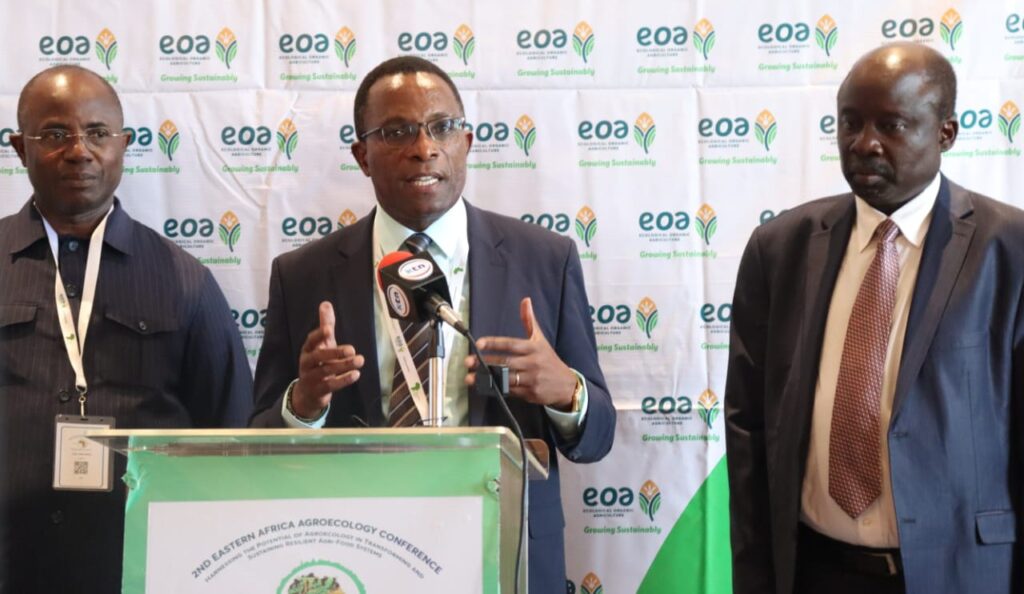
“Our region continues to grapple with rising food insecurity due to climate change, degraded soils, and market instability. Agroecology provides a science-based and community-centered pathway to restoring soil health, promoting biodiversity, and ensuring affordable, nutritious food for all,” he said.
The conference will showcase innovative solutions such as biofertilizers, composting, and integrated soil fertility management, which offer sustainable alternatives to chemical-dependent farming.
A key focus of the conference will be empowering farmers with tools, policies, and market access to enhance productivity and economic sustainability. Farmers from counties such as Makueni, Kitui, Bungoma, Kisii, and Nyandarua will share their experiences in adopting agroecological practices, demonstrating how sustainable farming can be both viable and profitable.
Additionally, discussions will align with Kenya’s Bottom-Up Economic Transformation Agenda, the African Union’s Agenda 2063, and global sustainability goals.
“It is not enough to talk about transformation; we must invest in it. This conference is more than a meeting it is a movement and a call to action,” Dr. Amudavi emphasized.
Experts Advocate for Agroecology to Enhance Soil Health and Food Security

One thought on “Kenya Hosts 2nd Eastern Africa Agroecology Conference to Advance Sustainable Farming”