
Govt Unveils Sh45.4B Plan to Turn Kenya’s Waste into Wealth.
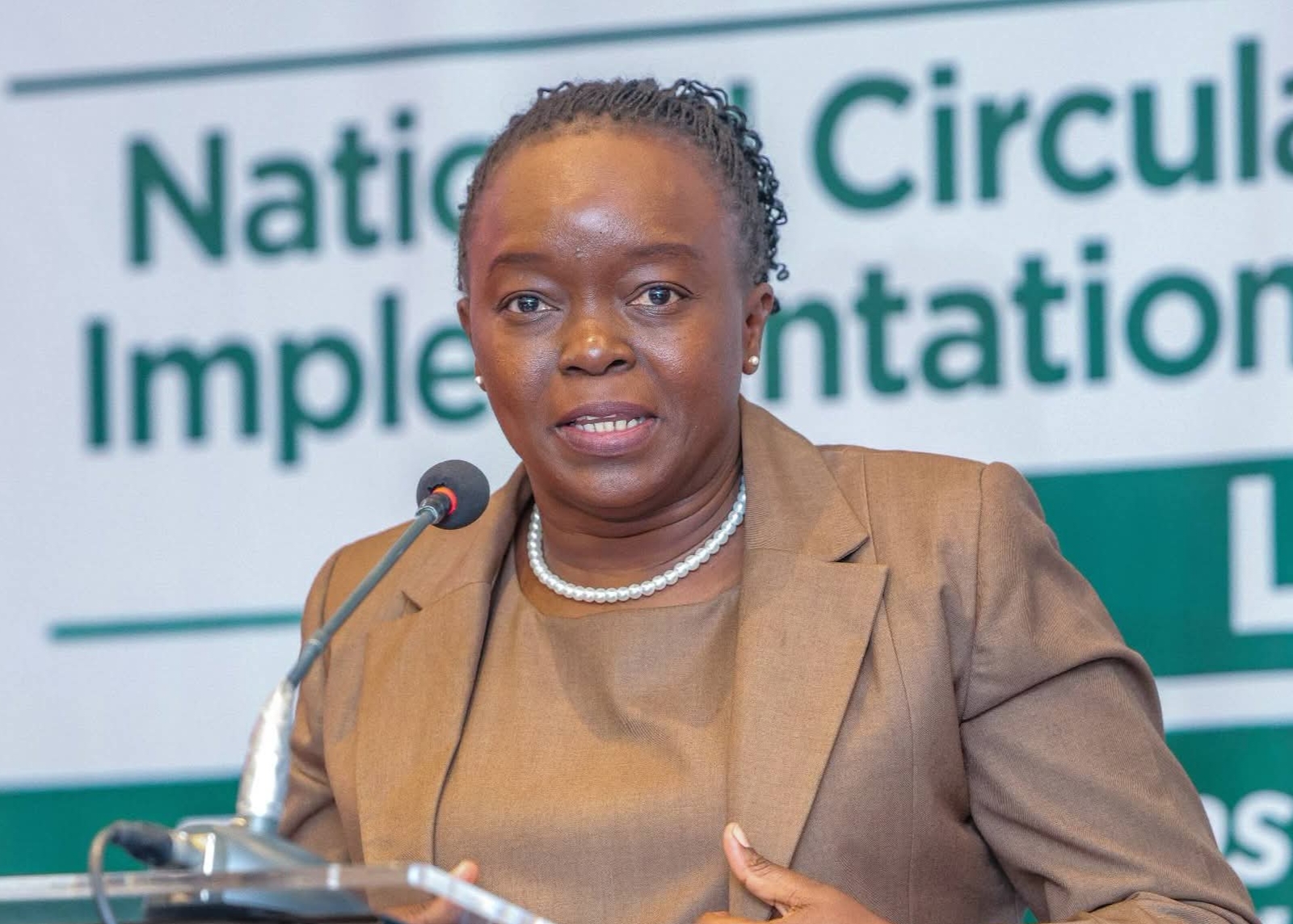
Environment Cabinet Secretary Deborah Mlongo Barasa speaks during the launch of the National Circular Economy Strategy and Implementation Plan (CESIP) in Nairobi.
The government has launched a Sh45.4 billion strategy to move Kenya away from the “take-make-dispose” economy with the aim of creating jobs, attracting investment and growing the economy from waste.
Environment Cabinet Secretary Deborah Mlongo Barasa on Tuesday unveiled the National Circular Economy Strategy and Implementation Plan (CESIP) in Nairobi describing it as far more than a clean-up campaign.
“This is a comprehensive economic transformation agenda, not merely a waste management intervention,” Barasa said.
The plan is expected to unlock opportunities worth more than USD700 million and contribute about 0.5 per cent to GDP by 2030.
Barasa said the country’s linear model of extracting, producing, consuming and disposing was straining the environment, public resources and communities as each Kenyan generates about 0.5 kilograms of waste daily, while packaging makes up nearly 30 per cent of municipal solid waste.
She said the strategy will strengthen local manufacturing, improve agricultural productivity, cut reliance on imported raw materials, build climate resilience and open new markets for Kenyan enterprises.
The strategic plan targets five sectors: agriculture and food systems,plastics and packaging, electrical and electronic equipment, textiles and fashion and mining, quarrying and construction.
Barasa called for a whole-of-government approach, with action from national and county governments, the private sector, development partners, academia and communities.
The 47 counties are “indispensable partners” in harmonising laws, developing recovery infrastructure and creating local investment opportunities.
She added that waste pickers, informal recyclers, women, youth and micro and small enterprises must be brought into the transition so that the benefits are inclusive. The plan aims to certify 15,000 informal-sector workers by 2032, working with counties.
Environment Principal Secretary Festus Ng’eno said the strategy brings previously fragmented initiatives into “a coherent national framework” with defined responsibilities, measurable indicators and accountability mechanisms.
“The Government is committed to decoupling economic growth from environmental degradation and resource depletion,” Ng’eno said.
2027 will be a preparatory year, followed by implementation from 2028 to 2032. The first two years will focus on standards for secondary materials, an Extended Producer Responsibility (EPR) system, better coordination, national material-flow data, access to finance for circular enterprises and stronger county capacity.
The Sh45.4 billion cost covers 2028 to 2032 at constant 2026 prices. Ng’eno said the government will work with the National Treasury, development partners, financial institutions, counties and private firms to mobilise funds and develop “credible, costed and bankable projects.”
The National Circular Economy Programme (NACIP) is expected to be operationalised in 2027 as the main delivery vehicle. Expected outcomes include more waste separation and recovery, better recycling of plastics and e-waste, less open dumping and burning and more green jobs.