
IMLU, IRCT Lead Forensic Training to Curb Rising Custodial Deaths and Torture in Kenya
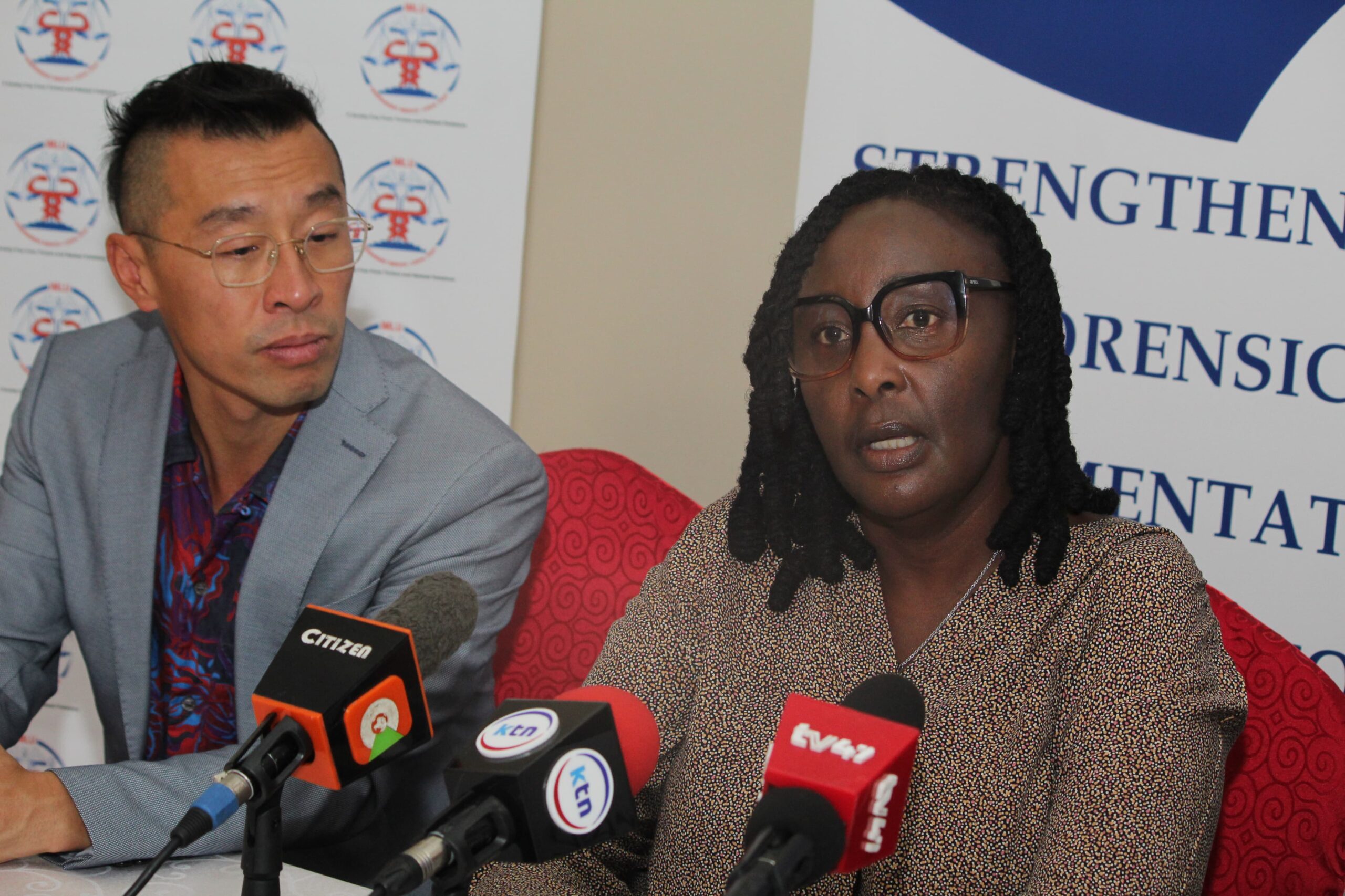
IRCT Istanbul Protocol Programme Coordinator James Lin and IMLU Executive Director Grace Wangechi address the media personnel’s present at the press briefing in Nairobi on Thursday 6th November,2025.
Kenya has taken a major step toward strengthening accountability for deaths in custody and torture through a new forensic training in Nairobi
Kenya’s efforts to strengthen accountability for deaths in custody and allegations of torture have gained new momentum following a three-day forensic capacity-building programme in Nairobi. The training, led by the International Rehabilitation Council for Torture Victims (IRCT) and the Independent Medico-Legal Unit (IMLU), brought together local and international experts to enhance forensic documentation and investigations in line with international standards, including the Istanbul Protocol and the Minnesota Protocol.
IMLU Executive Director Grace Wangechi said the initiative comes at a critical time, as the country faces growing concerns over deaths occurring in police custody and during protests. She revealed that the organisation had conducted over 80 autopsies this year, confirming 59 deaths linked to protests and 17 custodial deaths.
Autopsies, she explained, remain a costly but essential process for uncovering the truth and ensuring accountability. Families, she said, often turn to IMLU in search of answers about their loved ones’ deaths, and they deserve evidence-based responses.
Wangechi noted that despite rising public concern and media attention, Kenya’s forensic capacity and mortuary infrastructure remain inadequate. Many funeral homes lack proper equipment, and some regions have no pathologists at all, forcing families to wait for days or even weeks for post-mortem examinations. She stressed that such delays are not merely logistical challenges but issues of justice.
The IMLU director further called for the immediate operationalisation of the National Coroners Service Act, which she said has been pending for too long. According to her, continued delays undermine impartial investigations into suspicious deaths, as current processes remain under police and state pathologists. She emphasized that the Coroner General’s Office must be operationalized and adequately funded to ensure independence in investigations.
IRCT Istanbul Protocol Programme Coordinator James Lin said the training aimed to raise the standard of medico-legal examinations in Kenya to ensure transparency and justice for affected families. He said the only way to guarantee accountability is through comprehensive, science-based forensic approaches. Lin added that IRCT’s support to IMLU would help strengthen its network and ensure death investigations are credible, transparent, and aligned with global best practices.
He underscored that forensic investigations grounded in scientific rigor provide stronger paths to justice, noting that accountability must be built on evidence and truth, not mere testimony or allegations.
UN Subcommittee on Prevention of Torture Member and Head of Forensic Medicine at the University of Belgrade, Dr Djordje Alempijevic, echoed the call for elevated forensic standards. He observed that Kenya’s challenges mirror global struggles for accountability in custodial deaths, which can only be overcome through science and integrity.
Dr Alempijevic said forensic medicine exists to help societies confront difficult truths and pursue justice, stressing that every autopsy must be documented in a way that can be reproduced and verified by experts anywhere in the world. He acknowledged that Kenya’s forensic documentation still falls short of international standards but expressed confidence that ongoing capacity-building efforts will help bridge the gap.
He further explained that proper forensic work protects both victims and state officers. When deaths occur in custody or during protests, scientific evidence can distinguish between natural causes and unlawful force, ensuring justice and preventing future abuses.
The experts agreed that forensic documentation plays a central role in building public trust and addressing impunity. The training forms part of wider justice-sector reforms championed by civil society under the Police Reforms Working Group and supported through recommendations from Kenya’s Universal Periodic Review at the United Nations earlier this year.
Wangechi reiterated that science is central to accountability and reform, emphasizing that forensics transform pain into proof and evidence into justice. She urged the government to allocate adequate funding to forensic services, noting that a functioning coroner system would ensure families receive timely information and that investigations meet global standards.
She said every life lost in state custody should trigger a transparent process because the rule of law demands it. As Kenya continues to grapple with deaths linked to protests and detention, stakeholders agreed that improving forensic capacity and implementing existing legal frameworks are essential to safeguarding human rights.
Wangechi concluded by saying that the country is moving closer to a future where no death in custody is ignored and where accountability becomes the standard rather than the exception. She affirmed that families and the public deserve nothing less.