

Swisscontact Unveils PropelA II Initiative to Boost Youth Skills and Private Sector Investment in Kenya
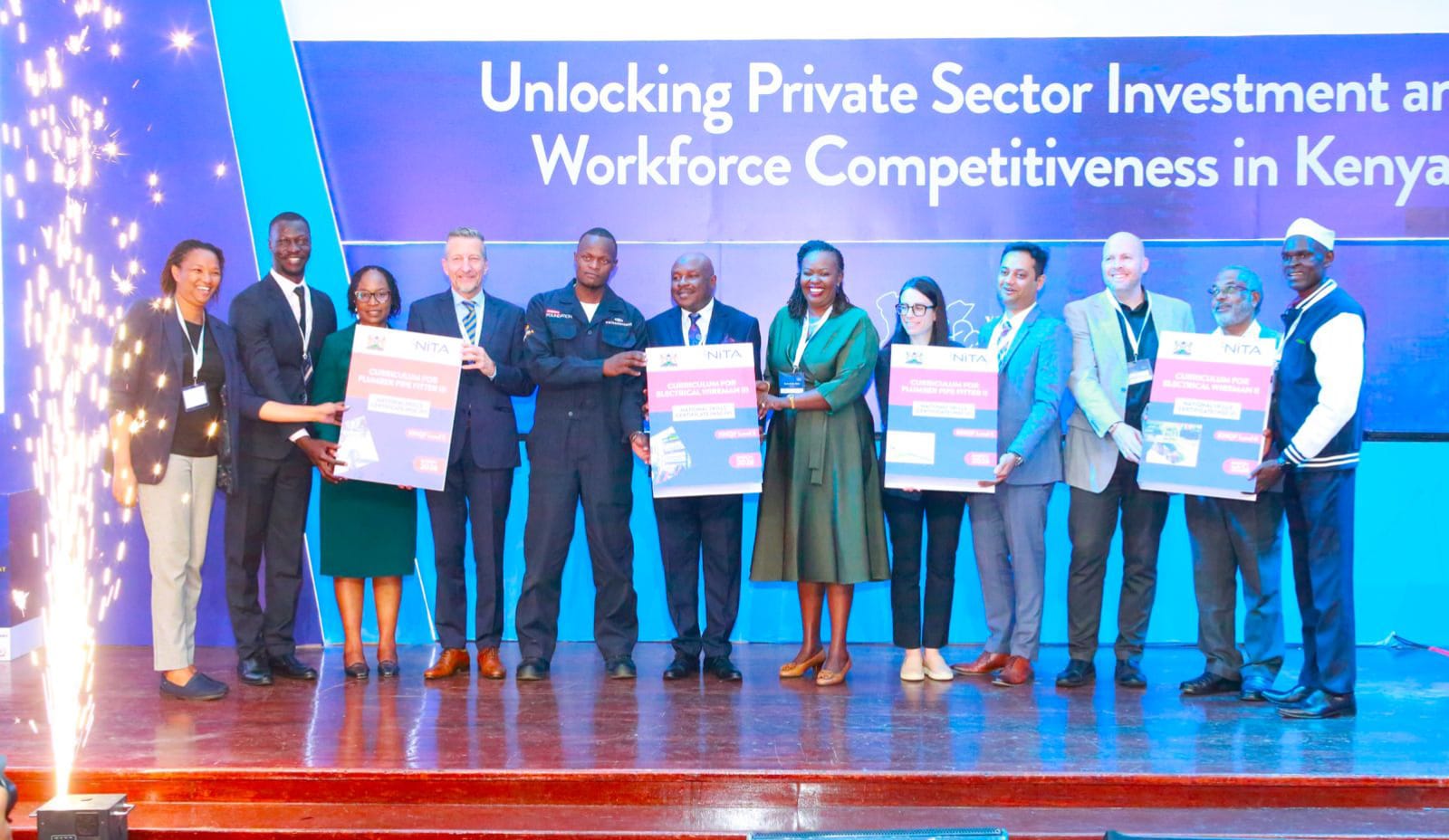
Swisscontact has launched the PropelA Phase II initiative, a youth skills development programme aimed at strengthening workforce competitiveness and unlocking private sector investment in Kenya.
The programme brings together industry players, Technical and Vocational Education and Training (TVET) institutions, and the National Industrial Training Authority (NITA) to address youth unemployment and the growing mismatch between education and labour market needs.
Speaking during the launch of PropelA Phase II under the theme “Unlocking Private Sector Investment and Workforce Competitiveness in Kenya,” Swisscontact Kenya Country Director Sharon Mosin said youth unemployment remains a deeply personal issue affecting families across the country.

Mosin invited participants to reflect on how widespread the problem is. “How many of us have a sibling, a niece, a nephew, a cousin, an aunt or an uncle who is looking for a job?” she asked the audience, noting that youth unemployment is not an abstract statistic but a reality affecting households across Kenya.
She observed that Kenya is one of the most youthful countries in the world, with about 75 percent of its population under the age of 35. Every year, hundreds of thousands of young people enter the labour market with education, talent and ambition, yet many struggle to find meaningful employment.
According to Mosin, one of the main drivers of unemployment is the persistent skills mismatch between training institutions and the needs of employers. While access to education has expanded significantly, she said this has not always translated into relevant skills for the modern workplace.
“Employers consistently report difficulty finding job-ready candidates, while graduates struggle to find work. This disconnect is not because young people lack potential, but because the skills demanded by rapidly evolving industries are not aligned with what is being taught,” she said.
She emphasized that beyond technical skills, employers increasingly require digital capabilities, problem-solving abilities, adaptability and workplace readiness.
Mosin also cited limited job creation in high-productivity sectors as another challenge. Although Kenya’s economy continues to grow, much of the employment remains concentrated in the informal sector where incomes are often low and unstable.
However, she noted that sectors such as agro-processing, construction, manufacturing, the green economy and digital services hold strong potential for employment growth if supported by the right investments and policies.
Inequality of opportunity also continues to hinder many young people from accessing employment, Mosin added. Factors such as geography, gender, disability and social background still determine who gets ahead.
“Talent is equally distributed across the country, but opportunity is not,” she said, pointing to barriers such as limited access to finance, mentorship, internships and professional networks.
She further highlighted weak school-to-work transition systems, noting that Kenya lacks strong institutional pathways linking training with employment opportunities through apprenticeships and industry attachments.
Mosin said PropelA aims to tackle these systemic challenges by strengthening collaboration between training institutions, industry and government agencies.
“Youth unemployment is a systemic challenge and systemic challenges require systemic solutions,” she said.
Despite the challenges, she expressed optimism that Kenya has strong foundations for change, including an expanding TVET system, a growing digital infrastructure and a vibrant entrepreneurial ecosystem.
“If we get this right, youth skills development will not only reduce unemployment but also drive productivity, strengthen industries and increase Kenya’s competitiveness,” she added.
The PropelA programme has already demonstrated promising results, showing improved employment outcomes and strong returns for private sector partners who invest in workforce training.
Additionally,her counter part, Swisscontact Central East and Southern Africa Regional Director Anirban Bhowmik noted that Kenya has made progress in strengthening the TVET sector, with increased investments in infrastructure and renewed policy focus. However, he cautioned that buildings alone cannot create a competitive workforce.
“The private sector continues to report that graduates lack market-relevant skills and industry exposure,” he said.
Through PropelA, Swisscontact is promoting a dual apprenticeship model that integrates classroom training with workplace learning. The approach draws inspiration from Switzerland’s apprenticeship system but has been adapted to the Kenyan context.
Under the programme, companies play a central role in shaping the curriculum to ensure that training aligns with real industry needs.
Bhowmik said the initiative has already gained strong support from businesses, with dozens of companies participating in the programme and investing in workforce development.
He added that the model is now being replicated beyond Kenya, with similar initiatives beginning in neighbouring countries such as Tanzania
Government, Private Sector Urged to Strengthen Skills Training to Address Youth Unemployment
Principal Secretary Shadrack Mwadime said Kenya must urgently address the widening gap between education and employment, noting that although the country produces nearly one million graduates every year, the economy absorbs only a small fraction of them.

He emphasized that skills development and access to capital remain the key factors that will determine whether Kenya can transform its economy and create sustainable jobs for young people.
Mwadime noted that many employers continue to report a mismatch between the skills graduates possess and those required in the labour market. While Kenya has expanded universities and training institutions, he said the country must now focus on practical, industry-relevant skills that can directly support enterprise growth and productivity.
He welcomed initiatives such as the PropelA dual training model, which combines classroom learning with hands-on industry experience. According to the PS, the system allows young trainees to gain practical skills while earning a stipend, with many securing employment after completion. He urged the private sector to partner with government and training institutions to scale the model and provide more apprenticeship opportunities.
Swiss Ambassador Mirko Giulietti highlighted Switzerland’s long-standing dual vocational training system, which he said has played a major role in making the country one of the world’s most competitive economies. The model allows young people to spend most of their time learning directly in companies while attending vocational school part-time, enabling them to graduate with practical skills and nationally recognized qualifications.
Giulietti said the PropelA programme, inspired by the Swiss system but adapted to the Kenyan context, demonstrates how collaboration between government, industry and training institutions can help young people transition smoothly from education into employment.
He urged the private sector to take a leading role in shaping training programmes and investing in workforce development to unlock Kenya’s youth potential.