


RSF Accused of Genocide in El Fashir as Sudan Envoy Warns of Regional Threat
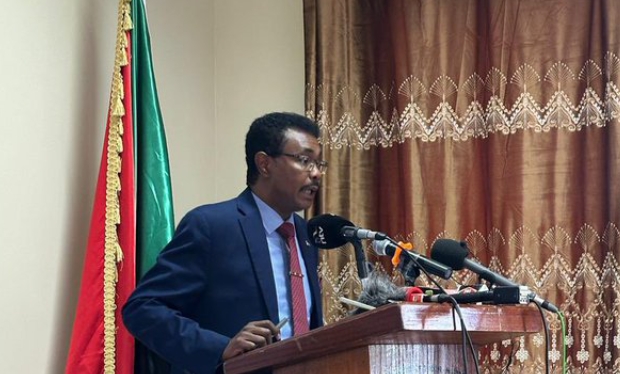
Nairobi — Sudan’s Chargé d’Affaires to Kenya, Mohamed Osman Akasha, on Wednesday accused the Rapid Support Forces (RSF) militia of committing systematic genocide and widespread war crimes after seizing control of El Fashir, the capital of North Darfur, following a months-long siege.
Speaking at a press conference on Wednesday in Nairobi, Akasha described two years of relentless bombardment and deprivation that left more than a million civilians trapped in El Fashir, with supply lines cut and basic services destroyed. He said the Sudanese Armed Forces withdrew from the city on October 26 “to protect civilians from further mayhem and total annihilation,” after which RSF fighters entered and launched what he called a campaign of “pure extermination.”
“Hospitals were destroyed. Humanitarian convoys were looted or ambushed. Entire neighbourhoods were burned to the ground,” Akasha said, summarising accounts from eyewitnesses, humanitarian agencies and independent investigators. He said the assault included house-to-house executions, public hangings, mass graves, attacks on medical staff and patients, sexual violence, and civilians run over by armoured vehicles in the streets.
“The evidence of genocide is overwhelming,” Akasha told assembled journalists. “This is not a conflict it is extermination. It is systematic, ethnically targeted and deliberate.”
The envoy cited recent warnings from United Nations officials, including an Assistant Secretary-General who described the situation in El Fashir as “simply horrifying,” and the UN High Commissioner for Human Rights, who warned of large-scale, ethnically motivated atrocities. He also referenced reports by international NGOs and media documenting drone strikes on residential areas and the destruction of hospitals — and alleged use of chemical agents.
Akasha accused the RSF — widely seen as the successor to the Janjaweed militias — of committing familiar patterns of violence with modern weaponry: “the same militias now re-branded as the Rapid Support Forces are committing the same crimes, only this time with drones instead of horses, armoured vehicles instead of camels, and foreign-supplied weapons instead of machetes.”
The press conference also highlighted what the Sudanese government says is an international dimension to the crisis: evidence compiled and submitted to the United Nations Security Council, according to Akasha, points to external supply routes, financing channels and air bridges that have enabled the RSF to obtain arms, drones and fuel despite the UN arms embargo. He cited the UN Panel of Experts report on Sudan (S/2024/65, 15 January 2024) as documenting transfers in violation of the embargo.
“This flow of mercenaries, weapons and illicit financing has transformed this militia into a transnational network of armed profiteers,” Akasha said, warning that recruitment of foreign fighters had turned Sudan’s tragedy into a broader regional security crisis.
Akasha called on the international community to take decisive action: enforce the arms embargo, halt logistical and financial support to the RSF, impose targeted sanctions and consider designating the militia as a terrorist organisation. He referenced past and recent US congressional moves — including a 2024 letter to President Biden under the Global Magnitsky Act alleging gross human rights violations, and a joint statement by US senators on October 30, 2025, urging consideration of terrorist-designation options in light of RSF actions in El Fashir.
“The Republic of the Sudan therefore urges the United Nations to act decisively to investigate these networks and to hold accountable any state or entity found complicit,” he said.
The humanitarian toll, Akasha said, is staggering. He quoted United Nations Office for the Coordination of Humanitarian Affairs figures indicating that more than 800,000 civilians fled El Fashir in recent weeks alone, with thousands missing and countless bodies unburied.
Akasha appealed directly to the media and human rights organisations to “bear witness, to tell the truth, to expose the perpetrators, and to help prevent the erasure of an entire people.” He said Sudan does not seek sympathy but “demands justice,” and warned that silence or inaction amounted to complicity.
“Those who sustain and enable the RSF’s atrocities share responsibility for the suffering of the Sudanese people,” he said. “The martyrs of El Fashir will not be forgotten, and those responsible will face the judgment of history.”
Hello. Great job. I did not anticipate this. This is a great story. Thanks!