

Ps Hinga Link Kenya’s Housing Shortage to Low Wages and Rapid Urbanisation
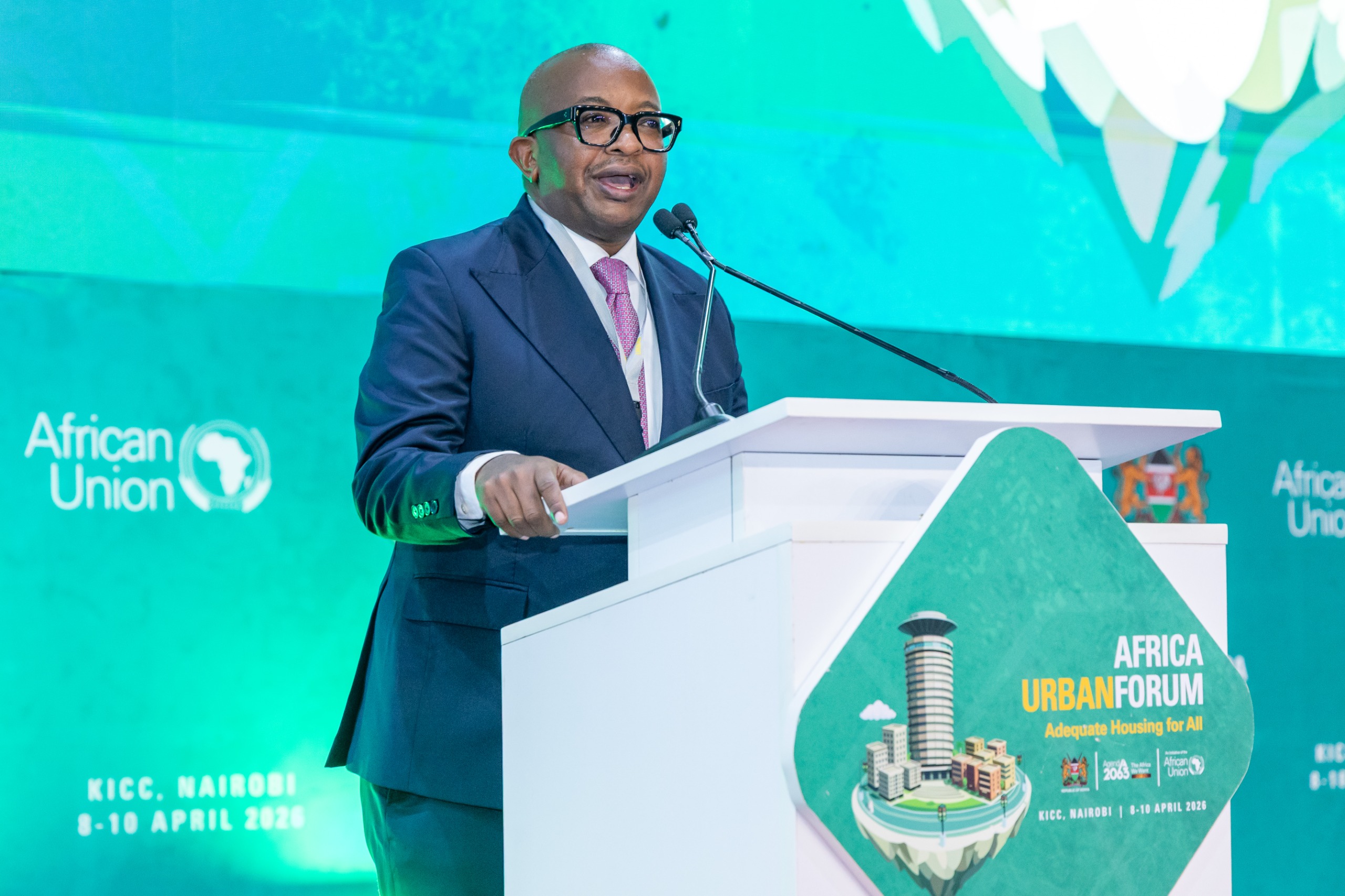
Principal Secretary for Housing and Urban Development, Charles Hinga speaking during the African Urban Forum on April 09, 2026 in Nairobi
Housing and Urban Development Principal Secretary Charles Hinga has attributed Kenya’s housing crisis to decades of policy shifts, rising land prices and low household incomes that have locked millions of urban residents out of home ownership.
Speaking during the Africa Urban Forum in Nairobi, Hinga said the country’s housing challenge is rooted in historical policy decisions and economic realities that have made decent housing unaffordable for the majority of Kenyans.
“The main resource that we have here is land and everybody wants a piece of that land. As more people moved to urban areas, the value of land in Kenya started to rise sharply,” he said.
Hinga explained that Kenya’s housing shortage dates back to colonial policies that discouraged Africans from settling in urban areas, leaving the country with limited housing infrastructure when independence was achieved in 1963. As cities expanded over the years, demand for housing grew faster than supply, creating a widening deficit.
The situation, he said, was compounded in the 1980s and 1990s when structural adjustment programmes encouraged governments to withdraw from direct investment in housing and leave development largely to the private sector.
At the same time, Kenya experienced rapid rural-to-urban migration as young people moved to cities in search of employment opportunities. However, the cost of housing continued to rise while incomes remained relatively low for the majority of urban workers.
“Seventy-five percent of all payslips in Kenya are Sh50,000 or below, and if you double that to Sh100,000, about 97 percent of all payslips earn less than that,” he said.
According to the Principal Secretary, this imbalance between incomes and housing costs has forced a large portion of urban residents to settle in informal settlements located close to employment centres.
Government data indicates that a significant percentage of Kenya’s urban population currently lives in informal settlements, a situation Hinga said has developed gradually over many decades.
“Less than one percent of Kenyans have access to mortgages, with fewer than 30,000 mortgages in a country of about 50 million people,” he said.
Hinga said the government’s Affordable Housing Programme seeks to address these structural challenges by lowering the cost of land, reducing construction expenses and expanding access to housing finance.
Among the key interventions, he said, is the use of public land for housing development and the reduction of certain government charges that increase construction costs. The government is also working with institutions such as the Kenya Mortgage Refinance Company to make mortgage financing more accessible to ordinary Kenyans.
He noted that addressing the housing crisis will require sustained investment, policy reforms and collaboration between the government and private sector developers.
Hinga said the housing deficit did not emerge overnight and warned that solving it will also require long-term commitment and substantial financial resources to expand access to decent and affordable housing across the country.