
Meru University team wins national AI hackathon with low-cost digital microscope innovation

Winners of the 2025 National AI Hackathon with Interior CS Kipchumba Murkomen, NIRU Board Chairman Nordin Haji, and other officials during the NIRU awards ceremony in Nairobi on April 01, 2026
A team of innovators from Meru University of Science and Technology has been crowned the overall winner of the 2025 National Artificial Intelligence Hackathon after developing a low-cost AI-powered digital microscope designed to improve the diagnosis of diseases such as malaria and cancer.
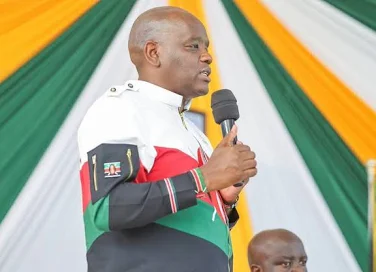
Speaking during the awards ceremony in Nairobi, James Kibon said the initiative organised by National Intelligence Research University is aimed at nurturing practical technological solutions that address national challenges while strengthening Kenya’s digital innovation ecosystem.
“What we are building is not just a competition, but a pipeline of deployable AI solutions. The quality of innovations we have seen demonstrates Kenya’s capacity to develop technologies that directly address our national priorities, from security and agriculture to public service delivery,” he said.
The winning project, titled “A Low-Cost AI-Powered Digital Microscope for Accessible Cancer and Malaria Diagnosis in Kenya,” was developed by Caroline Gakii, Daniel Maitethia and Ezekiel Otieno and earned the team a KSh 2 million prize during the final showcase.
The innovation aims to make diagnostic technology more affordable and accessible, particularly in health facilities that may lack advanced laboratory equipment.
The national hackathon attracted more than 5,600 registrations and generated over 2,500 AI solution submissions from innovators across the country, demonstrating the growing interest in artificial intelligence and its potential to solve real-world problems.
Joshua Radula from Strathmore University emerged as the first runner-up with his “Word 2 Sign” innovation, an AI-powered system that translates spoken or written words into sign language to improve communication and accessibility for the deaf community. He received KSh 750,000 for the project.
Kelvin Mulama secured the third position with “Veritas AI,” a solution designed to strengthen financial integrity by detecting fraud within financial systems. The project earned him KSh 500,000.
The competition formed part of broader efforts to support local innovation by providing young developers and researchers with opportunities to refine their ideas and transform them into scalable solutions.
Participants selected for the programme underwent a structured incubation process where they received technical mentorship, product development support, ethical AI guidance and insights on commercialisation to help move their ideas from concept to deployment-ready solutions.
Chairman of the NIRU Board of Trustees and Director General of the National Intelligence Service Nordin Hajji said nurturing local technological innovation is key to strengthening Kenya’s capacity to respond to national challenges.
“By nurturing AI innovation locally, we are building the capacity to develop solutions that respond to our socio-economic realities while strengthening national security and economic resilience,” he said.
Interior and National Administration Cabinet Secretary Kipchumba Murkomen also praised the innovators, noting that the diversity and quality of projects presented during the hackathon reflect Kenya’s growing leadership in digital transformation.
“The diversity and quality of solutions presented here demonstrate that Kenya has the talent and creativity to compete globally. These innovations have the potential not only to solve local challenges but also to create jobs and drive economic growth,” he said.
Innovations showcased during the hackathon addressed key sectors including agriculture, cybersecurity, public service delivery, digital infrastructure and national security, highlighting the increasing role of artificial intelligence in driving Kenya’s development agenda.