
Karua Calls for Citizen-Led Leadership as Inuka Kenya Launches Angaza Kura Platform Ahead of 2027 Elections
Inuka Kenya has officially launched the Angaza Kura platform as part of its efforts to enhance citizen engagement in the upcoming 2027 elections. During the launch, Deputy President Martha Karua emphasized the importance of citizen-led leadership, advocating for active participation in the democratic process. She urged citizens to utilize the platform to ensure their voices are heard and to hold leaders accountable. This initiative represents a significant step towards fostering a more inclusive electoral environment in Kenya.
Former Justice Minister Martha Karua has called on Kenyans to reclaim their constitutional power and demand accountable, transparent and people-centred leadership as the country prepares for the 2027 General Election.
Karua said Kenya needed alternative political leadership grounded in integrity, constitutionalism, economic justice and respect for citizens’ sovereignty, warning that independence had not fully transformed the relationship between those in power and the people they govern.
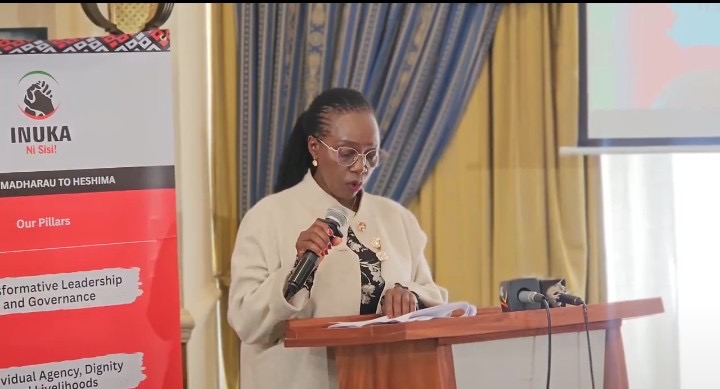
Speaking on Wednesday, November 11, 2026, during the launch of the Inuka! Angaza Kura Campaign at Sarova Stanley Hotel in Nairobi, Karua challenged political leaders to abandon the culture of entitlement and embrace leadership as a responsibility to serve the public.
The campaign, spearheaded by Inuka Kenya Ni Sisi!, seeks to strengthen citizen participation in leadership conversations, promote electoral accountability and encourage Kenyans to identify alternative leaders ahead of the 2027 elections.
Addressing participants under the theme Reimagining Leadership, Reclaiming Citizen Agency, Karua questioned whether ordinary citizens genuinely exercised the sovereign power guaranteed by the Constitution or whether elected officials had taken control of that authority.
“The Constitution proclaims sovereignty of the people, but who truly exercises power in Kenya?” she posed.
“Is it the citizen whose taxes sustain the state, whose labour builds the economy, and whose vote confers authority? Or is it the officeholder who, once elected, hijacks power and behaves like the master relegating citizens to subjects?”
She argued that Kenya’s democratic transformation required more than changing the individuals occupying public offices, insisting that the country must also dismantle leadership practices inherited from the colonial administration.
“Independence was supposed to transform that relationship. Yet changing the nationality of those occupying public office could not, by itself, dismantle the habits, incentives and institutions of domination,” she said.
Karua maintained that leadership should be understood as service and sacrifice rather than entitlement and privilege, adding that public officials must protect citizens’ rights and uphold their dignity.
“Whenever leadership demands obedience without accountability, the colonial model or inheritance survives. Whenever citizens must seek political patronage to obtain public services, it survives. Whenever criticism is treated as disloyalty, it survives,” she said.
She further reminded leaders that public services such as healthcare, education and infrastructure were constitutional responsibilities funded through taxpayers’ contributions and should never be presented as personal favours.
“A hospital is a public responsibility. A road is a public investment. Education is an investment in the nation’s future. Every service by leaders is part of their duty to us funded by our taxes, not a favour,” Karua said.
The former minister also challenged individuals seeking to offer alternative leadership to demonstrate their commitment to accountability through their actions, including within their political organisations.
She cautioned against politicians who condemn arrogance in government while practising similar conduct within their own parties.
“It is insufficient to condemn arrogance in government while practising it within our political parties. We cannot promise inclusion while silencing young people and women in our own organisations. We cannot demand transparency from others while avoiding scrutiny ourselves,” she said.
Karua disclosed that she had offered herself for the presidency in the 2027 General Election, saying her candidature was anchored in the belief that Kenya deserved a different approach to governance.
“I have offered myself for the presidency in the 2027 General Election because I believe Kenya deserves an alternative. An alternative grounded in constitutionalism, integrity, economic justice, and respect for the sovereignty of the people,” she stated.
She said her proposed leadership would treat public resources as a trust rather than an avenue for personal enrichment while promoting an economy that rewards hard work and creates opportunities for citizens.
However, Karua emphasised that national transformation could not depend on one individual, regardless of their leadership capabilities.
“No president, however capable, can substitute for strong institutions, active citizens, and a society that demands accountability,” she said.
She urged Kenyans to scrutinise all six elective positions on the ballot rather than concentrating exclusively on the presidency, noting that meaningful governance required accountability across all levels of leadership.
On citizen participation, Karua welcomed the Inuka! Angaza Kura initiative, describing it as an opportunity to shift political conversations from politicians determining electoral choices to citizens defining the leadership they want.
“By inviting Kenyans to define the leadership values they expect, identify potential leaders and share electoral experiences, this initiative can help reverse a familiar political habit: politicians prescribing the choices while citizens are asked only to applaud,” she said.
She observed that citizen agency extended beyond participating in elections to include involvement in public budgeting, community organisation, oversight of government institutions and demanding fair treatment.
She cited journalists investigating wrongdoing, young people questioning authority and citizens demanding explanations over public expenditure as examples of democratic responsibility.
Karua further called for political leadership that respects human dignity, warning against the use of abductions, torture and unlawful killings as instruments of governance.
“No administration should treat abduction, torture or unlawful killing as instruments of governance. No family should have to search for a loved one while public institutions evade responsibility,” she said.
On corruption, she said misappropriation of public resources had direct consequences on ordinary citizens, including inadequate medicine in hospitals, unfinished classrooms and lost economic opportunities.
“Every diverted shilling has a human consequence: medicine unavailable, a classroom unfinished, a supplier unpaid, an opportunity lost,” she said.
She urged aspiring leaders to embrace transparency in public expenditure, allowing citizens to establish what was purchased, its cost, the suppliers involved and whether the promised services were delivered.
Karua also called for the campaign to extend beyond digital participation, urging organisers to reach citizens without smartphones or reliable internet access.
She emphasised the importance of accessible communication formats, protection of participants’ personal information and mechanisms to ensure public contributions translated into tangible action.
“Participation loses meaning when people speak and nothing responds. Its value grows when their concerns become public questions, their proposals shape commitments, and those commitments can be tracked,” she said.
Meanwhile, Inuka Kenya Ni Sisi! Chief Executive Officer Dr Kawive Wambua said the Angaza Kura Campaign was designed to strengthen citizens’ influence in determining the country’s political leadership and promote conversations on alternative leadership.
In a statement accompanying the launch, Wambua said the initiative sought to move leadership discussions beyond political popularity, party affiliations and campaign promises towards the values, integrity, competence and accountability expected of individuals seeking public office.
At the centre of the campaign is the Inuka! Angaza Kura digital platform, which will enable citizens to identify and nominate leaders they believe can provide alternative leadership.
The platform will also provide an avenue for Kenyans to share their electoral experiences and contribute to discussions on electoral accountability.
Wambua said the initiative challenged the notion that leadership choices should be determined exclusively by political elites, established political parties or campaign machinery.
Instead, it seeks to place citizens at the centre of defining the kind of leadership they want and the standards they expect from those entrusted with public responsibility.
The launch brought together representatives of civil society organisations, the media, religious institutions, citizens and other stakeholders to deliberate on alternative leadership and citizen participation in shaping the country’s democratic future.
As the campaign begins its rollout, Inuka Kenya Ni Sisi! has called on Kenyans to actively participate in the platform and contribute to developing a new vision for leadership.
The organisation said meaningful democratic change required an informed, engaged and intentional citizenry capable of making responsible electoral choices and holding elected leaders accountable.
Karua concluded by urging Kenyans to take an active role in shaping the country’s democratic future, challenging citizens to demand answers from those seeking public office.
“Let this platform help citizens ask every aspiring leader: What have you done? What are you proposing? How will it be financed? How will we measure delivery? And how will you answer for failure?” she posed.
She called for a Kenya where citizens could access opportunities without political connections and demand justice without seeking permission from powerful individuals.
“The republic belongs to its people, and its leadership must always answer to them,” she said.