
Law Society Accuses Judiciary of Overreach, Warns of “Growing Judicial Impunity

Nairobi, Kenya —The Law Society of Kenya (LSK) has raised alarm over what it terms a “growing trend of judicial impunity,” accusing sections of the Judiciary of abusing their powers and threatening both constitutional order and the livelihoods of legal practitioners.
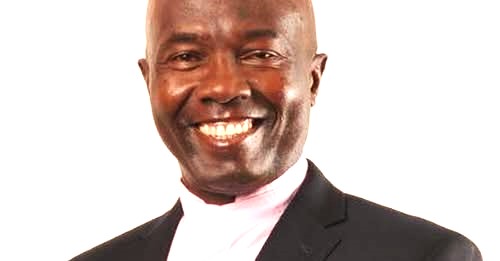
In a Press statement, LSK President Faith Odhiambo criticised recent ex-parte conservatory orders issued by the High Court in Nakuru that temporarily halted the engagement of private advocates by public entities, describing the move as unconstitutional, economically harmful and procedurally unjust.
LSK said the orders arise from Nakuru Petition E001 of 2026, filed by seven petitioners seeking to bar state and county governments from hiring external legal counsel. The Society argued that this petition is part of a long-running campaign aimed at pushing private practitioners out of public sector legal work.
“This is not a new debate,” the Society noted, pointing to a 2020 Cabinet resolution that attempted to restrict state agencies from engaging private lawyers a move that was quashed by the High Court in 2023 for violating constitutional procurement principles under Article 227.
Justice Jairus Ngaah, in that ruling, held that government procurement must be fair, transparent, competitive and cost-effective, and warned against concentrating such decisions at the discretion of a single office.
LSK also referenced a 2024 petition before the Senate seeking to block counties from outsourcing legal services, which Parliament rejected in 2025, warning that such a ban would violate the Constitution, procurement law, and statutes governing the Offices of the Attorney General and County Attorney.
The Society said the latest petition ignores this legal clarity and wrongly frames private advocates as unnecessary or costly, while overlooking the role they play in addressing conflicts of interest, capacity gaps, specialised legal needs and constitutional timelines.
LSK further dismissed claims that legal fees are uncontrolled, noting that advocate remuneration is regulated by law and subject to taxation by courts where disputes arise.
More broadly, the Society warned that the Nakuru orders risk setting a dangerous precedent by retroactively suspending lawful payments owed to advocates who have already rendered services, thereby causing significant financial harm to law firms and undermining confidence in the rule of law.
Beyond the specific case, LSK expressed deep concern over what it described as a pattern of judicial overreach, citing recent controversial court decisions including the lifting of orders halting police recruitment and the suspension of the Judicial Service Commission’s constitutional functions as evidence of a troubling trend.
“The Constitution grants judicial independence, not judicial impunity,” the Society stated, warning that unchecked abuse of judicial power could erode public trust and provoke widespread outrage.
LSK announced that it has filed an application to review and set aside the Nakuru ex-parte orders issued by Justice Mohochi Mukira and is monitoring emerging cases of judicial misconduct.
“We will not stand by as the Judiciary the last line of defence for Kenyans runs rogue against the people,” the Society said, adding that it remains committed to defending constitutional values, access to justice and the professional space for advocates.
The Society reaffirmed its dedication to public service while vowing to protect the legal profession from unlawful interference.